
Home » How To Run Faster » Hip Flexors for Running Speed: The Missing Link That’s Slowing You Down
Introduction
When it comes to your hip flexors for running speed, most athletes don’t realize how important these muscles really are.
Instead, they focus almost entirely on the muscles that push the body forward, such as:
- glutes
- hamstrings
- quadriceps
- calves
These are the muscles responsible for pushing your body forward.
👉 But what if the real reason you’re not getting faster…
👉 has nothing to do with how hard you push?
Most athletes completely overlook one critical factor:
👉 their hip flexors
⚡ Why Hip Flexors Matter for Speed
Every time you run, your legs go through a cycle:
- push phase
- swing phase
- return phase
The push phase drives you forward.
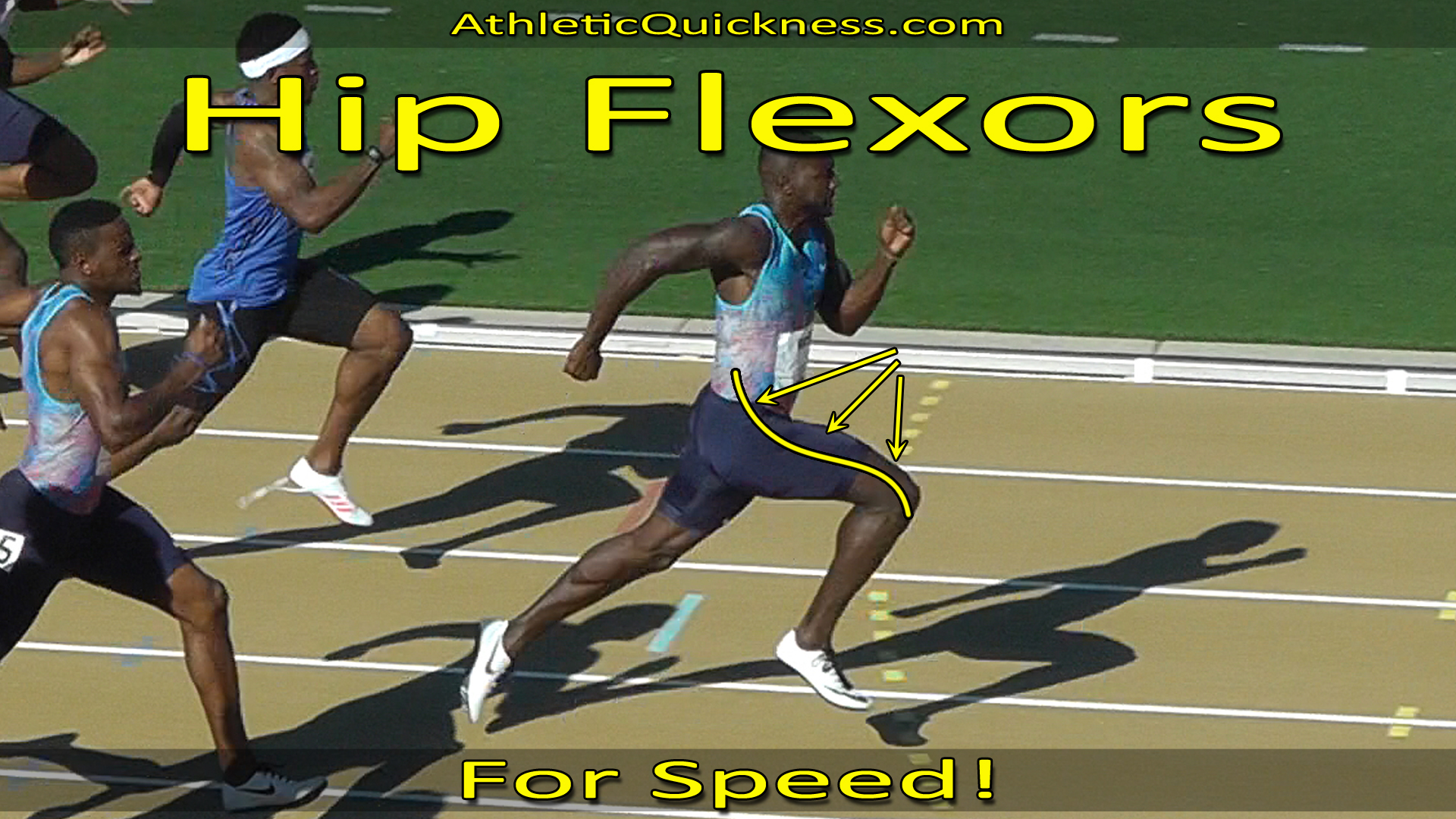
👉 But the swing phase determines how fast your legs can cycle.
And that phase is driven by your hip flexors.
🔥 The truth is:
👉 Your hip flexors set the speed of your stride.
- If they are slow → your stride is slow
- If they are fast → your stride becomes faster
🧠 The Problem Most Athletes Have
Most training programs are built around:
- strength
- power
- pushing force
So athletes spend:
👉 80%+ of their time training the push phase
But speed doesn’t just come from pushing harder…
👉 it comes from how fast you can cycle your legs.
👉 And that’s where most athletes fall behind.
🔄 Speed Is a System—Not a Single Phase
Running speed isn’t created by one movement.
👉 It’s created by a system working together:
- push phase → generates force
- swing phase → drives leg speed
- return phase → resets the cycle
👉 And all three must work together efficiently.
If one part of the system is weak…
👉 the entire system is limited.
⚠️ The Biggest Misunderstanding About Hip Flexors
When most athletes hear “hip flexors,” they think of one muscle:
👉 the psoas
But that’s only part of the picture.
👉 The hip flexors are a group of muscles that work together to lift and drive the leg.
And some of these muscles play a much bigger role in speed than most people realize.
👉 This is one reason athletes train the area—but still don’t see results.
🧠 Why Strength Alone Isn’t Enough
Many athletes try to improve speed by:
- strengthening their legs
- increasing power
- adding more resistance
But even with stronger muscles…
👉 their speed doesn’t improve.
Why?
👉 Because speed depends on:
- how quickly muscles respond
- how efficiently they coordinate
- how well they work together
👉 Not just how strong they are.
🚀 How to Train Hip Flexors for Speed
If you want to improve your speed, you must train your hip flexors differently.
Not just through:
- repetition
- traditional strength exercises
👉 But by training them to:
- react quickly
- stabilize under tension
- adapt to changing resistance
👉 To understand how this type of training works, see:
Isometric Training for Speed
👉 To see how resistance bands are used to train this system, see:
Resistance Bands for Speed
💪 Applying This to Real Training
To improve running speed, your training must:
- target the hip flexors directly
- challenge coordination
- develop faster muscle response
👉 This is especially important because the hip flexors:
- control stride rate
- influence leg recovery
- help drive the next cycle
👉 To see how to apply this in real exercises, see:
Resistance Band Exercises for Speed (Using Isometric Training for Maximum Results)
🏁 Conclusion
If you want to run faster, don’t just focus on pushing harder.
👉 Focus on how fast your body can cycle and respond.
Because:
👉 your hip flexors play a critical role in determining your speed
👉 Train them correctly…
👉 and you unlock a level of speed most athletes never reach.
🔥 Start Here
👉 Start here:
How to Run Faster
👉 To see how to apply this system step-by-step, learn more here:
Run Faster with Isometric Training
❓ Frequently Asked Questions
Do hip flexors make you run faster?
Yes, hip flexors play a major role in stride rate and leg speed, which directly affect running speed.
What are the hip flexors in running?
The hip flexors are a group of muscles that lift and drive the leg forward during the running cycle.
Why are my hip flexors slowing me down?
If your hip flexors are weak, slow, or not trained properly, they can limit how fast your legs cycle and reduce your speed.
Should I train hip flexors for sprinting?
Yes, training hip flexors properly is essential for improving stride rate, coordination, and overall speed.
Are hip flexors more important than leg strength?
Both are important, but without properly functioning hip flexors, strength alone will not maximize speed.