Home » How to Run Faster » How to Run Faster: 7 Things That Actually Matter
🧠 Why Athletes Start Looking For More Speed In The First Place
It usually doesn’t start with a stopwatch.
It doesn’t start with a workout.
It doesn’t even start with a coach.
💥 It usually starts with frustration.
👉 Another player keeps pulling away from you.
👉 You can’t stay in front of the athlete you’re trying to guard.
👉 Coach starts giving someone else more playing time.
👉 Or maybe you’ve been…
• lifting
• sprinting
• working hard
• doing everything people told you to do…
…yet somehow everyone else still seems to be improving faster than you.
Eventually…
almost every athlete reaches the same conclusion.
Something has to change.
So you do what millions of athletes have already done.
👉 You open Google.
👉 And you type:
How do I run faster?
Almost every article tells you to:
👉 Lift weights.
👉 Run hills.
👉 Do sprint drills.
👉 Perform plyometrics.
👉 Improve your running form.
💥 Can those things help?
👉 Absolutely.
💥 Are they the complete answer?
❌ Probably not.
Otherwise…
every athlete doing those things would eventually become fast.
👀 But that’s not what happens.
Many athletes…
👉 become stronger.
👉 improve their conditioning.
👉 work incredibly hard.
…and still find themselves asking:
“Why am I still not getting faster?”
💥 That’s the question that matters most.
At AthleticQuickness…
we believe the answer begins by looking at speed differently.
Instead of starting with another workout…
or another drill…
👉 we start by understanding what actually contributes to faster running.
Because once you understand what you’re really trying to improve…
choosing the right training becomes much easier.
💪 1. Strength Matters—But It Isn’t The Whole Story
👉 Getting stronger helps… but strength alone doesn’t guarantee greater speed.
Getting stronger is one of the foundations of athletic performance.
👉 No question.
❌ But if strength alone created speed…
every stronger athlete would automatically become faster.
That simply isn’t what happens.
Every year…
thousands of athletes become noticeably stronger in the weight room…
…while seeing very little improvement on the field.
💥 Why?
Because sprinting isn’t simply about producing more force.
It also depends on:
👉 When that force is produced.
👉 How that force is transferred.
👉 Whether the rest of your body can continue supporting it as speed increases.
👀 Two athletes can have similar strength…
…yet produce very different sprint performances.
👉 Strength matters.
👉 Getting stronger matters.
💥 But how your body organizes and applies that strength during sprinting often matters even more.
If you’ve spent months getting stronger without becoming much faster, Why Strength Alone Won’t Make You Faster explains why producing more force and producing more speed aren’t always the same thing.
🏃 2. Better Running Mechanics Help You Use More Of Your Ability
👉 Better mechanics help more of your athletic ability reach the stopwatch.
Many athletes think running mechanics are simply about looking smoother.
AQ doesn’t.
👀 Running mechanics determine how effectively your body uses the strength you already possess.
Every stride requires your entire body to contribute.
👉 Legs
👉 Arms
👉 Torso
👉 Hips
Not one after another.
💥 All at the same time.
That’s the sprint system.
When one contributor begins falling behind…
the rest of the system often has to compensate.
👉 More effort doesn’t always produce more speed.
Sometimes…
it simply produces more compensation.
Good running mechanics don’t simply improve how you look.
👉 They improve how much of your athletic ability actually reaches the stopwatch.
If you’ve never studied how your body produces speed as one coordinated movement, Running Mechanics Explained: The System That Makes You Faster is one of the best places to continue learning.
⚙️ 3. Faster Running Depends On More Than The Pushing Muscles
👉 Running faster requires much more than stronger glutes, hamstrings, quadriceps, and calves.
Traditional speed training places tremendous emphasis on four muscle groups.
👉 Glutes
👉 Hamstrings
👉 Quadriceps
👉 Calves
At AthleticQuickness…
we often refer to them collectively as:
GHQC.
💥 They’re incredibly important.
Without them…
speed isn’t possible.
❌ However they’re not the entire story.
For years, speed training has largely revolved around developing these four muscle groups.
But running isn’t simply one powerful push…
followed by another.
👀 It’s a continuous sequence of:
👉 Pushing
👉 Swinging
👉 Rotating
👉 Stabilizing
👉 Reorganizing
…hundreds of times during a race.
As speed increases…
every contributor has to continue supporting the others.
💥 If one contributor begins falling behind…
the entire sprint system may eventually have to slow down to remain organized.
👉 That’s why AQ doesn’t simply ask:
“How can I make the pushing muscles stronger?”
We also ask:
“Can the rest of the sprint system continue supporting that greater force?”
Those are two very different questions.
And they often lead to two very different training programs.
👀 If you’ve never considered that running has both a pushing side and a swing side working together during every stride, Push Phase vs. Swing Phase: The Missing Half of Running Speed explains why this idea changes the way many athletes think about speed.
🦵 4. Don’t Ignore The Swing Phase
👉 Every powerful push depends on preparing for the next one.
For decades…
speed training has focused heavily on producing more force into the ground.
👉 Push harder.
👉 Become stronger.
👉 Produce more power.
Those are all worthwhile goals.
💥 But what happens immediately after the push?
That’s where many athletes unknowingly stop paying attention.
Every stride has to prepare for the next stride.
And that’s where the hip flexors become incredibly important.
👉 They rapidly drive the leg forward.
👉 They help reposition the body.
👉 They prepare the sprint system for another aggressive push.
The faster an athlete runs…
the more important this rapid repositioning becomes.
❌ Improving the swing phase isn’t about replacing the pushing phase.
👉 It’s about allowing both sides of the sprint system to continue improving together.
That’s one reason AQ considers the hip flexors one of the most overlooked muscle groups in sprinting.
👀 If you’ve never intentionally trained the swing side of running, Hip Flexors for Running Speed: The Most Overlooked Muscle Group in Sprinting explains why these muscles deserve much more attention than they typically receive.
💪 5. Your Arms Do More Than Swing
👉 Your arms don’t just move with your legs… they help support faster running.
Many athletes think their arms simply move because their legs are moving.
AQ looks at the relationship differently.
👀 As the legs become more aggressive…
the arms and torso become more important.
They help organize movement.
👉 They help support the pushing side.
👉 They help coordinate the sprint system.
👉 They help the body continue cycling efficiently as speed increases.
💥 They aren’t passengers.
They’re contributors.
👉 They contribute to speed every bit as much as the legs contribute to speed.
That’s one reason improving arm mechanics often improves much more than the upper body.
When your:
👉 arms
👉 torso
👉 hips
👉 and legs
…work together efficiently…
running often begins feeling:
👉 smoother
👉 quicker
👉 more controlled
👉 and easier to sustain.
❌ Speed isn’t created by stronger legs alone.
💥 It’s supported by a better organized sprint system.
👀 If you’ve never considered how much your upper body contributes to speed, Arm Swing Mechanics in Sprinting: Why Your Arms Matter More Than You Think will likely change the way you watch people run.
🎯 6. Find What’s Actually Holding You Back
👉 The biggest opportunity for improvement isn’t always where you’re weakest… but it usually isn’t where you’re strongest, either.
One of the biggest mistakes athletes make…
is continuing to improve what they’re already good at.
It’s understandable.
👉 Strong athletes usually enjoy training their strongest muscles.
💥 But getting even stronger at what you’re already good at…
doesn’t always make you faster.
Sometimes…
the real limitation is somewhere else.
👉 It may be a muscle that’s struggling to keep up.
👉 It may be a movement that’s falling behind.
👉 Or it may be a part of your sprint system that’s no longer supporting everything else.
AQ refers to this as improving the weakest link.
👉 Not because one muscle does everything…
👉 But because one limitation can eventually prevent the rest of the sprint system from continuing to improve.
Instead of asking:
“What should I train more?”
AQ often asks a different question.
💥 “What’s actually preventing me from running faster?”
Those are two very different questions.
And they often lead to two very different training programs.
👀 If you’ve never looked at speed through the lens of limiting contributors, The Weakest Link Principle For Running Speed: Why Speed May Rise Only As Far As Its Weakest Link Allows explores this idea in much greater depth.
🏋️ 7. Train Specifically For Speed
👉 The best speed training improves your entire sprint system… not just your muscles.
Many training programs ask your muscles to become stronger.
AQ asks your entire sprint system to become better.
Those aren’t always the same goal.
💥 The best speed training doesn’t simply improve force.
It also improves:
👉 Timing
👉 Coordination
👉 Muscle response
👉 Strength balance
👉 Whole-body organization
Because the goal isn’t simply producing more force…
👉 It’s producing more usable speed.
That’s one reason AthleticQuickness combines:
👉 Resistance bands
👉 Isometric training
The objective isn’t simply stronger muscles.
💥 It’s creating a sprint system capable of expressing greater speed.
🧠 Final Thoughts
👉 Running faster starts with understanding what actually creates speed.
If your goal is to run faster…
don’t spend all of your time searching for another workout.
Instead…
focus on improving the contributors that actually make faster running possible.
👉 Build strength.
👉 Improve your running mechanics.
👉 Develop both the pushing side and the swing side.
👉 Train your arms and torso to support faster movement.
👉 Find what’s actually limiting your speed.
👉 Train your sprint system…
…not just individual muscles.
💥 When those contributors begin improving together…
greater speed often follows.
There isn’t one magic exercise.
There isn’t one magic muscle.
There isn’t one perfect drill.
👀 The athletes who continue getting faster usually aren’t the ones doing the most work…
👉 They’re the ones improving the things that matter most.
The fastest athletes don’t simply train harder.
They understand what actually creates speed… then they train accordingly.
🚀 Where To Go Next
You’ve just learned seven of the biggest ideas behind faster running.
Now choose the topic you’d like to explore next.
💪 Running Muscles
Wondering what each muscle actually contributes?
👉 Running Muscles for Speed: What Actually Matters (And What Doesn’t)
Discover why speed depends on much more than simply stronger glutes, hamstrings, quadriceps, and calves.
🧠 Speed Training Science
Curious why some training methods produce speed while others mainly produce strength?
👉 Speed Training Science: Why Most Methods Fail (And What Actually Works)
See the science behind faster running and why many traditional programs eventually stop producing results.
🚀 Ready To Start Training?
Ready to begin applying these ideas?
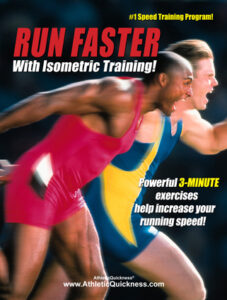
👉 Run Faster With Isometric Training
Learn the training philosophy AthleticQuickness uses to help athletes develop greater usable running speed.