

Hello everyone, I am Dr. Larry VanSuch for AthleticQuickness.com and you are watching video #2 of this series called Speed Training Sessions.
Before I begin, I want to say if you haven’t already watched the first video, then I highly recommend you go ahead and do that now before watching this one, because, even though I am going to provide a quick review of it here in a minute, watching that first video in its entirety will help place not only this one into its proper context, but also, the ones to follow. So again, I highly recommend watching it and you can access the link to it in the description below.
Now, if you have already seen it, then great, welcome back. Let me just say that while I thoroughly enjoy making these training videos, I am really, very excited, to make this particular one.
And the reason why is because after speaking with a number of people throughout the years about the glutes/hams, quads and calves (See Figure 1)
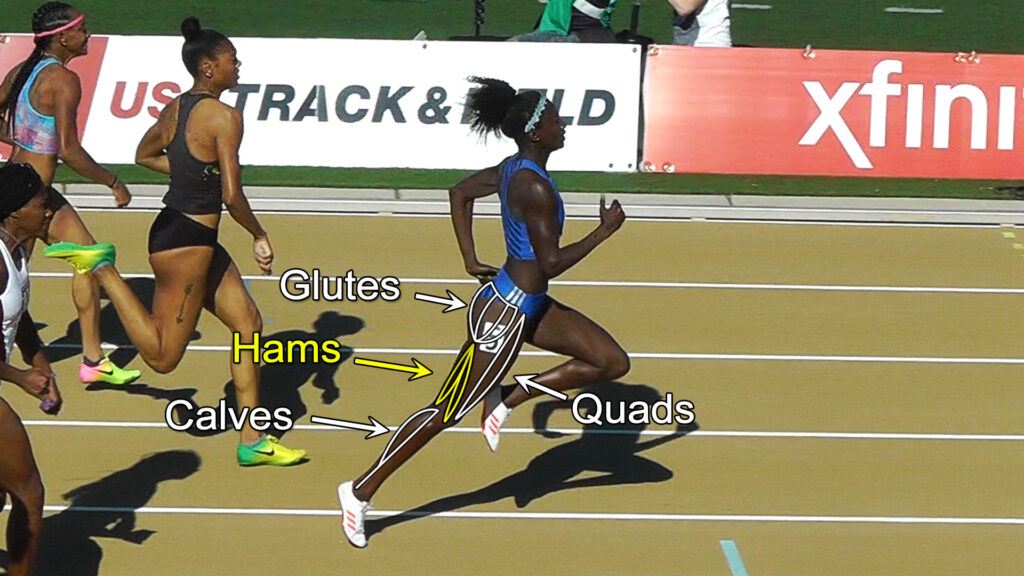
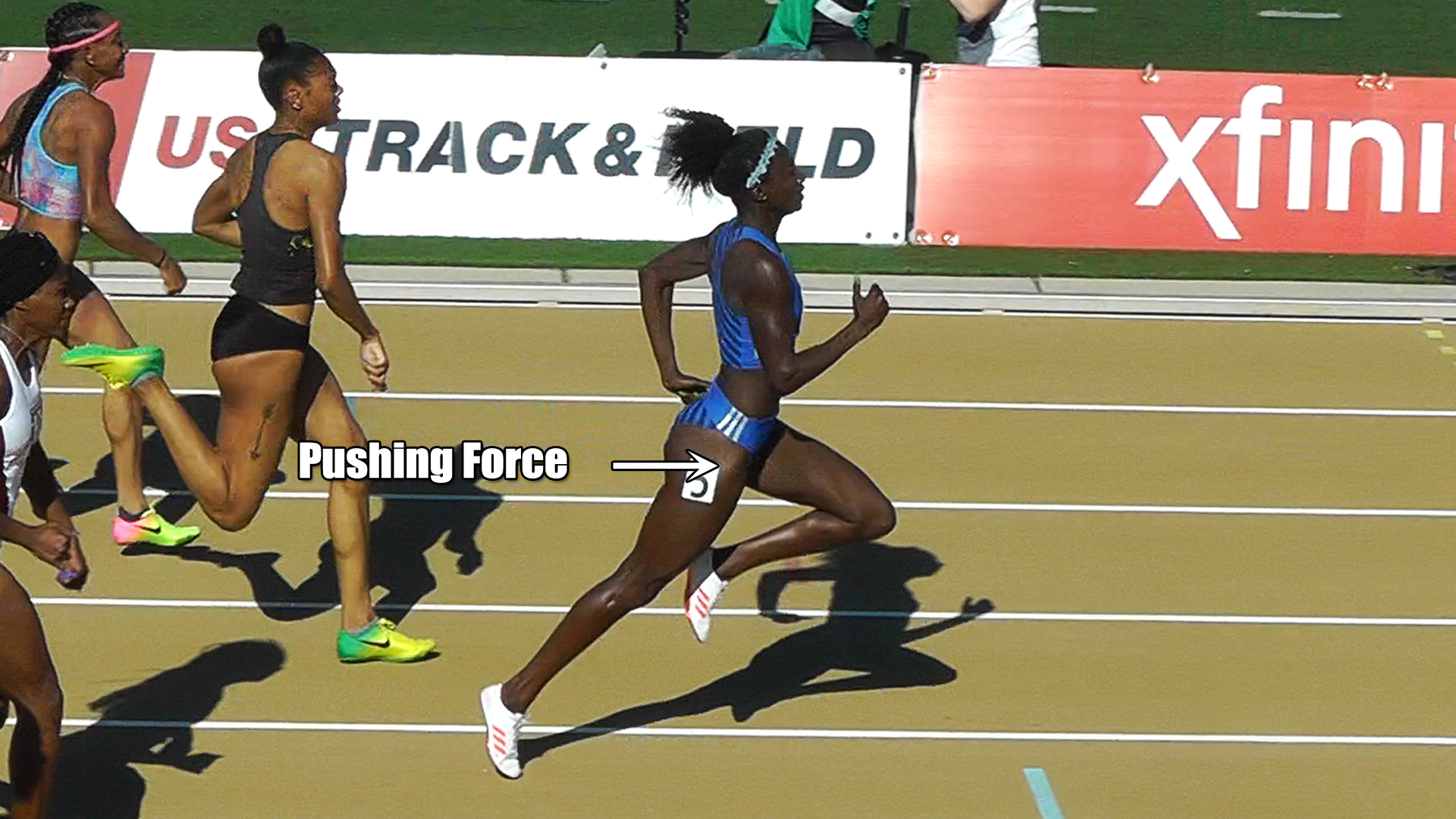
and their role in the running process, I have come to the realization that while many had a general understanding of what these muscles did, which was to generate a pushing force on body forward (See Figure 2)
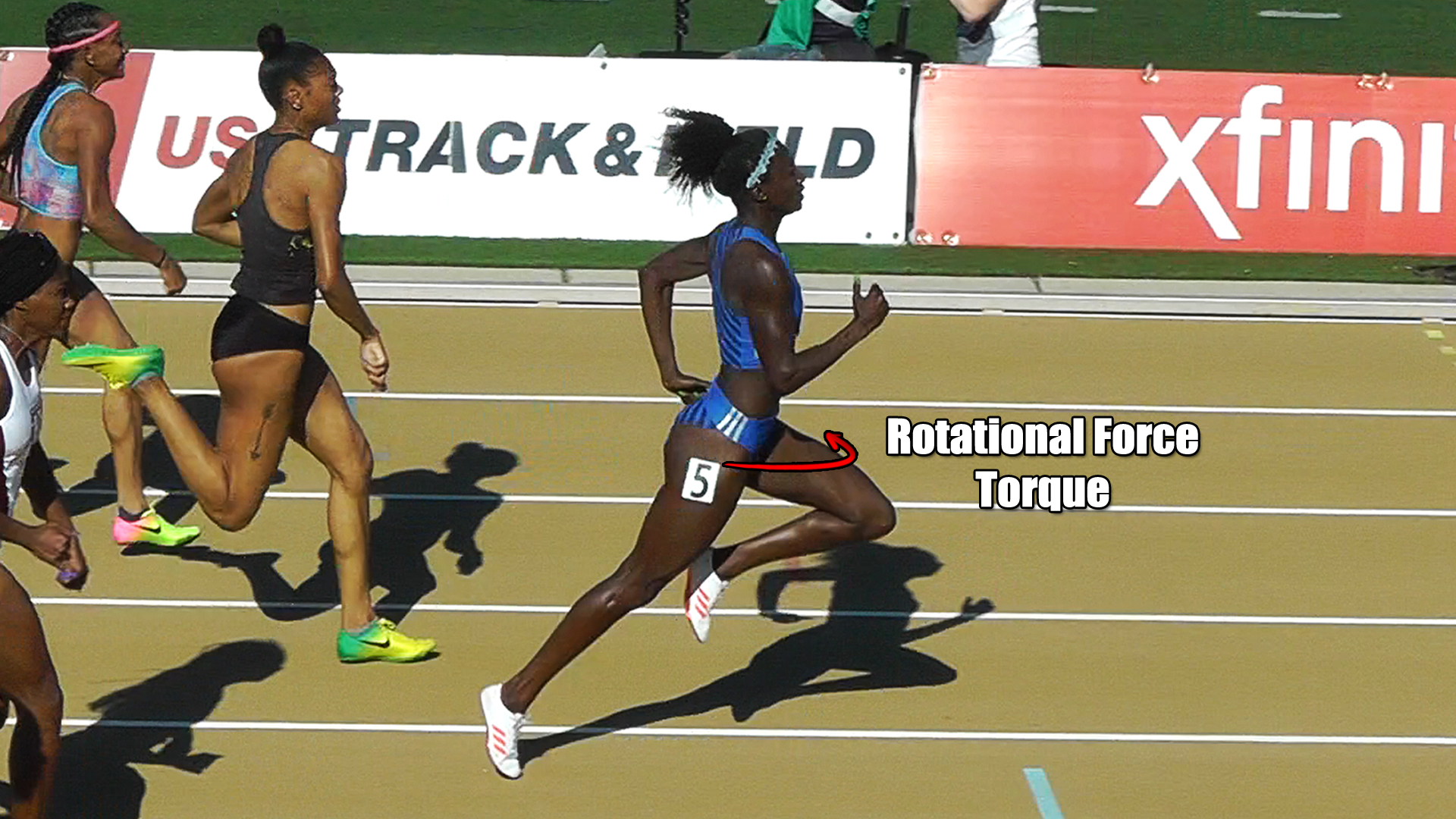
no one, and I repeat, no one was even remotely aware of another component to this force, which was a rotational one, or, torque around the athlete’s midline in this direction (See Figure 3).
And because they had no idea this rotational component even existed, they never considered the possibility that others might exist as well, others desperately needed in different parts of the body, such as the left shoulder, right shoulder, airborne leg and torso, to keep both sides of it in perfect balance while running. (See Figure 4).
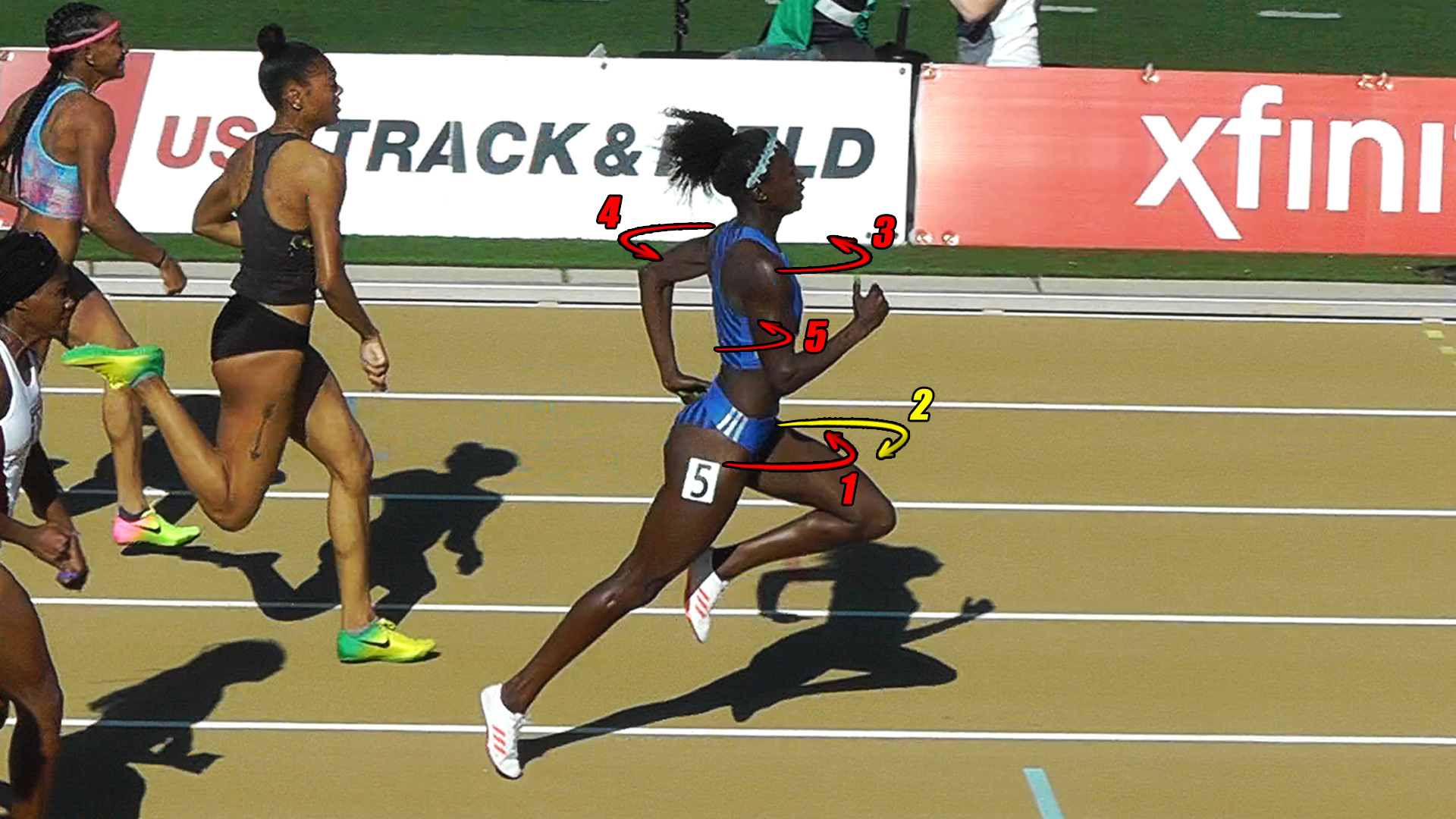
A tunnel vision approach to speed will always end in frustration
So, they ended up with the misconception that in order to get faster, all they had to do was work on the obvious, which to them was just the muscles supplying a simple, straight-line pushing force through the hip joint, (See Figure 5)
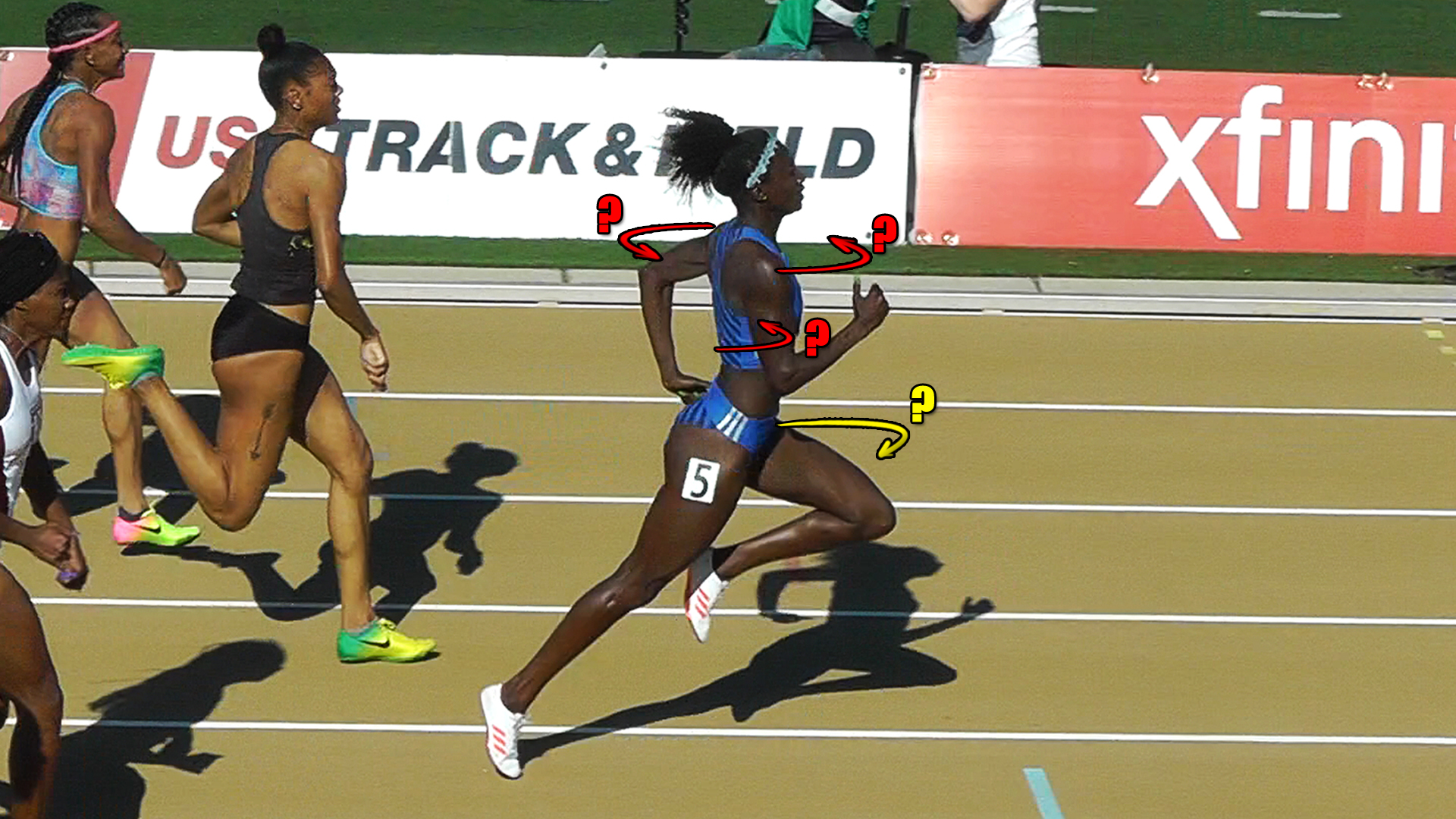
while the not-so-obvious, but equally important muscles producing rotation, and counter-rotation in the rest of the body were simply ignored. (See Figure 6)
And so, my guess is that you may be stuck in a similar place as those I’ve previously spoke with, exercising the same muscles over and over again and expecting a different result…there’s a word for this type of behavior. And I’m also guessing that you are as unfamiliar with the concept of torque production in the body, as they were, and how it is needed to run your very best.
Therefore, in this video, I am going to introduce to you this concept of torque in a very big way because not only is it the single most important factor in determining who runs fast and who doesn’t, but it’s also the key to breaking you free from the mindset that all you need to do to get quicker is increase the strength in the leg pushing against the ground.
How I Plan to Introduce You to Torque in the Body
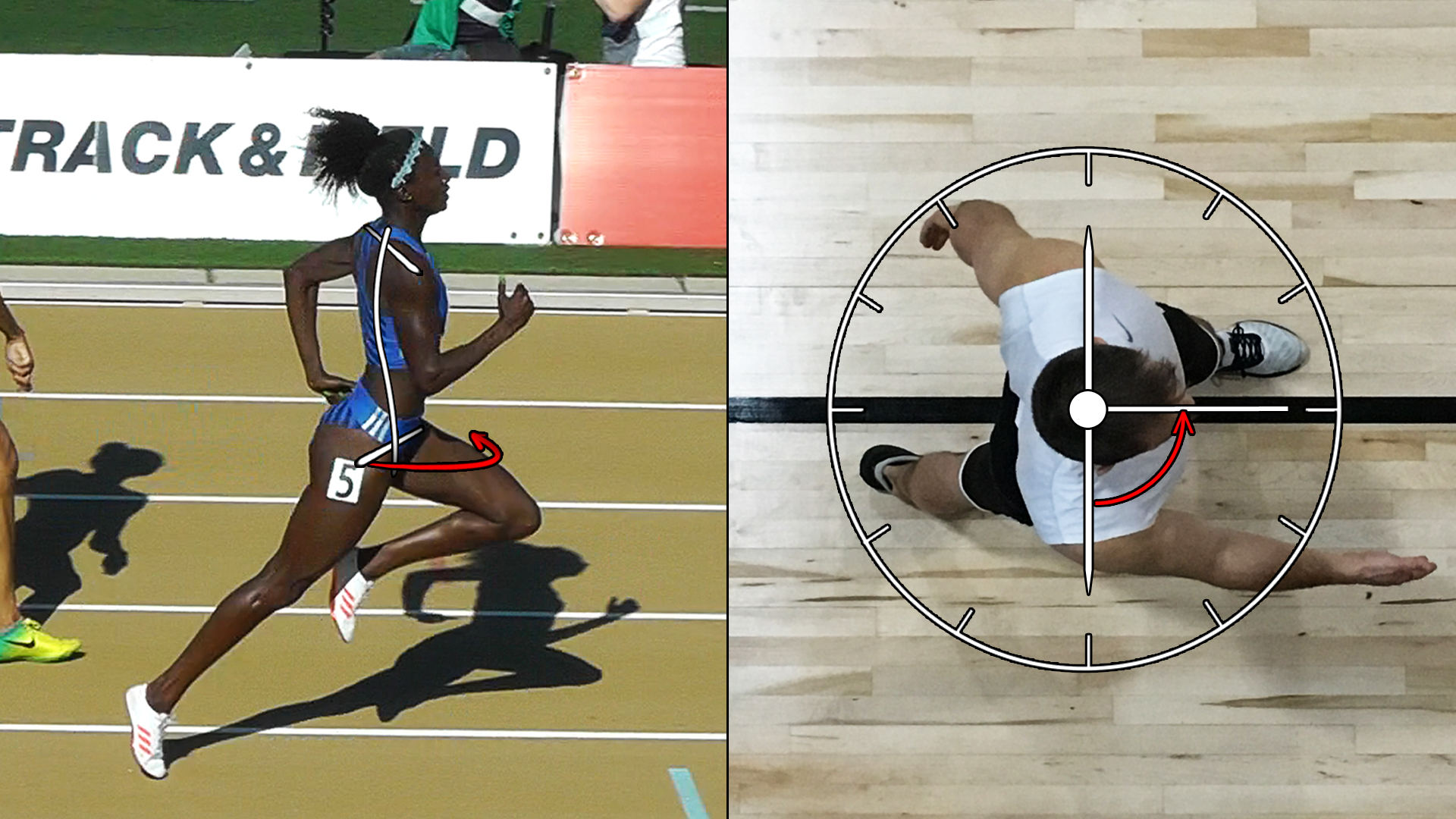
So, the first thing I am going to do regarding torque, is show you how the glutes/hams, hams, quads and calves produce their own rotational force and I’m going to show it to you from two different perspectives, so you can begin to see and understand it more clearly. (See Figure 7).
Then, I am going to show you how four other areas in the body produce their own, similar torque at the exact same time the glutes/hams, quads and calves are producing theirs (See Figure 8)
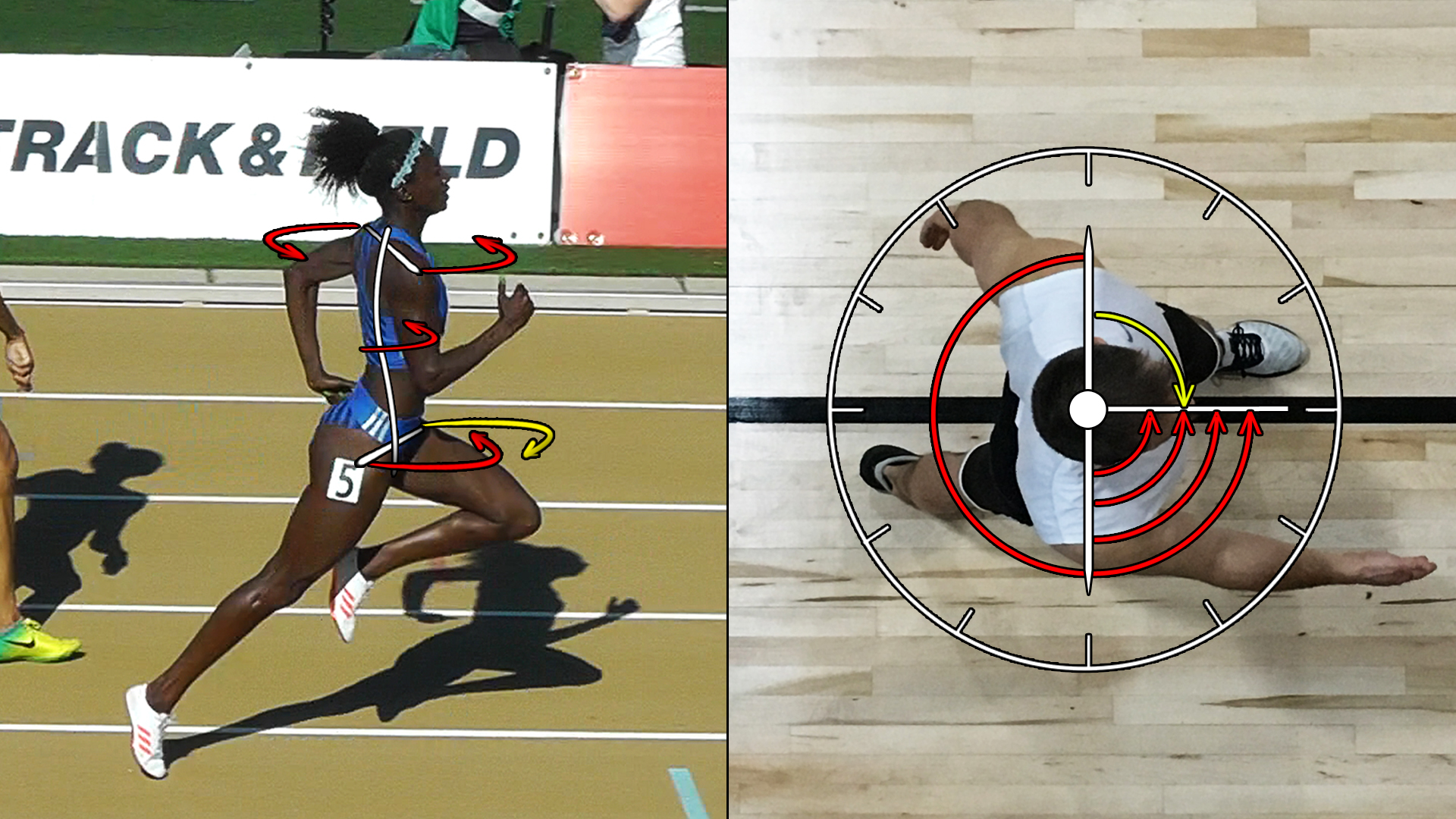
and when I’m finished, I am going to assemble them all into something I call the Ultimate Running Speed Equation. See Figure 9.
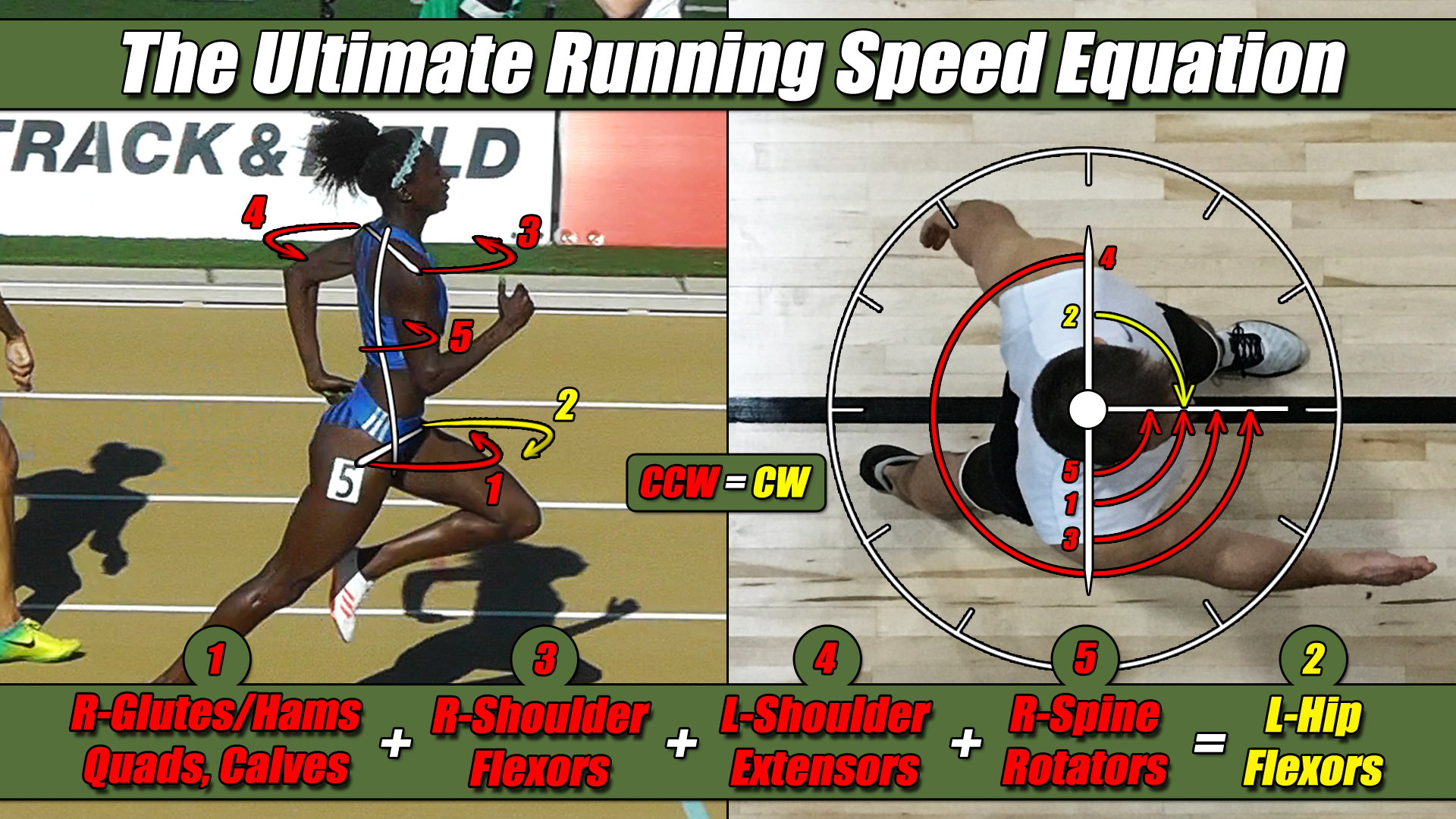
The Ultimate Running Speed Equation
This is an equation that shows how the entire body merges these five rotational forces to create the perfect balance necessary for us to move as fast and efficient as humanly possible.
And finally, what I think is the really cool part of this entire video, is I’m going to show you how to instantly identify this Ultimate Running Speed Equation, this equation of perfect balance in action on some of the best 100m sprinters and middle-distance runners in the United States so that you can get used to seeing, and believing, just how important and powerful these torques really are.
By the time we are finished, you will have become an ultimate running speed equation expert yourself…one who understands that running fast is all about achieving perfect balance in the body, one who understands the need to include a variety of different exercise to achieve this perfect balance, and one who is now more, ready than ever, to take their game to the next level. And this is why I am really, very excited, to make this video.
So, let’s do that quick review of Session #1 like I said I would at the beginning and then immediately afterward we will get this session started.
❓ Frequently Asked Biomechanical Physics Questions
How do mainstream training protocols fail to break past stubborn speed plateaus?
Most standard athletic conditioning routines fall victim to a severe tunnel vision approach to speed. Mainstream coaches treat sprinting like a simple linear equation, focusing entirely on building raw leg mass to increase a straight-line pushing force through the hip joint. This completely ignores the unyielding laws governing your skeleton, leaving the rest of your body’s critical torque networks completely unconditioned and lopsided.
What is the exact role of the pushing engine room in the running process?
Your dominant stance leg is a high-velocity engine designed to detonate your glutes, hamstrings, quadriceps, and calf muscles violently down into the track surface. This massive, high-velocity thrust forcefully propels your hip socket forward past its fixed axis, instantly initiating a massive wave of rotational force or torque around the athlete’s midline.
What exactly is the concept of torque in the body during high-velocity sprinting?
In biomechanics, human locomotion is not a sequence of isolated straight steps. Every single stride splits your body into complex rotational force vectors that travel across your pelvic grid axle. True speed is a violent, high-velocity battle of balancing rotational torque across your pelvis, where multiple opposing forces must fire simultaneously to maintain a net vertical torque equilibrium.
How does the upper body flywheel interact with the lower body engine room?
Your arms and deep torso rotators function as a high-speed upper body flywheel. Working in perfect alliance with your downward stance leg, this flywheel unifies its rotational torque vector directly with the lower body engine room to function as an explosive mechanical multiplier that instantly locks, braces, and anchors the spinal chassis.
Why is looking at an athlete from a side sagittal view a severe mechanical blindspot?
If you only evaluate sprint mechanics from the side, it is virtually impossible to see how your muscle groups interact rotationally. To break free from linear training fallacies, you must evaluate human movement from an overhead axial view. Looking down from above reveals that running is a perfectly balanced rotational battleground.
What is the formal definition of the Ultimate Running Speed Equation?
The Ultimate Running Speed Equation is a definitive biomechanical formula showing how the entire body merges five distinct rotational forces to create perfect balance. It proves that elite velocity requires your pushing leg, chest flexors, shoulder extensors, spine rotators, and airborne swing leg hip flexors to operate in flawless mathematical harmony.
How does the airborne swing-side engine provide rotational counter-torque?
Operating in absolute concurrent solitude completely opposite to your pushing leg sits your airborne swing-side engine—your deep hip flexors. The exact microsecond your foot leaves the ground, these deep winches must violently contract at extreme fast-twitch velocities to whip the heavy, unweighted limb forward through thin air, generating a concentrated wave of opposing torque.
What happens if an athlete builds massive pushing power without upgrading their swing leg counter-forces?
You create a dangerous, lopsided strength balance deficit. Your brain possesses a built-in neurological safety governor designed to protect your skeleton from tearing apart. If your deep hip flexor engine lacks the velocity to counter your pushing leg’s torque, your central nervous system will actively throttle your speed downward, keeping you stuck in first gear.
How can coaches instantly identify the equation of perfect balance in action on competitive sprinters?
By utilizing our specialized clock face alignment to track elite 100m sprinters and middle-distance runners, you can visually trace how their shoulder lines and hip lines rotate around their central axis. Watching how their limbs naturally explode forward proves that running fast is all about achieving perfect balance in the body.
Why does the Athletic Quickness system include a variety of different exercises instead of traditional weight lifting?
Traditional dynamic weight exercises cannot isolate deep pelvic pathways because your body naturally uses forward momentum to bypass your weakest joint angles. Our isometric training strategy combines high-tension resistance bands with specific multi-planar holds to completely strip away momentum, forcing your deep, neglected fast-twitch muscle fibers to instantly wake up and recruit maximum power.
Why do standard high-volume track gassers fail to improve an athlete’s top-end stride frequency?
Standard sprint conditioning loops and repetitive field gassers fail because dynamic movements natively rely on forward momentum. When an athlete sprints under fatigue, the body automatically reorganizes its muscle recruitment patterns to bypass its weakest joint angles. This deepens the lopsided strength balance across your pelvic axle, training your fast-twitch muscle networks to mimic sluggish, slow-twitch endurance traits.
What is the exact difference between a side sagittal view and an overhead axial view in sprint analysis?
Evaluating sprint mechanics from a side sagittal view is a severe mechanical blindspot because it can only track linear forward extensions and simple vertical jumping actions. By contrast, evaluating human locomotion from an overhead axial view exposes the deep, hidden transverse plane. This top-down window reveals that sprinting is an unyielding, continuous battle of balancing rotational torque around your central spine chassis.
How does the central nervous system monitor force-output balance across the body?
Your brain operates as a master safety engineer by utilizing specialized neural pathways to continuously monitor tension across your skeletal transmission. If your lower-body engine room generates massive force, but your brain detects that your core stabilizers lack the contraction velocity to match that load, a protective regulator trips. The central nervous system activates an internal emergency brake, down-regulating your total speed expression to protect your joints from a catastrophic breakdown.
What is the mechanical role of the left and right shoulder rotators in the running process?
Your shoulders function as high-speed upper-body torque equalizers that work in absolute concurrent alliance with your lower limbs. The exact millisecond your right stance leg drives downward to force a counter-clockwise torque wave, your left and right shoulder rotators detonate to force a matching torque vector. This upper-body multiplier anchors the spine, preventing energy leaks and forcing 100% of your power straight down the track line.
Why cannot traditional heavy weight-room squats isolate your deep fast-twitch hip flexion fibers?
Traditional heavy gym lifting completely fails to activate your deep front-side core winches because free weights require dynamic movement through a fixed track plane. Because your body naturally recruits its massive, visible pushing engines to move heavy iron stacks, your deep psoas and iliacus winches remain completely dormant. True fast-twitch neural recruitment requires unweighted isometric holds paired with high-tension resistance bands to completely strip away momentum and isolate the muscle safely.








