Home » Isometric Training for Speed » ISOMETRIC TRAINING FOR SPEED: The Complete System to Run Faster
🧠 Introduction
Most athletes trying to get faster are told the same thing:
👉 get stronger.
So they:
- squat
- deadlift
- sprint
- jump
- train harder
And at first:
👉 that often works.
They become:
- stronger
- more explosive
- more powerful
💥 and sprint speed usually improves too.
But eventually many athletes run into the same frustrating problem:
👉 progress slows down.
Then:
- sprint times stop dropping
- movement starts feeling heavier
- speed becomes harder to maintain
- the body feels stronger…
BUT:
👉 sprinting no longer improves the same way.
That is where AQ believes the sprint problem often changes completely.
Because sprinting faster is not simply about producing more pushing force with the pushing leg.
💥 It is also about whether the rest of the body (arms, torso and swing leg) can continue supporting and balancing that increasingly aggressive pushing movement.
That changes how AQ approaches speed training entirely.
⚡ What AQ Believes Sprinting Actually Is
AQ teaches that sprinting is not:
❌ one leg pushing while the other leg “recovers.”
Instead:
💥 sprinting is a whole-body movement happening simultaneously.
During sprinting:
- the pushing leg aggressively drives backward into the ground
- the arms aggressively support this movement
- the torso rotates to support these force expressions even more
- the opposite swing leg aggressively attacks forward and balances the system
👉 all simultaneously.
That matters.
Because sprint speed depends on more than:
- stronger legs
- bigger muscles
- more force production alone
It also depends on:
👉 how well the entire body can continue supporting aggressive sprint movement together.
That is one of the biggest ideas inside AQ.
🔄 Why Many Athletes Plateau
Many athletes spend years:
- building stronger glutes
- stronger hamstrings
- stronger quads
- stronger calves
💥 developing tremendous pushing strength.
And stronger athletes usually DO have greater sprint potential available.
But eventually:
👉 many athletes stop getting faster.
Not necessarily because:
- they stopped working hard
OR: - they reached their genetic limit
AQ often believes something else may be happening.
Because once sprinting movement becomes aggressive enough:
- the swing leg may not be able to continue attacking as aggressively
- the arms may not be able to continue supporting movement as effectively
- the torso may not be able to continue supporting force transfer as cleanly
- sprint positions may become harder to maintain at high speed
💥 even while pushing strength continues improving.
That is where many speed plateaus quietly begin.
🔥 Hidden Weakness Changes Everything
One of AQ’s biggest beliefs is this:
💥 hidden weakness may quietly limit sprint speed long before athletes realize it.
Especially weaknesses involving:
- swing-leg aggression
- arm support during sprinting
- torso support during force transfer
- maintaining aggressive sprint movement under fatigue
Because those qualities become harder to maintain:
👉 as sprint demands rise.
And honestly:
👉 when was the last time you specifically focused on improving those qualities to help you sprint faster?
Most athletes never do.
That becomes important.
Because weakness that never becomes exposed:
👉 often never gets fully challenged or improved.
And weakness that never improves:
👉 may continue limiting sprint speed.
⚡ Why AQ Uses Isometric Training Differently
AQ uses resistance bands with an isometric training strategy very differently than most athletes expect.
Not simply to:
- create fatigue
- create resistance
- make exercises harder
👉 but to expose hidden weakness during aggressive sprint positions and correct it.
That changes the training demand completely.
Because during aggressive sprint-position holds:
- instability increases
- elastic tension changes
- muscles begin weakening
- shaking often begins appearing
- sprint positions become harder to stabilize
And as this happens:
💥 the body repeatedly attempts to stabilize the sprint position again while support from the system becomes harder to maintain.
That is where:
- weak links become easier to expose
- recruitment demand increases
- aggressive sprint positions become harder to control
AQ teaches that this is often where important sprint adaptation begins.
Because once hidden weakness becomes visible:
👉 it can finally improve.
💥 What Changes When Athletes Start Seeing Sprinting Differently
As athletes begin understanding sprinting differently:
- the pushing leg stops feeling isolated and starts feeling part of a system
- the arms stop feeling accessory and start asserting themselves more forcefully
- the torso stops feeling passive and starts feeling actively involved in sprint movement
- the swing leg stops feeling like “recovery” and starts feeling like a major thrusting force
- balance becomes mechanically important and strength balance overall raises speed threshold
- simultaneity becomes easier to picture
That changes how athletes begin training sprinting.
And once athletes begin training sprinting this way:
💥 hidden weaknesses often become easier to expose and improve.
Sometimes:
👉 much faster than athletes expect.
AQ often teaches that these changes may begin improving within weeks…
not necessarily months and months.
🔄 Why Some Athletes Improve Faster Than Expected
This is where many athletes become surprised.
Sometimes:
👉 speed improvements begin happening very quickly.
Why?
Because the athlete may not have needed:
- more effort
- more conditioning
- more training volume
Sometimes:
💥 they simply needed hidden sprint weaknesses exposed and improved.
That changes everything.
Because once the body becomes better at:
- supporting aggressive sprint movement
- balancing pushing force
- maintaining sprint positions
- continuing movement under rising demand
👉 sprint speed often starts improving again.
And many athletes describe the experience similarly:
- sprinting feels lighter
- movement feels faster
- speed feels easier to maintain
- the body feels more explosive
- movement feels more aggressive and responsive
That is one reason AQ approaches sprint training very differently than traditional speed systems.
🚀 What This Means For You
If you want to get faster…
do not just ask:
👉 “How do I produce more force?”
Also ask:
👉 can the entire body continue supporting and balancing higher levels of aggressive sprint movement?
Because sprint speed depends on more than stronger pushing force alone.
💥 The pushing leg must continue driving aggressively backward while the arms, torso, and opposite swing leg continue supporting aggressive sprint movement simultaneously.
That is where many athletes begin realizing:
👉 becoming stronger and becoming faster are not automatically the same thing.
And that is where AQ believes isometric training for speed may add something very different.
🧭 You Are Here (Within The AQ Speed Training System)
You are currently exploring:
👉 ISOMETRIC TRAINING FOR SPEED: The Complete System to Run Faster: how AQ combines hidden weakness exposure, aggressive sprint-position training, instability, elastic tension, and whole-body sprint support into one connected speed-development system.
🌐 How This Fits Into The AQ Speed Training System:
The Isometric Training For Speed category focuses on: hidden weakness exposure, instability training, elastic tension, aggressive sprint-position support, and improving sprint performance through AQ’s resistance-band isometric methodology.
🪜 Continue Deeper Into Isometric Training For Speed:
Learn why athletes often stop improving speed once different parts of the body stop supporting aggressive sprint movement together.
➡️ Why You Hit A Training Plateau (And How To Fix It For Speed)
Learn why AQ uses instability, fatigue, elastic tension, and aggressive sprint positions differently than traditional speed training.
➡️ ISOMETRIC TRAINING FOR SPEED: Why AQ Uses It Differently
Learn why the swing leg can become one of the most important speed-limiting factors during sprinting.
➡️ Why Hip Flexor Strength Matters More For Speed Than Most Athletes Realize
🚀 Ready To Run Faster?
If you are ready to turn this information into real speed:
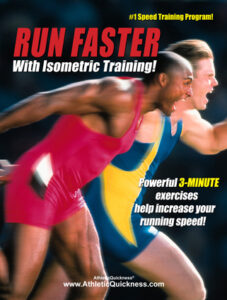
➡️ Run Faster With Isometric Training
❓Frequently Asked Questions
What is isometric training for speed?
AQ uses isometric training to challenge aggressive sprint positions underneath elastic tension while exposing hidden weakness that may limit sprint speed.
How is AQ different from traditional speed training?
AQ focuses heavily on:
- whole-body sprint support
- hidden weakness exposure
- simultaneous sprint movement
- balance during aggressive movement
- maintaining sprint positions under rising demand
Can athletes get stronger without getting faster?
Yes.
AQ teaches that stronger pushing force alone does not automatically guarantee the rest of the body can continue supporting aggressive sprint movement effectively.
Why does AQ use resistance bands?
AQ uses resistance bands because elastic tension creates instability, changing sprint-position demands, and hidden weakness exposure that traditional resistance often does not challenge the same way.
Why do AQ athletes sometimes improve quickly?
AQ often believes many athletes already possess untapped sprint potential but have hidden limitations preventing the body from fully expressing it during aggressive sprint movement.