Home » Resistance Bands for Speed » Resistance Band Exercises for Speed: Using Isometric Training for Better Results
Most athletes use resistance bands
👉 But very few actually get faster from them
💥 Not because bands don’t work
👉 but because of how they’re used
Most people train them like weights
👉 repetitions
👉 movement
👉 going through the motion
👉 That can help strength
👉 but it doesn’t always translate to speed
👉 To understand why this happens:
➡️ Isometric Training With Resistance Bands: Why It Works
⚡ What Makes Resistance Bands Different
Resistance bands have a unique property:
👉 the more they stretch
👉 the more resistance they create
👉 This is often called variable resistance
Unlike weights:
- resistance can come from any direction
- tension changes with movement
- the demand on your muscles is constantly shifting
👉 Even though they look simple
👉 they can create very high levels of resistance
🧠 Why Positioning Matters for Speed
One of the biggest advantages of bands is:
👉 positioning
With bands, you can:
- train at different angles
- target specific positions
- match real athletic movement
👉 This matters because running is not:
👉 straight up and down
👉 It’s dynamic
👉 constantly changing
💥 So your training should reflect that
🚨 Why Most Band Exercises Don’t Improve Speed
Most athletes make one key mistake:
👉 they use bands like weights
Here’s what happens:
- early in the movement → low resistance
- later in the movement → high resistance
- strongest positions get the most load
👉 But those positions are not always where speed is created
👉 So you end up training:
👉 movement
👉 but not the parts that matter most
💥 That’s why progress often feels limited
🔄 A More Effective Approach
Instead of repetitions
👉 use isometric holds
This means:
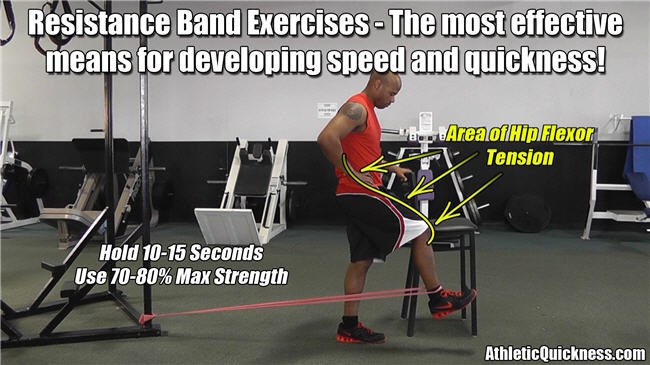
- stretch the band into position
- hold for 10–15 seconds
- use about 70–80% effort
👉 This allows you to train:
- specific positions
- different points in the movement
- areas that are often missed
👉 For a deeper breakdown of this method:
➡️ Isometric Training for Speed
🔬 What’s Really Happening During the Hold
Even though the position looks still
👉 your body is constantly adjusting
There are always:
- small shifts
- changes in tension
- subtle corrections
👉 As fatigue builds:
👉 these become more noticeable
- the band length changes
- resistance shifts
- your body must react
👉 You correct
👉 stabilize
👉 re-engage
💥 This creates a dynamic response inside a static position
⚡ Where the Real Training Happens
During the hold:
- muscles may begin to shake
- control becomes inconsistent
- coordination is challenged
👉 This is not a problem
👉 it’s part of the process
Because now:
- weaknesses are exposed
- adjustments are required
- your system is fully engaged
👉 This is where adaptation begins
🧠 Why This Improves Speed
Speed is not just about strength
👉 It’s about how quickly your body can:
- respond
- adjust
- coordinate movement
👉 This type of training helps develop:
- responsiveness
- coordination
- control under changing conditions
👉 Over time:
👉 it helps raise the level of strength balance across your system
👉 which is what allows speed to improve
👉 To see how this connects to running:
➡️ Running Mechanics Explained: The System That Makes You Faster
🔄 What to Focus On
To get the most out of this training:
👉 focus on positions that matter for speed
Examples include:
- hip flexor positions (swing phase)
- arm drive positions
- split stance positions (acceleration)
- rotational positions
👉 These reflect how your body actually moves
🧠 What Athletes Often Notice
When this type of training is applied:
👉 movement starts to feel different
- more responsive
- more controlled
- less “heavy”
👉 Instead of forcing speed
👉 it begins to show up more naturally
🔗 Where to Go Next
👉 Why Use Resistance Bands With Isometric Training for Speed
➡️ Best Resistance Bands for Speed Training
🚀 What This Means for You
If you’re using resistance bands:
❌ don’t just rely on repetitions
✅ use them to challenge:
- control
- coordination
- responsiveness
👉 That’s where the real benefit comes from
❓ Frequently Asked Questions
What are the best resistance band exercises for speed?
Exercises that use isometric holds in sport-specific positions tend to be most effective.
Why are isometric holds better than reps for speed?
They create constant adjustments in resistance, which challenges coordination and responsiveness.
How long should I hold each position?
10–15 seconds at a high effort level.
🔥 Final Thought
It’s not just about which exercises you choose
👉 it’s how you perform them
👉 Small changes in position and tension
👉 can completely change the result
💥 And that’s where real improvement begins