
Home » Running Muscles for Speed » Shoulder Flexor Muscles For Running Speed: Arm Drive, Rotation, And Coordination
Introduction
Shoulder flexor muscles for running speed are one of the most overlooked parts of athletic performance.
Most athletes focus almost entirely on the legs…
👉 but running is a full-body movement.
👉 And your arms play a critical role in:
- balance
- coordination
- force transfer
👉 If your upper body isn’t working properly…
👉 your speed will be limited—no matter how strong your legs are.
🧠 What the Shoulder Flexor Muscles Actually Do
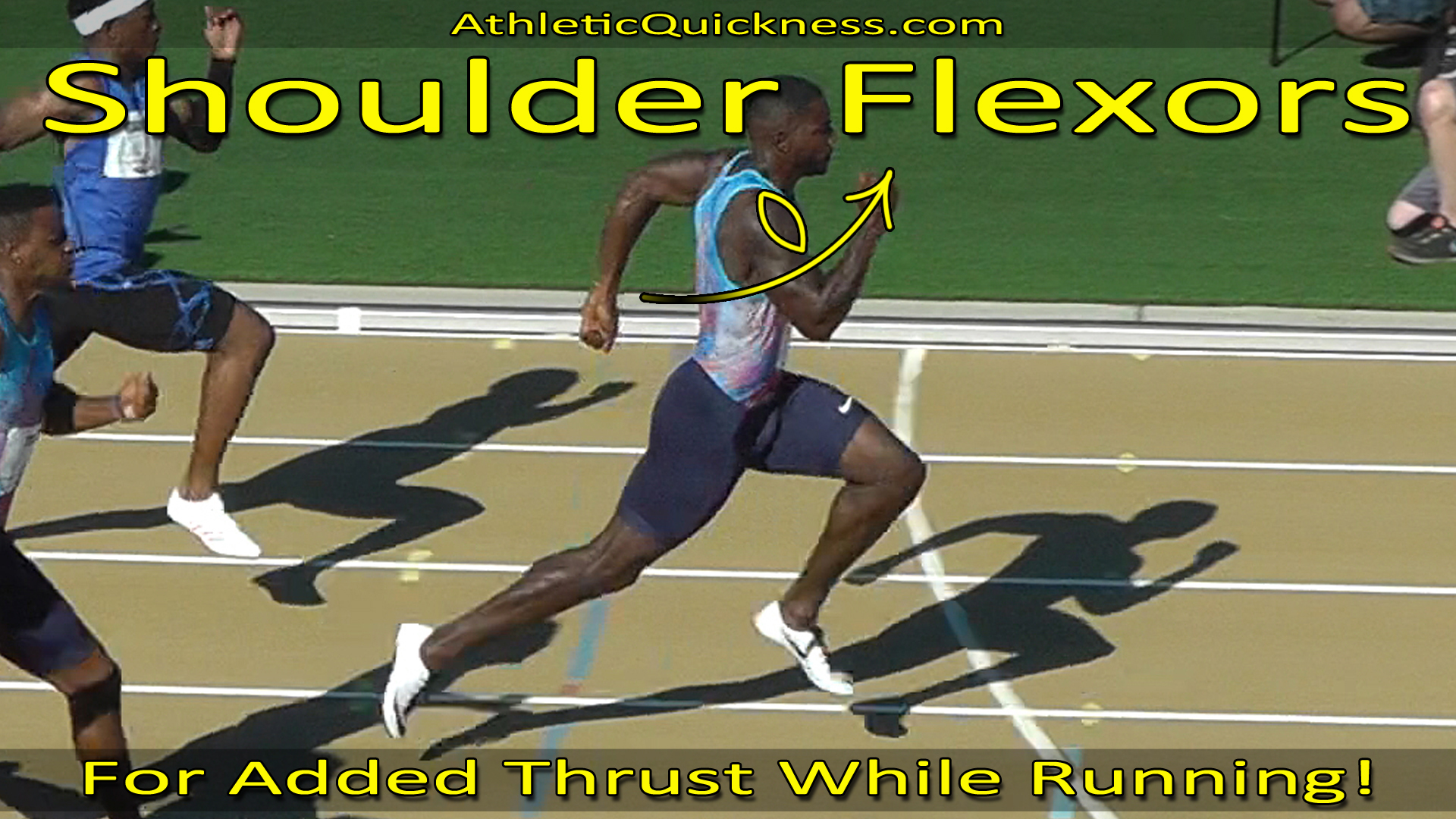
The shoulder flexor muscles are responsible for lifting your arm forward.
👉 This includes muscles like:
- anterior deltoid
- pectoralis major
- biceps brachii
- coracobrachialis
👉 During running, these muscles drive the forward motion of the arms.
👉 And this matters more than most athletes realize.
⚡ How Arm Drive Impacts Running Speed
When you run, your arms and legs move in coordination.
👉 As one leg drives forward…
👉 the opposite arm moves forward.
👉 This creates:
👉 balance and rhythm throughout the body
👉 But even more importantly:
👉 it contributes to rotational movement
👉 To understand how rotation affects speed, see:
The Ultimate Running Speed Equation
🔄 The Overlooked Role of Rotation
Every movement in running includes a rotational component.
👉 Your arms don’t just move forward and backward…
👉 they help control rotation throughout the body.
👉 When your shoulder flexors are working properly:
- movement becomes smoother
- coordination improves
- energy is transferred efficiently
👉 When they are not:
- balance is disrupted
- timing breaks down
- speed decreases
🧩 How Shoulder Flexors Fit Into the Speed System
The shoulder flexors work as part of a full-body system involving:
- hip flexors (leg recovery)
- glutes (force production)
- core (stability and rotation)
👉 When this system is synchronized:
- movement becomes efficient
- force is transferred properly
- speed improves naturally
👉 When it’s not:
- energy is wasted
- movement becomes disconnected
- performance suffers
⚠️ Why Most Athletes Undertrain the Upper Body for Speed
Most training programs focus on:
- legs
- strength
- power
👉 And while those are important…
👉 they ignore how the upper body contributes to speed.
👉 This leads to:
- poor coordination
- inefficient movement
- limited performance
🏃♂️ Shoulder Flexors And Jumping Performance
The arms also play a major role in jumping.
👉 When you jump, your arms move upward while your legs push off the ground.
👉 This creates a combined force that improves:
- height
- power
- efficiency
👉 Without proper arm drive:
- jump height decreases
- coordination suffers
👉 This is a clear example of how upper and lower body must work together.
🚀 How To Train Shoulder Flexor Muscles For Speed
To improve speed, the shoulder flexors must be trained as part of a coordinated system.
👉 This includes:
- proper arm mechanics
- timing with leg movement
- coordination with the rest of the body
👉 This is where isometric training with resistance bands becomes highly effective.
👉 It allows you to train:
- coordination
- stability
- movement patterns
👉 To learn how to apply this method, see:
Isometric Training for Speed
🏁 Conclusion
Shoulder flexor muscles are essential for running speed—but not because they generate massive force.
👉 They help coordinate movement across the entire body.
👉 And that coordination is what allows speed to happen.
👉 Train your upper body as part of a complete system…
👉 and your performance will improve.
❓ Frequently Asked Questions
Do arm muscles help you run faster?
Yes, arm movement helps maintain balance, coordination, and rhythm, all of which are essential for running speed.
What do shoulder flexors do in running?
They drive the forward motion of the arms, helping coordinate movement with the legs.
Does arm swing affect sprinting speed?
Yes, proper arm swing improves coordination and helps maintain efficient movement patterns.
Can weak arms slow you down when running?
Yes, weak or poorly coordinated arm movement can disrupt balance and reduce running efficiency.
How should I train my arms for running speed?
Focus on coordination, timing, and movement patterns—not just strength training.