
Home » How to Run Faster » Why NFL Prospects Get Stronger… But Not Faster (The 40-Yard Dash Problem)
🧠 Introduction
Every year at the NFL Combine…
👉 the same thing happens
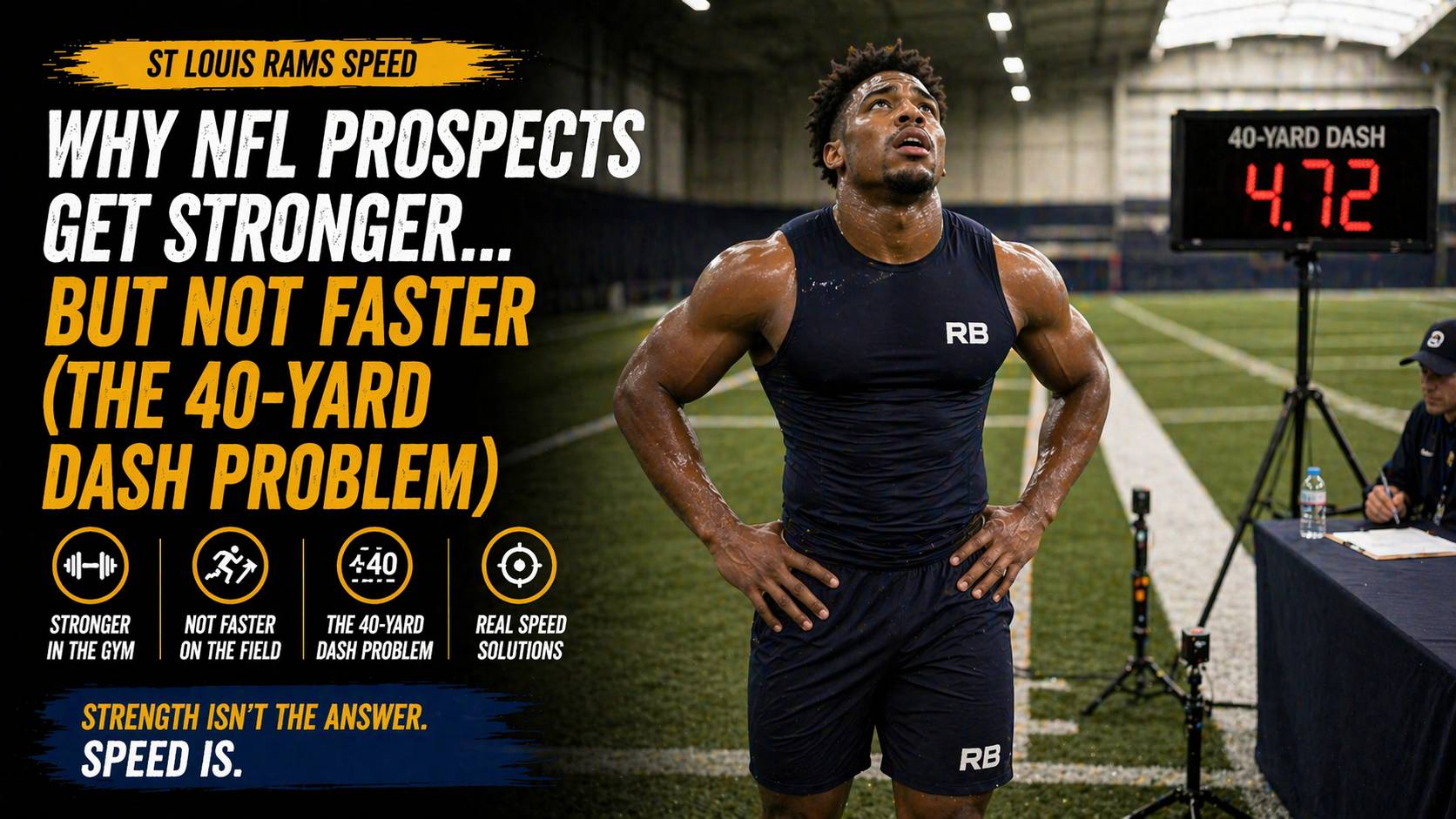
Elite athletes—stronger and more prepared than ever—step up to run the 40-yard dash
👉 expecting their best performance
👉 And every year…
👉 some of them don’t deliver
Despite:
• elite coaching
• structured programs
• months of preparation
👉 their speed doesn’t improve
👉 and sometimes… it gets worse
💥 That’s not random
⚠️ The Pattern Most People Miss
These athletes didn’t fail because:
• they didn’t work hard
• they didn’t train
• they weren’t strong enough
👉 In fact:
• they got stronger
• they improved conditioning
• they followed top-level programs
💥 And still… their speed didn’t improve
👉 That’s the pattern
➡️ Why Most Speed Training Programs Don’t Work
🧠 What This Actually Shows
At the highest level:
👉 strength is not the limiting factor
Because if it were…
👉 getting stronger would consistently improve speed
💥 But it doesn’t
👉 Which means something else is limiting performance
⚙️ Where the Breakdown Happens
Most combine prep heavily develops:
• push-phase muscles
• strength
• conditioning
👉 But under-develops:
• how quickly the leg cycles
• how efficiently movement connects
• how the system responds
👉 So the system becomes unbalanced
💥 And when that happens:
👉 speed stalls—or even declines
➡️ How to Increase Stride Rate
⚖️ The Real Issue Isn’t Effort
These are elite athletes
👉 effort is not the problem
👉 programming is not random
💥 Yet results still don’t match expectations
👉 That tells you something important:
👉 the limitation is built into the approach
🔄 What This Means for You
If it happens at the highest level…
👉 it can happen to anyone
👉 including you
💥 Which means:
👉 if you’re not getting faster
👉 it’s not because you’re not trying hard enough
👉 it’s because something is being missed
➡️ Why You’re Not Getting Faster
⚡ The Key Takeaway
Getting stronger does not guarantee speed
👉 Following a structured program does not guarantee results
💥 Because speed is not just about:
• force
• effort
• repetition
👉 It depends on how your system performs
🏁 Conclusion
The NFL Combine exposes something most athletes never see:
👉 you can do everything “right”
👉 and still not get faster
💥 Not because of effort
👉 but because of what your training leaves out
🔗 Continue Here
👉 If strength isn’t your limitation, here’s what actually is:
➡️ How to Run Faster When Strength Isn’t the Problem
🧭 Go Deeper
👉 See what actually limits speed beyond strength:
➡️ How Coordination Affects Running Speed
🎯 Start Here
👉 If strength isn’t the issue—even at the highest level—
👉 this is what actually changes how your system performs
➡️ Run Faster With Isometric Training
❓ Frequently Asked Questions
Why do NFL players sometimes get slower after training?
Because training often improves strength but not how their system performs
Does getting stronger guarantee a better 40 time?
No—strength must be applied efficiently to improve speed
Why doesn’t combine training always work?
Because it can overemphasize certain qualities while neglecting others
What limits speed at the highest level?
How efficiently the body moves, coordinates, and cycles
What should athletes focus on instead?
Improving how their system responds—not just how much force they produce