
Home » How to Run Faster » Why Most Speed Training Programs Don’t Work
🧠 Introduction
Have you ever finished a speed program…
looked back after eight or twelve weeks…
and realized…
you weren’t actually any faster?
You’re not the only athlete who’s experienced that.
💥 The question isn’t whether the program made you work hard.
The question is whether it was developing the things that actually limit running speed.
➡️ How to Run Faster: The Complete Guide
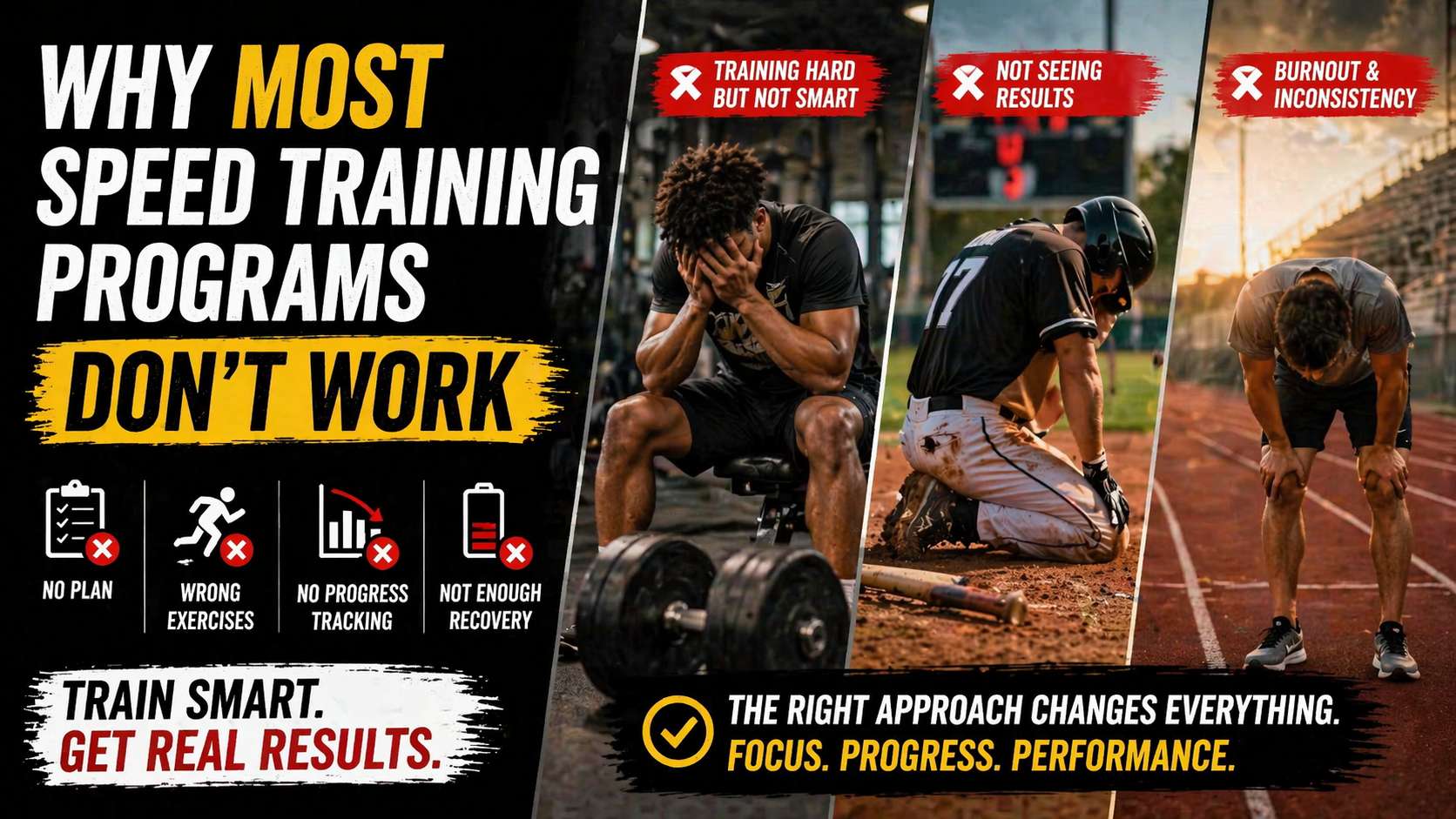
⚠️ The Real Problem With Most Programs
Most speed programs focus on:
• strength
• power
• repetition
👉 These can improve fitness
👉 but they don’t guarantee speed
💥 Because speed isn’t built from parts
👉 it’s built from how the system works together
🔄 Where Programs Fall Short
Most programs train:
• what happens on the ground
• force production
• visible strength
👉 But they under-develop:
• how the leg cycles
• how phases connect
• how the body coordinates
💥 So the system improves unevenly
👉 and speed stalls
⚖️ The Real Issue: Incomplete Development
Programs often improve:
• strength
• conditioning
• movement repetition
👉 But neglect:
• coordination
• timing
• muscle response
👉 These are what determine speed
💥 This is why athletes:
• train hard
• follow the plan
👉 and still don’t improve
➡️ How Coordination Affects Running Speed
⚡ Why Repetition Isn’t Enough
Repetition builds familiarity
👉 but speed requires adaptability
If your training is always:
• controlled
• predictable
• repetitive
👉 your body adapts to that environment
💥 But running requires:
• instant response
• constant adjustment
• real-time coordination
👉 That gap is where speed is lost
🧠 What’s Actually Missing
To improve speed, your training must develop:
• muscle response
• coordination
• system balance
👉 Not just effort
💥 This is where most programs fail
🔄 Why This Leads to Plateaus
When the same patterns repeat:
• the same muscles dominate
• the same limitations stay in place
👉 The system doesn’t change
👉 so speed doesn’t change
💥 This is why many athletes plateau
➡️ Why You’re Not Getting Faster
⚡ What Actually Works
Speed improves when training:
• exposes weak links
• forces coordination
• challenges the system
• requires adjustment
👉 Not just repetition
💥 This is what allows development to transfer into performance
➡️ Best Training Methods for Speed
🚀 The Question AQ Eventually Started Asking
Most speed programs ask:
How can we make athletes stronger?
AQ eventually began asking a different question.
Which muscles are doing most of the work…
and which ones are quietly falling behind?
That single question changed how AQ looked at speed training.
Because once you begin identifying the muscles that aren’t contributing enough…
you stop simply working harder.
You begin training differently.
🔗 Go Deeper
👉 If your training feels disconnected, this is how to organize it properly:
➡️ How to Combine Strength and Speed Training
🎯 Start Here
👉 If your training hasn’t been working, the issue usually isn’t effort—
👉 it’s how everything is being put together
👉 This is where you apply it the right way
➡️ Run Faster With Isometric Training
❓ Frequently Asked Questions
Why don’t most speed training programs work?
Because they focus on strength and repetition but neglect coordination and system balance
Is repetition bad for speed training?
No—but it’s not enough on its own to improve speed
What is missing from most programs?
Coordination, timing, and how the body responds under movement
Why do I train hard but not get faster?
Because effort alone doesn’t improve how your system functions
What type of training improves speed the most?
Training that develops coordination, response, and full-system movement