

Discover why traditional high-volume endurance training loops fail competitive sprinters and middle-distance runners looking to protect their late-race velocity. Learn how long cardio work forces fast-twitch fibers to take on slow-twitch traits.
Speed Training Science

If you want to get faster, you’ve probably tried:
- lifting weights
- sprint drills
- conditioning programs
👉 And while those can help…
👉 many athletes still don’t see the speed gains they expect
💥 That’s because speed is not just about effort
👉 it’s about how your body produces, organizes, and applies force
This category breaks down the science behind speed training, so you can understand:
- why some methods work
- why others don’t
- and what actually improves performance
👉 If you want a complete system for applying this:
➡️ How to Run Faster: The Complete Guide to Speed, Power and Performance
⚡ What Actually Determines Speed
Speed is not just about:
- strength
- muscle size
- effort
👉 It depends on:
- contraction speed
- coordination
- timing
- how force is transferred through the body
💥 This is how your body turns strength into speed
👉 Start here to understand the full system:
➡️ Speed Training Science: Why Most Methods Fail (And What Actually Works)
🧠 Why Most Training Doesn’t Improve Speed
Many programs focus on:
- strength
- endurance
- repetition
👉 These build a foundation
💥 But they don’t always improve how your body uses that strength
👉 Learn why this happens:
➡️ Why Traditional Training Can Make You Stronger—But Not Always Faster
⚖️ Strength vs Speed (The Missing Link)
Getting stronger helps
👉 but speed depends on how quickly and efficiently that strength is applied
💥 Not just how much you have
👉 Learn why more muscle doesn’t always mean more speed:
➡️ Why Getting Bigger Can Actually Make You Slower (The Science Explained)
⚡ The Role of Muscle and Contraction
Speed is driven by:
- fast twitch muscle fibers
- rapid muscle contractions
- efficient coordination
👉 But these must be trained the right way
👉 Learn how:
➡️ How to Train Fast Twitch Muscle Fibers for Speed (Without Adding Bulk)
➡️ Muscle Contractions Explained (And How They Impact Running Speed)
🔄 How Force Becomes Movement
Producing force is only the first step
👉 it must be transferred through the body
💥 This is where many athletes lose speed
👉 Learn how this works:
➡️ How Torque Through The Hips Creates Speed, Power, and Athletic Performance
🔬 How to Train for Speed (Not Just Strength)
To improve speed, your training must develop:
- coordination
- timing
- responsiveness
- system efficiency
💥 Not just strength
👉 Learn what makes speed training effective:
➡️ Why This Type of Speed Training Works (The Science Behind It)
🔗 From Science to Performance
Understanding the science is one step
👉 applying it is what creates results
👉 See how this connects to real movement:
➡️ Running Mechanics Explained: The System That Makes You Faster
👉 And how to apply it in training:
➡️ Isometric Training for Speed: The Complete System to Run Faster
🚀 Ready to Get Faster?
If you’re serious about improving your speed:
❌ don’t just train harder
✅ train smarter
👉 Start with the science
👉 then apply it with the right system
The Sloth vs. The Olympian Gravity Equalizer | Stride Physics
Introduction To understand why traditional high-volume track laps and generic stride-rate advice completely fail to break your speed plateaus, you have to look past superficial sideline lore and look at the unyielding engineering laws of gravity. University research mainframes spent decades tracking elite sprinters on motorized treadmill belts only to emerge with a startling, highly over-complicated […]
The Elastic Recoil Fallacy: Restoring Pelvic Torque Equilibrium to Bypass the Neurological Governor and Unlock Stride Turn Over Velocity
University treadmill data fails real-world sprinters because motorized belts hide the unyielding engineering laws of human locomotion. On solid ground, your stance leg drives downward past a fixed pivot point, generating a massive wave of pelvic torque that your upper body must actively multiply and amplify. Because a treadmill belt forcefully slides beneath your feet, it completely deletes your true pelvic torque requirements, leaving your deep, flat hip winches completely unrecognized for the vital role they play in human locomotion.
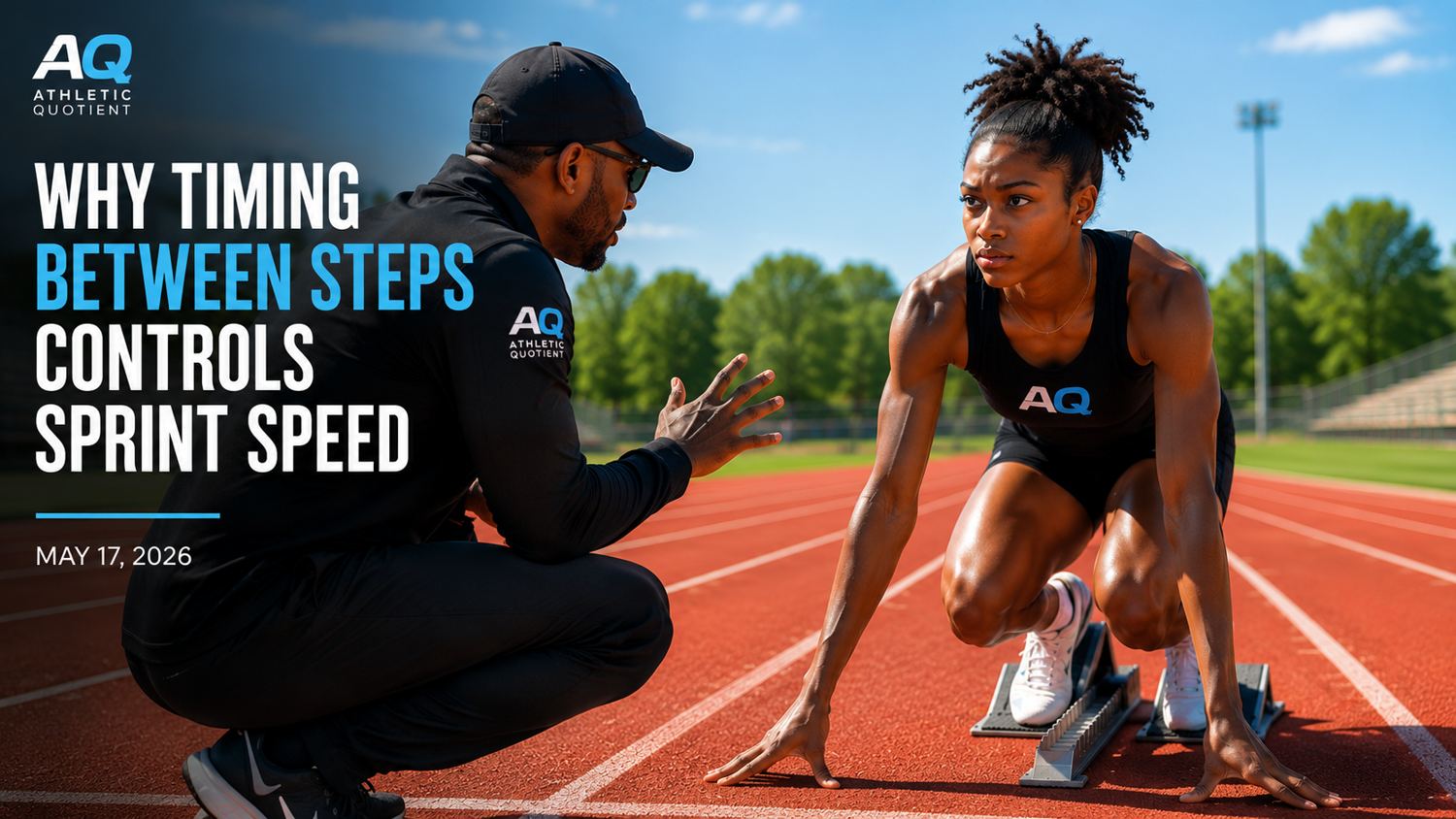
Why Timing Between Steps Controls Sprint Speed
**Excerpt:**
Many athletes think sprint speed mainly depends on pushing harder into the ground. AQ explains why faster sprinting depends heavily on how quickly the sprint movement can reorganize itself between steps.
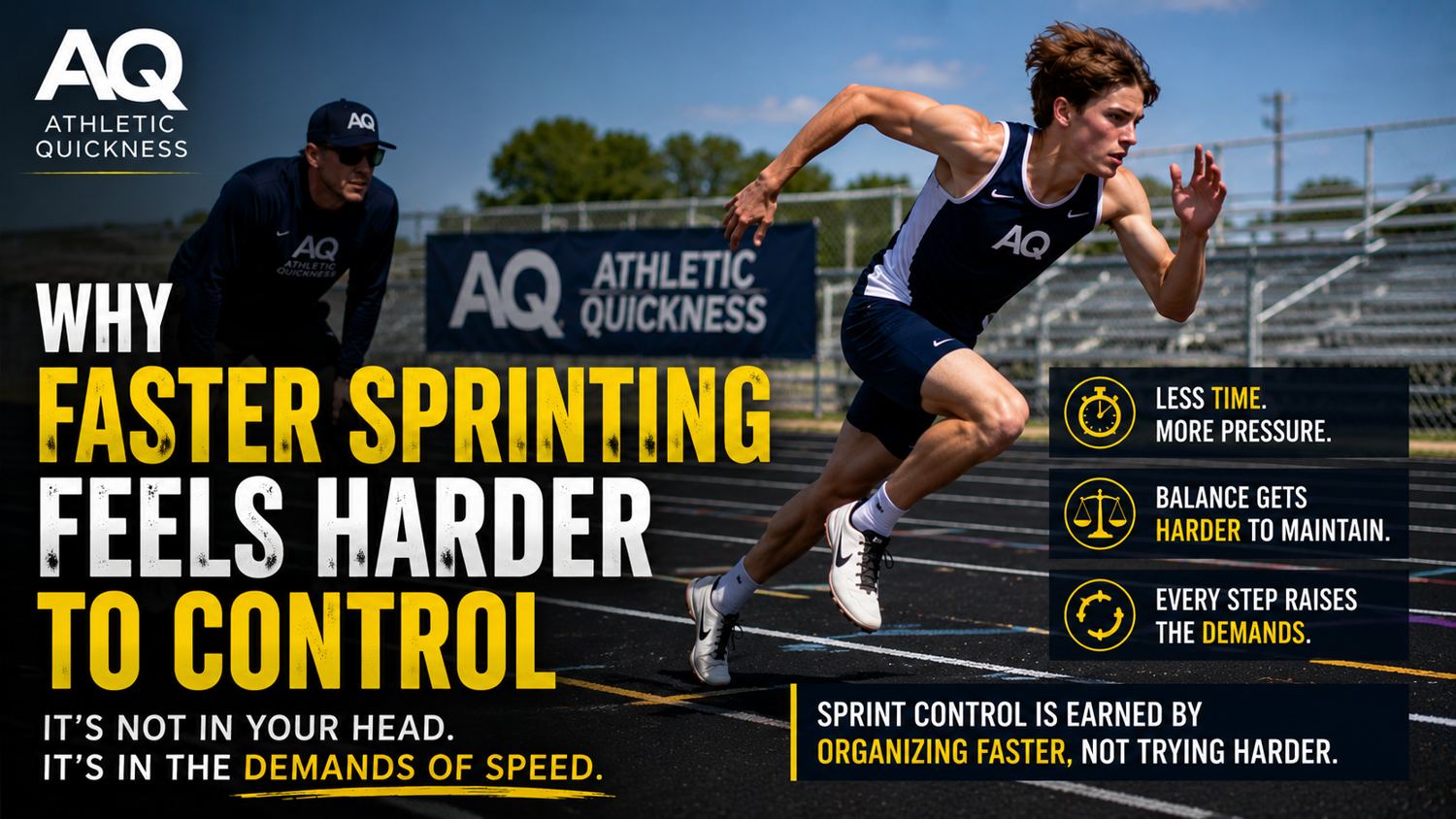
Why Faster Sprinting Feels Harder To Control
**Excerpt:**
Many athletes feel smooth at lower speeds but rushed and restricted at top speed. AQ explains why faster sprinting creates greater timing and balance demands across the entire sprint movement.

Why Running Form Breaks Down At Higher Speeds
**Excerpt:**
Many athletes think running form breaks down at higher speeds because of poor technique or lack of relaxation. AQ explains why sprint mechanics often tighten as force and balance demands rise throughout the body during sprinting.
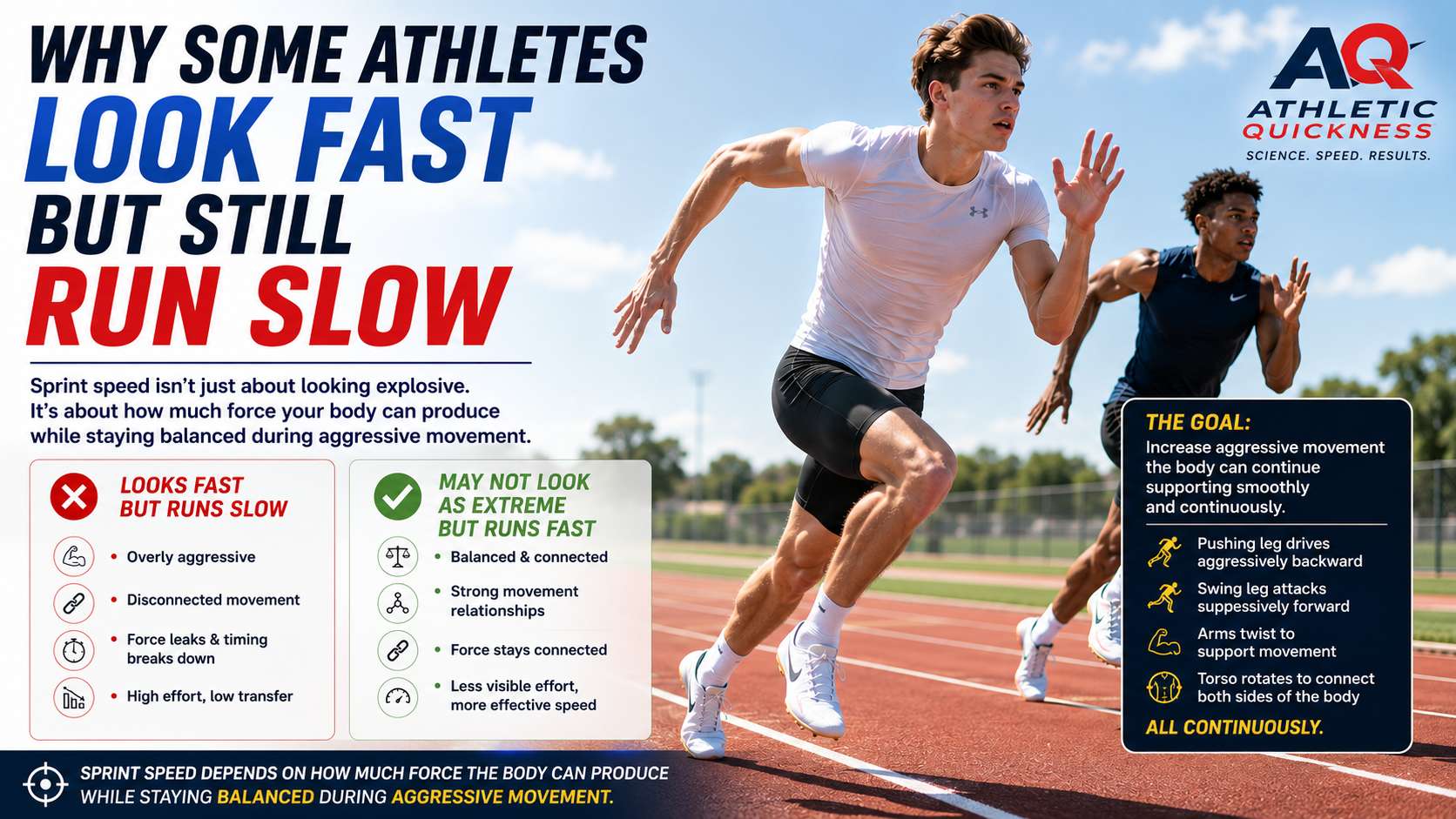
Why Some Athletes Look Fast But Still Run Slow
Some athletes look explosive and aggressive while sprinting but still struggle to create real separation. This article explains why sprint speed depends on how much force the body can produce while staying balanced during aggressive movement — not just visible effort or explosiveness.
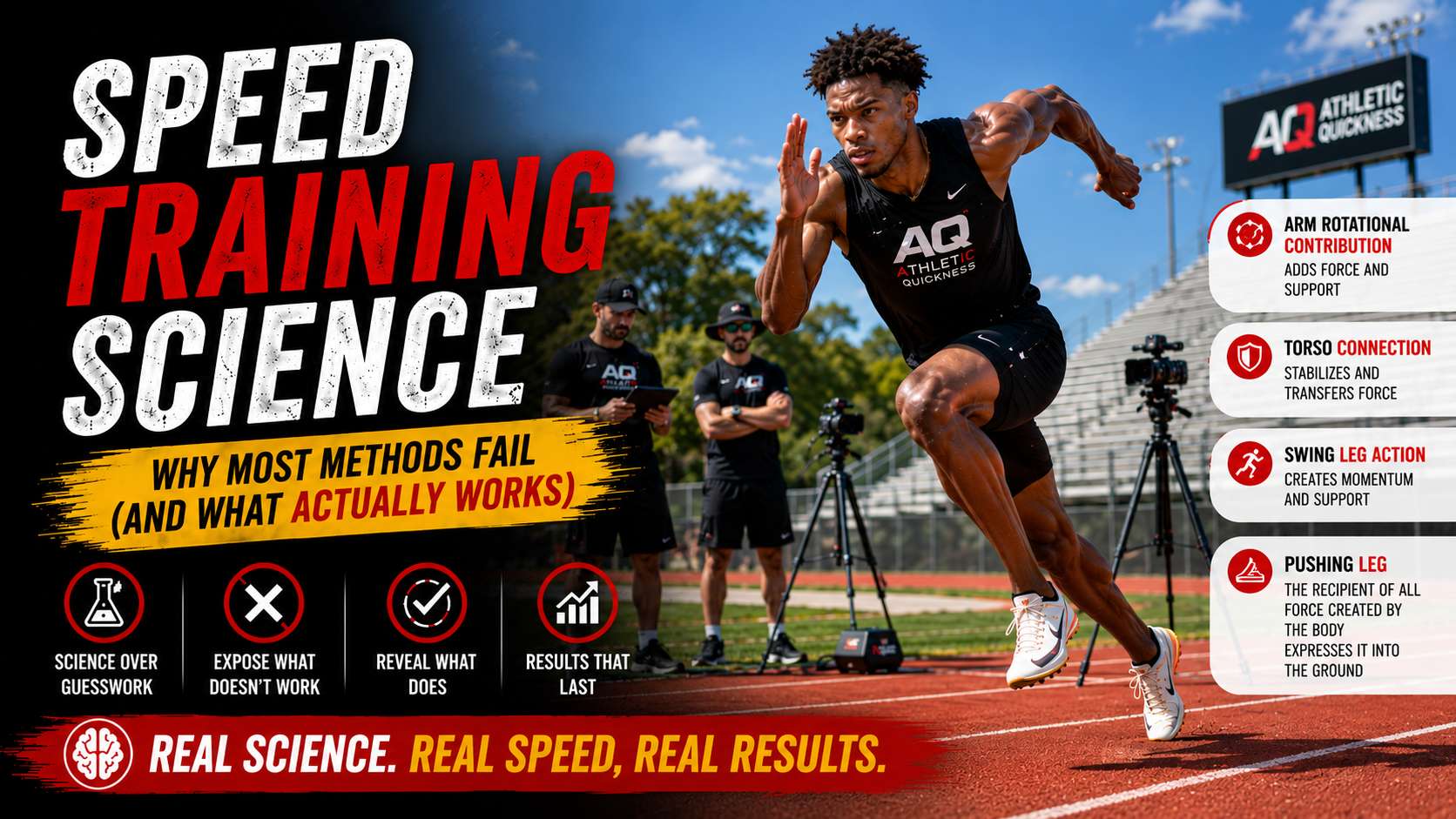
SPEED TRAINING SCIENCE: Why Most Methods Fail (And What Actually Works)
Most athletes train hard but don’t get faster. This article explains the science behind speed training, including muscle contraction, fast twitch fibers, and why traditional methods often fail to improve speed.
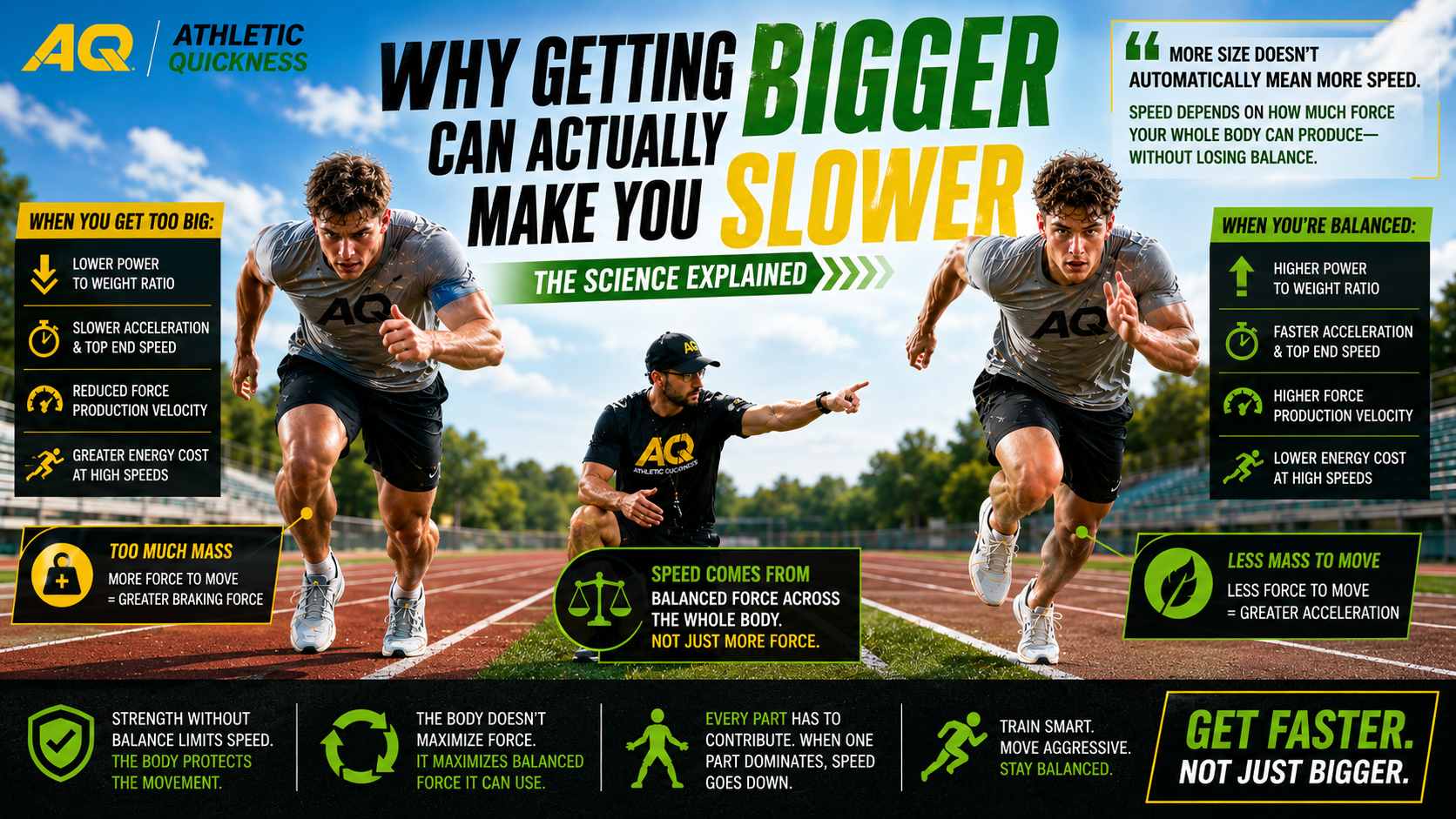
Why Getting Bigger Can Actually Make You Slower (The Science Explained)
Many athletes believe getting bigger will make them faster—but that’s not always true. Learn how hypertrophy affects muscle function, contraction speed, and why size alone doesn’t translate into real performance.
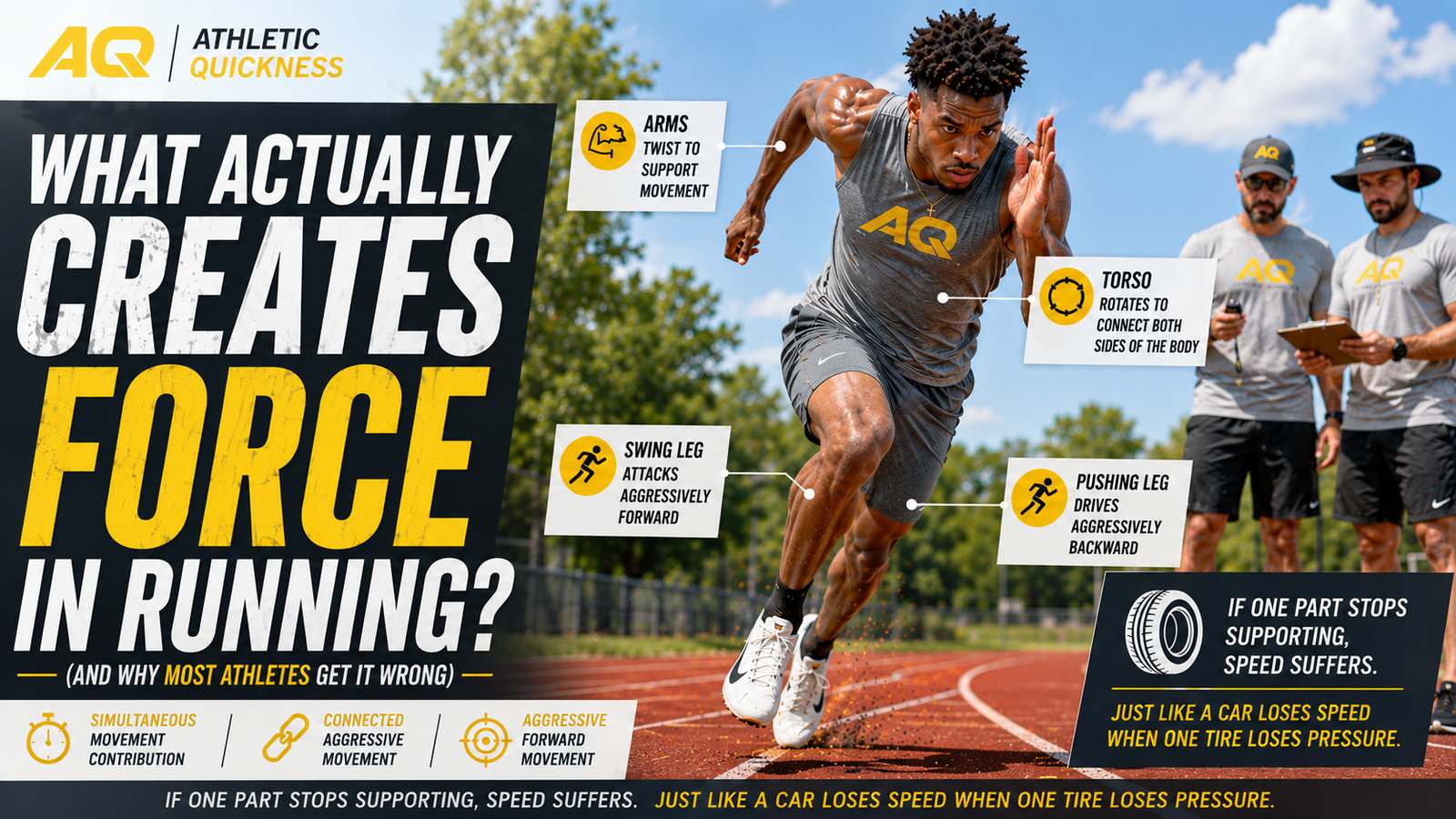
What Actually Creates Force in Running? (And Why Most Athletes Get It Wrong)
Force is one of the most misunderstood aspects of running. Many athletes think strength alone creates speed, but force depends on how your system applies and transfers energy. Learn what actually creates force in running and how to improve it.
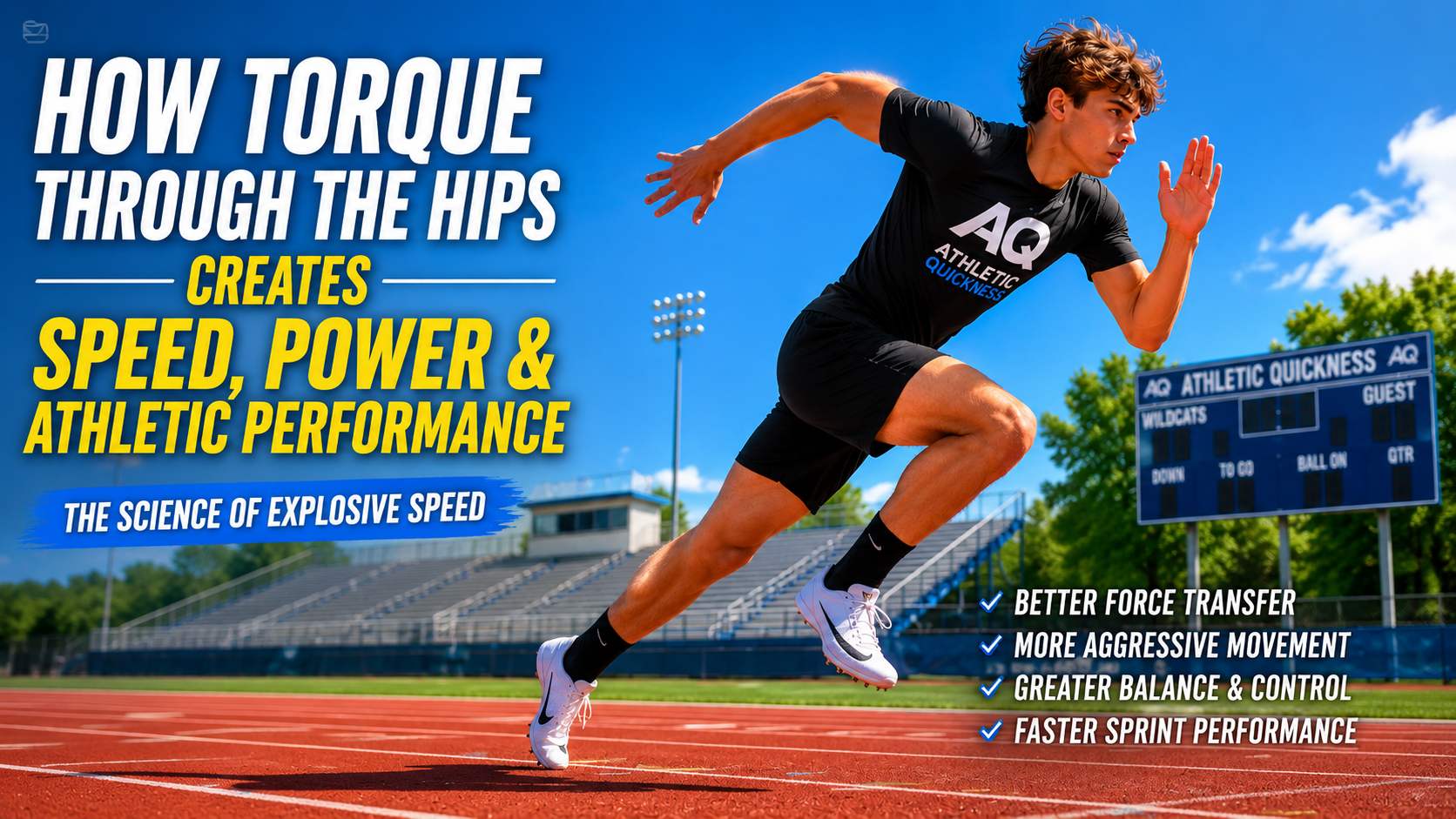
How Torque Through The Hips Creates Speed, Power, and Athletic Performance
Torque is one of the most overlooked drivers of speed. Learn how the body organizes and transfers force through the hips to support aggressive movement, sprint timing, and powerful athletic performance.
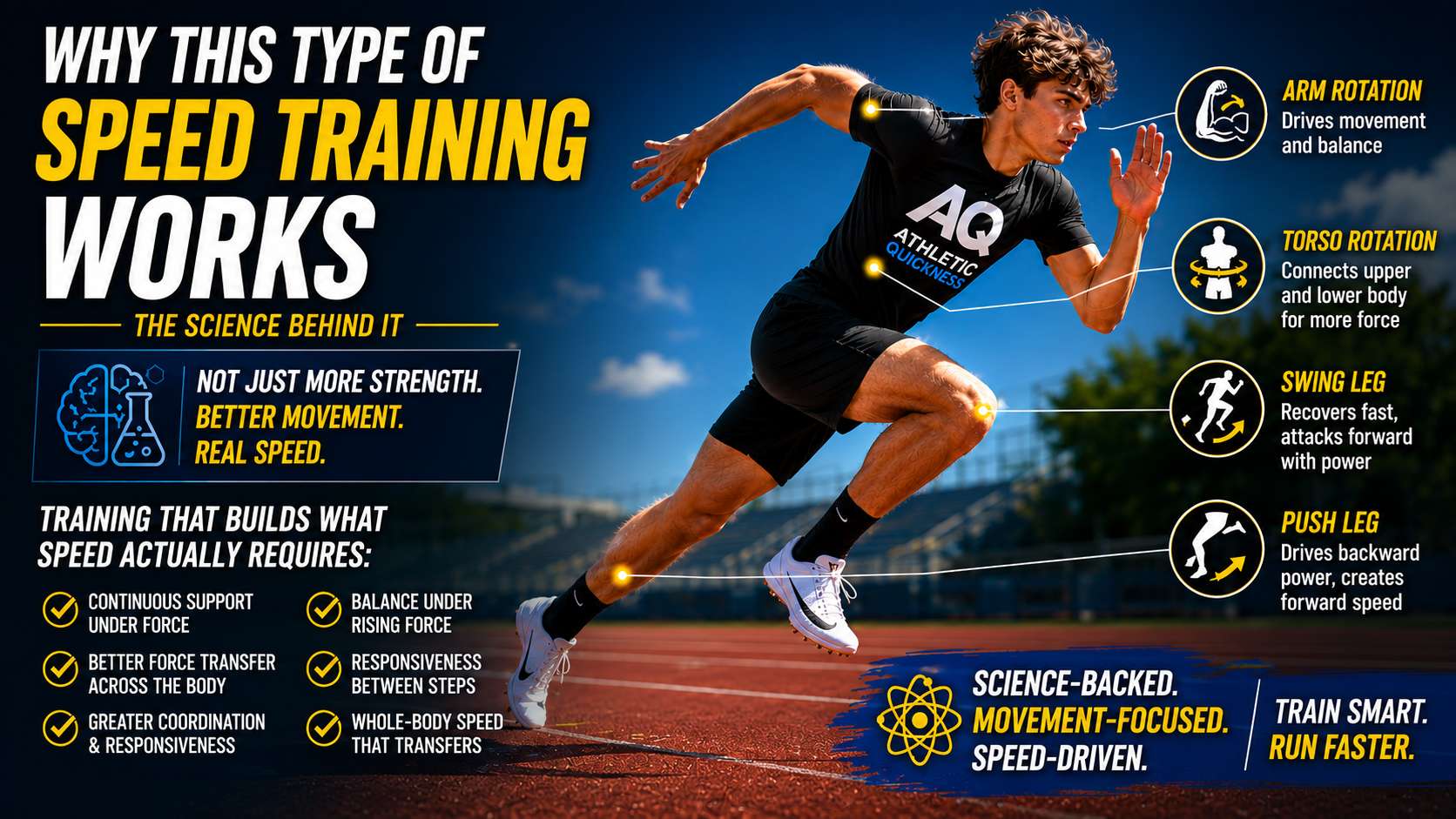
Why This Type of Speed Training Works (The Science Behind It)
Learn why some speed training methods work better by improving timing between steps, aggressive movement support, and how the sprint movement responds under rising force demands.

How to Train Fast Twitch Muscle Fibers for Speed (Without Adding Bulk)
Discover how to train fast twitch muscle fibers for speed, power, and quickness without adding unnecessary muscle mass.

How Resistance Bands Improve Speed (And What They Add Beyond Weights)
Discover how resistance bands improve speed by increasing timing pressure, movement instability, and aggressive movement support demands beyond traditional weight training.
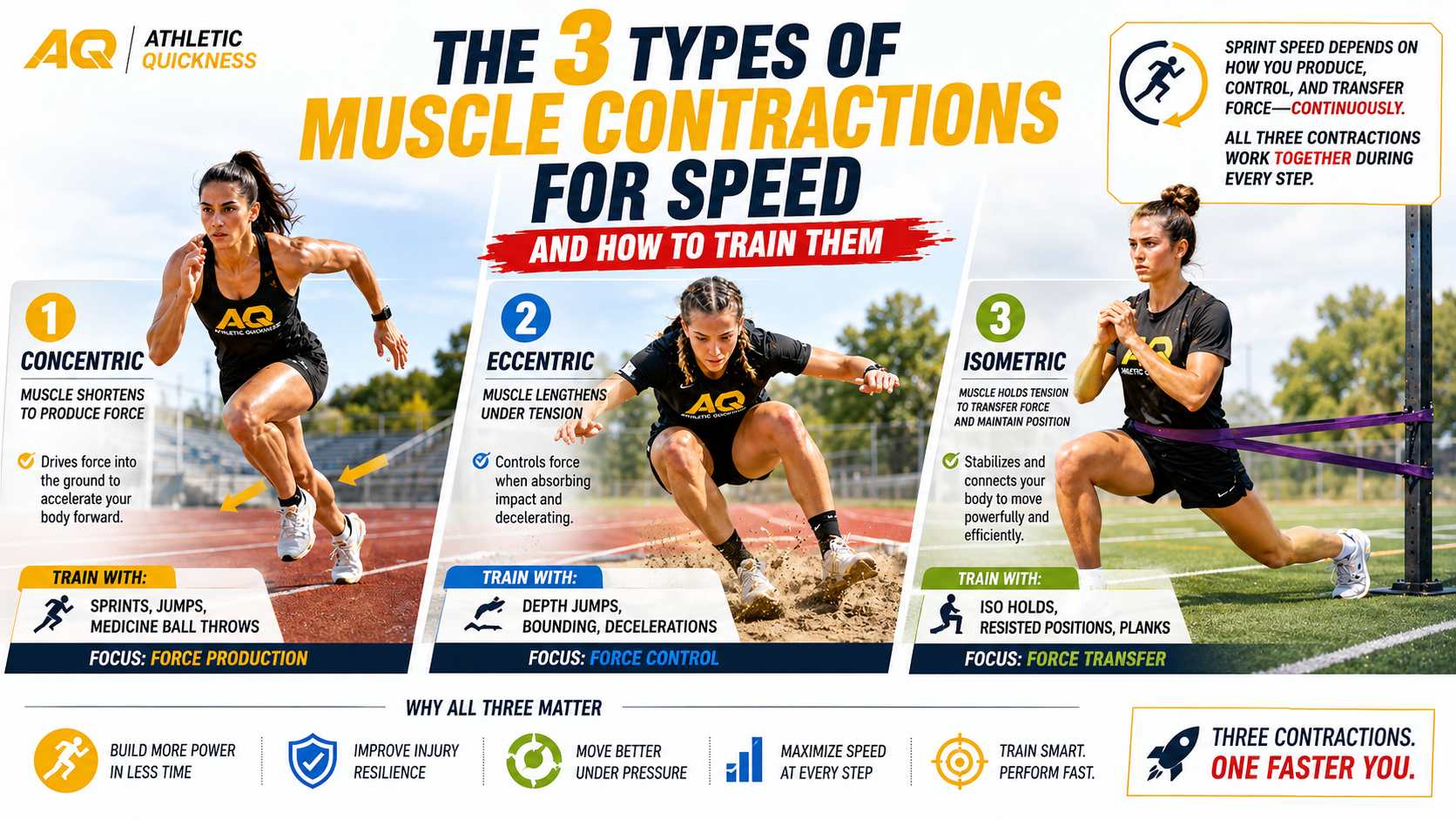
The 3 Types of Muscle Contractions for Speed (And How to Train Them)
Discover the three types of muscle contractions and how they work together to improve running speed, coordination, and performance.
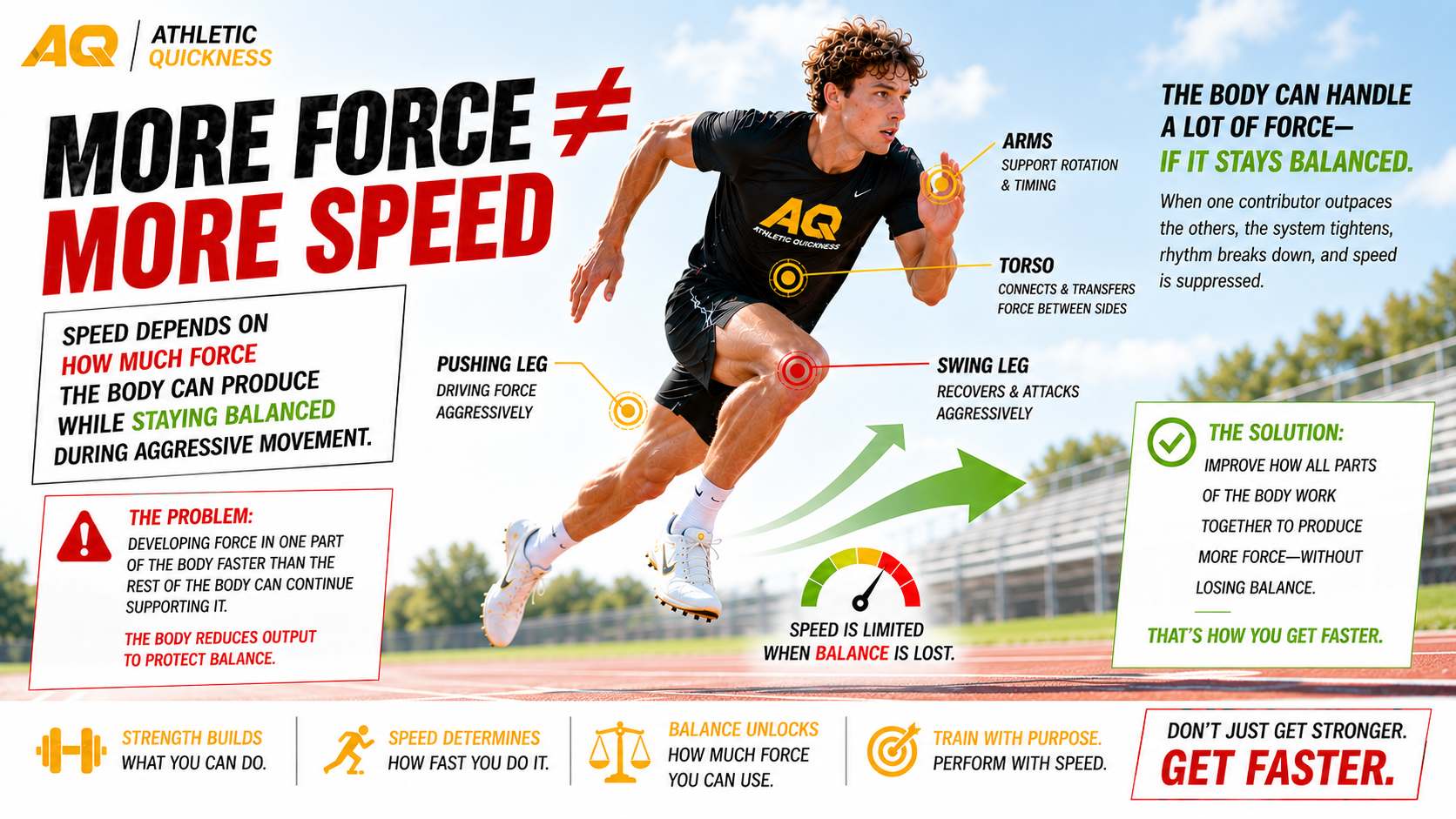
Why Traditional Training Can Make You Stronger—But Not Always Faster
Learn why traditional training methods can increase strength without improving speed, and what actually drives running performance.
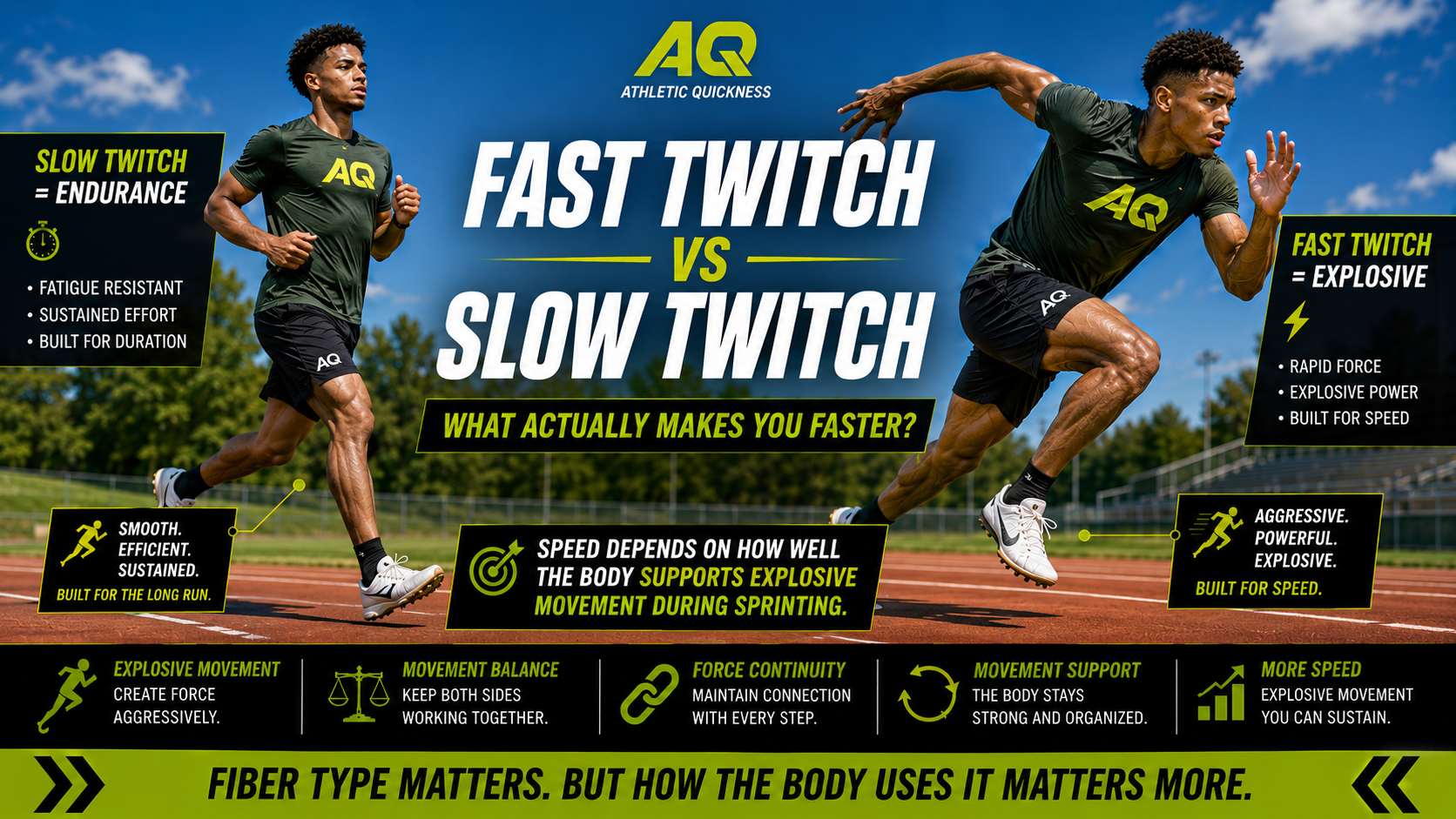
Fast Twitch vs Slow Twitch: What Actually Makes You Faster?
Discover the difference between fast twitch and slow twitch muscle fibers and learn what actually impacts running speed and athletic performance.
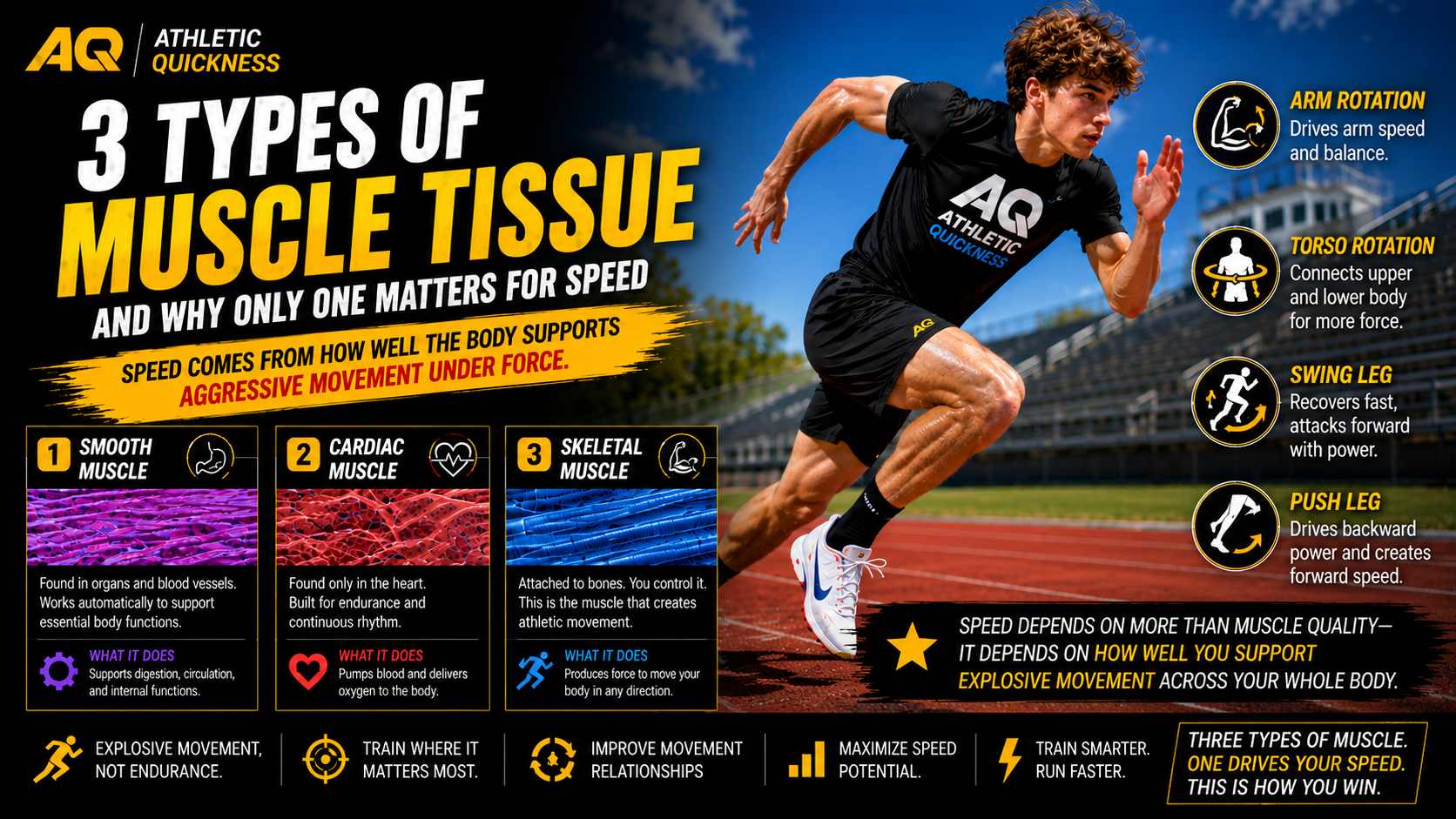
3 Types of Muscle Tissue and Why Only One Matters for Speed
There are three types of muscle tissue in the body—but only skeletal muscle directly produces sprint movement. Learn how speed depends on how the sprint system supports force, timing, and aggressive movement under pressure.
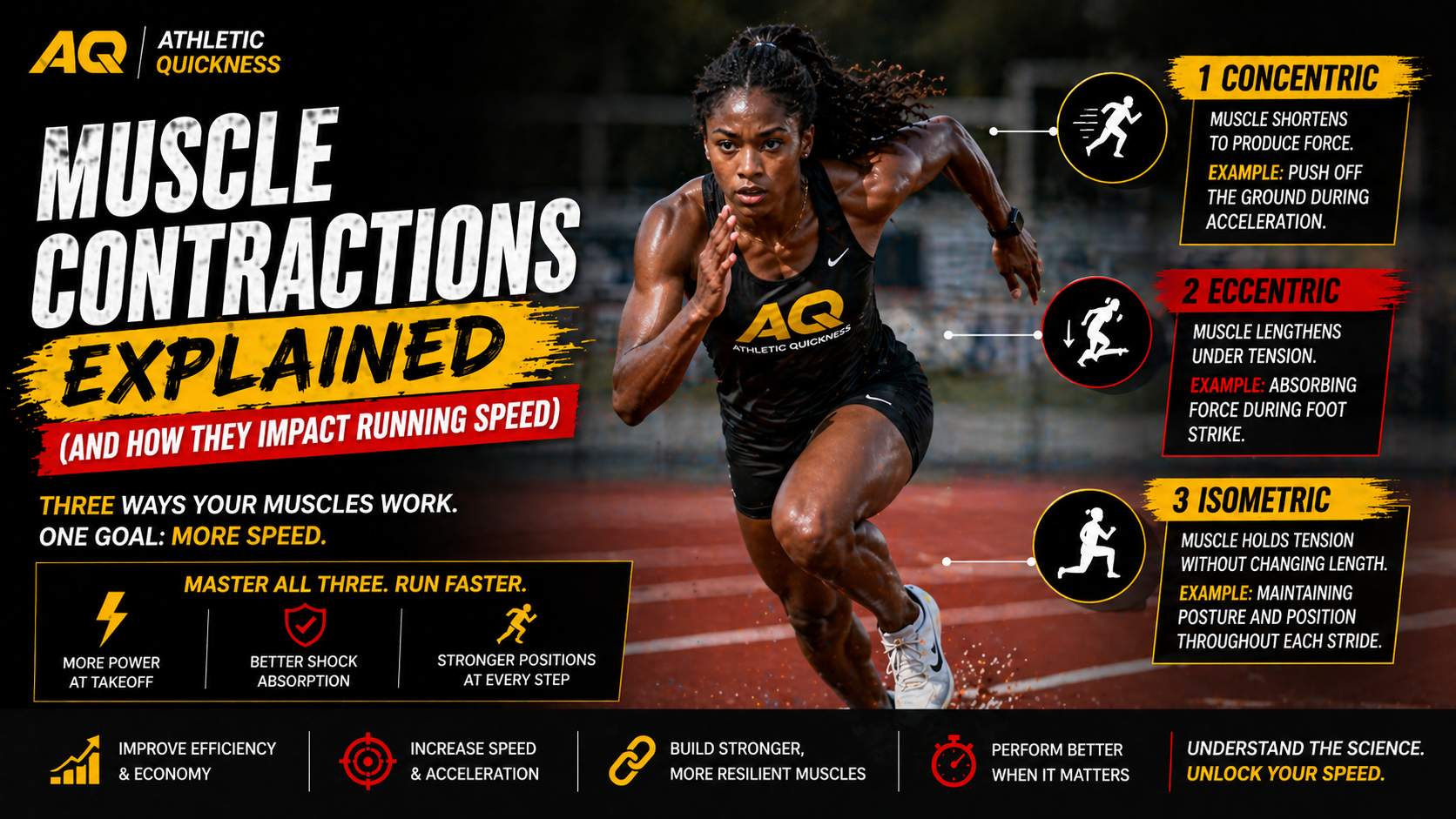
Muscle Contractions Explained (And How They Impact Running Speed)
Learn how concentric, eccentric, and isometric muscle contractions affect sprint force, movement timing, and the body’s ability to support aggressive movement during running.








