SPEED CHALLENGE PARTICIPANT 
Chris J. – New Jersey
Event 1: 40
Before Time 1: 5.27
After Time 1: 4.90
Story: I’ve have been wanting to become a running back for my football team and had trouble increasing my speed. I did many strength exercises like leg presses, leg extensions, and leg curls. I did get results in muscle size, but not that increase of speed.
So, I went to youtube and watched the Speed Challenge video and did the thigh flexor exercise and I found quick results in my 40 yard dash! This increase in speed in so little time amazed me!”
SPEED CHALLENGE PARTICIPANT 
User name: John
City, State: Odenville, AL
Event 1: 40
Before Time 1: 4.88
After Time 1: 4.79
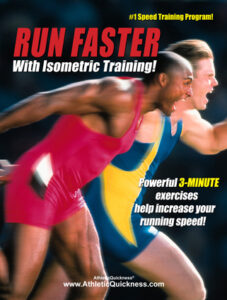
Story: i ran a 4.6 forty yard dash as a junior in highschool. now after two years in college..i’m running a high 4.8 so i am looking to get back to my former speed so that i can possibly walk on a football team. after two weeks i am seeing my time drop and now i think i can get it all the way back down to maybe a 4.5. thanks for offering the Run Faster Program..i think it is really going to work for me.
SPEED CHALLENGE PARTICIPANT 
“My name is Adam Thomas and I go to Eagle’s View Academy in Jacksonville, FL. I am a senior that has graduated and I am on my way to playing college football this upcoming season for Methodist University.
I have started to use your Speed Training,from June 1 to June 15, which has drastically dropped my 40 yard dash time from a 4.56 to a “MOVING” 4.41. I thank you, and you have blessed me and prepared me better for the next level.”
Event 1: 40
Before Time 1: 4.56
After Time 1: 4.41
SPEED CHALLENGE PARTICIPANT 
User name: David
City, State: Elk Grove Village, IL
Event 1: 100
Before Time 1: 11.9
After Time 1: 11.5
Story: I was really doubtful that this program would work, but when I finally tried it, it felt great. I feel so much faster. I’ve gone from an 11.9 to an 11.5 and can’t wait to get the whole package and see how much faster I get.
SPEED CHALLENGE PARTICIPANT 
User name: Dylan
City, State: Auckland, NEW ZEALAND
Event 1: 40
Before Time 1: 5.8
After Time 1: 5.4
Event 2: 200
Before Time 2: 24.8
After Time 2: 24.1
Story: The Run Faster program is incredible! After just 14 days i have seen huge results as i feel more athletic, explosive and quick as i play soccer.
This increase in speed allows me to make goal scoring situations a lot more frequently.
It has helped my game hugely and i strongly recommend the program to any soccer player!
SPEED CHALLENGE PARTICIPANT 49 Patt; Alta, Norway
User name: patt
City, State: alta, norway
Event 1: 40
Before Time 1: 5.42
After Time 1: 5.23
Event 2: 60
Before Time 2: 8.75
After Time 2: 8.49
Story: I was try this out in 2 weeks. And i feel more lighter and some faster to
SPEED CHALLENGE PARTICIPANT 
User name: Christian Sam
City, State: Allen, Tx
Event 1: 40
Before Time 1: 5.43
After Time 1: 5.16
Story: I wasn’t that fast, i mean i was fast but not that fast. so we ran 40’s at school and i got a 5.43, so i wasn’t satisfied, i saw yalls program, i ordered the RUN FASTER program and i did it.
I felt light right after the first workout, i did it the full 2 weeks, and my 40 dropped!! i was so happy. I’m still using it and i know hopefully I’ll be in the 4.8’s soon.
Thanks Dr. Van Such, this was amazing!!