
Home » Resistance Bands for Speed » How Muscles Respond to Isometric Resistance Band Training for Speed
🧠 Introduction
Most athletes already use resistance bands
👉 But very few actually get faster from them
💥 Not because resistance bands don’t work
👉 but because of how your muscles are forced to respond
👉 That response is what determines whether your speed improves
⚡ What Happens During an Isometric Hold
In isometric training:
👉 you hold a position under tension
As effort increases:
• fatigue builds
• control becomes harder
• small movements begin to appear
👉 You may notice your muscles begin to shake
👉 This is not a problem
👉 it’s part of the process
🔄 What’s Changing (Even When You Think Nothing Is)
Even when you try to stay still:
👉 your body is not completely motionless
With resistance bands:
• tiny shifts occur
• fatigue changes control
• resistance changes instantly
👉 Because every small change:
• alters band length
• shifts force direction
• changes the demand
💥 So instead of one steady contraction
👉 your muscles are dealing with a constantly changing environment
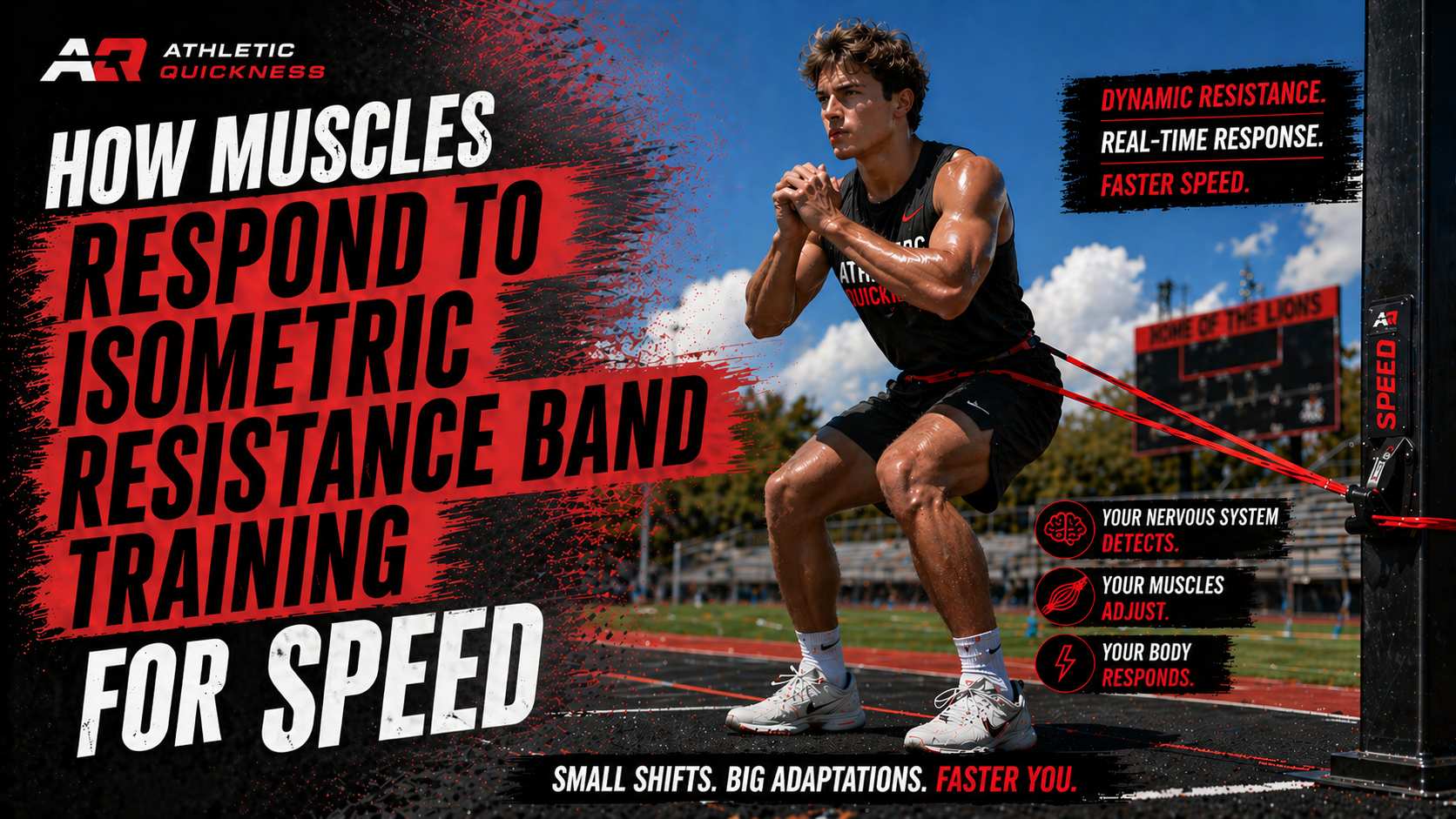
⚡ How Your Muscles Are Forced to Respond
As resistance changes:
👉 your muscles must:
• detect the change
• adjust force
• re-coordinate contraction
👉 This creates a continuous cycle of:
• adjustment
• correction
• re-engagement
👉 And it happens quickly
💥 Not just producing force
👉 but organizing it in real time
🔬 The Role of Your Nervous System
Your body constantly monitors:
• position
• tension
• force direction
👉 When resistance keeps changing
👉 these systems become more active
👉 Your body must process more information
👉 and respond faster
💥 This improves:
• coordination
• responsiveness
• control
⚖️ Why This Matters for Speed
Speed depends on:
• how quickly your body reacts
• how well it adjusts
• how efficiently it coordinates movement
👉 Not just how much force you can produce
💥 This is what allows strength to transfer into speed
⚖️ Why This Is Different From Weights
With weights:
• resistance is predictable
• movement is repeatable
• your body adapts quickly
👉 Over time:
👉 the need to adjust decreases
💥 With resistance bands:
👉 the demand never fully settles
👉 your system must keep responding
💥 This is the difference most athletes miss
👉 They try to build more strength
💥 without improving how that strength is organized
👉 And that’s where speed stops improving
🚀 What This Means for You
👉 If you’re using resistance bands
don’t just focus on movement
🔄 Focus on how your muscles:
• respond
• adjust
• coordinate
👉 That’s where the real benefit comes from
⚡ That’s how strength becomes usable speed
🧭 You Are Here (Within The AQ Speed Training System)
You are currently exploring:
👉 HOW MUSCLES RESPOND TO ISOMETRIC RESISTANCE BAND TRAINING FOR SPEED: why muscles must continually adjust, stabilize, and respond as fatigue builds and resistance-band tension changes throughout an isometric hold.
🌐 See How This Fits Into The Complete AQ Speed Training System
🪜 Continue Deeper Into Resistance Bands For Speed
Learn why AQ combines resistance bands with isometric training to expose hidden weakness, challenge underperforming muscles, and help more muscles contribute to faster running.
➡️ Why Use Resistance Bands With Isometric Training for Speed
Learn why resistance-band isometric training creates a unique challenge that forces the body to continually adjust, stabilize, and support force under tension.
➡️ Isometric Training With Resistance Bands (Why It Works)
Learn why muscle shaking often occurs during resistance-band isometric training and what it may reveal about the demands being placed on the body.
➡️ Why Your Muscles Shake During Training
🚀 Ready To Run Faster?
If you are ready to turn this information into real speed:
➡️ Run Faster With Isometric Training
❓ Frequently Asked Questions
What happens to muscles during this type of training?
They continuously adjust to changes in resistance, direction, and tension.
Why do muscles shake?
Because your system is recruiting more fibers to maintain control.
How does this improve speed?
It improves how your muscles respond, adjust, and coordinate movement.
What role does the nervous system play?
It detects changes and adjusts muscle activity in real time.
Why is this different from weights?
Weights are predictable. Bands create constant variation.