
Home » Running Muscles for Speed » Antagonist Muscles For Running Speed: The Hidden Role Of Organized Opposition
🧠 Introduction
Most athletes think speed depends on muscles turning on.
Producing force.
Driving movement.
Generating propulsion.
And yes—
that matters.
💥 But what if part of speed depends on more than muscles creating force?
What if part of speed depends on how opposing muscles are organized?
That is a different way to think about speed.
⚠️ The Force-Only View Of Speed
Many athletes think faster movement comes from stronger contractions.
More output.
More drive.
More push.
Fair.
But what if speed depends on more than what contracts—
what if it also depends on how opposing actions are coordinated?
That may be overlooked.
🔑 Why Antagonist Muscles May Matter More Than Many Think
When many think about muscles for speed,
they focus on prime movers.
The muscles doing the obvious work.
Rarely do they think about opposing muscles—
and what those relationships contribute.
But what if part of speed depends on organized opposition?
💥 That is a different model
💥 What If Some Speed Depends On How Muscles Oppose Well?
This may be the hidden mechanism.
Many think opposing muscles resist movement.
Fair.
⚡ But what if part of speed depends on how opposing muscles help organize movement?
That is one hidden layer of how speed is expressed.
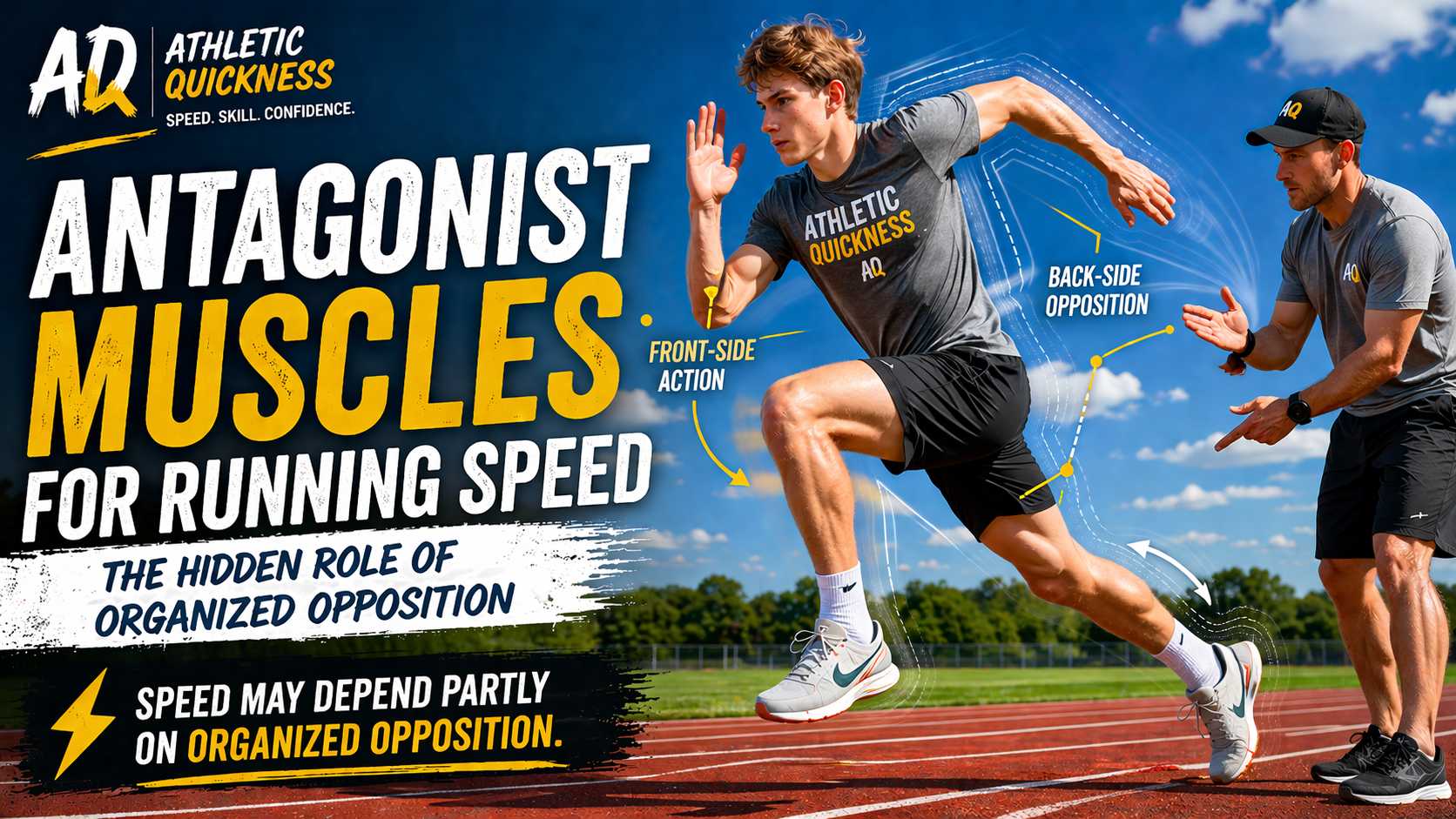
🔄 Speed May Depend Partly On Organized Opposition
Many think speed is about force.
Or turnover.
💥 What if part of speed depends on how well opposing actions are coordinated?
That is a hidden layer many athletes overlook in speed training.
🧩 Why More Force Alone May Not Solve Speed
More force can raise potential.
But if opposing actions are poorly organized…
If movement coordination leaks…
If force begins to fight itself…
👉 more force may not become more speed.
Many athletes experience exactly that outcome.
⚡ Organized Opposition May Help Shape What Force Alone Cannot
Some muscles may matter not only because they create force—
but because opposing muscles help regulate how that force is applied.
They may help:
• control movement transitions
• prevent force from conflicting
• support smooth, efficient motion
💥 Without organized opposition, force may work against itself.
🚀 What This Means For You
Think beyond force production alone.
👉 Train how opposing actions are coordinated.
That means improving:
• coordinated opposition
• timing relationships
• controlled release
• movement balance
👉 Not just stronger—but more organized under speed.
⚡ Some muscles contribute to running speed through how they coordinate with opposing muscles—not just how they contract.
➡️ How to Run Faster: The Complete Guide to Improving Speed Step by Step
🧭 You Are Here (Within The AQ Speed Training System)
You are currently exploring:
👉 ANTAGONIST MUSCLES FOR RUNNING SPEED: THE HIDDEN ROLE OF ORGANIZED OPPOSITION: why opposing muscle groups may help coordinate movement, regulate force, and support efficient running throughout the running speed system.
🌐 See How This Fits Into The Complete AQ Speed Training System
👉 Discover how antagonist muscles fit alongside the other major muscle groups involved in running speed.
➡️ RUNNING MUSCLES FOR SPEED: What Actually Matters (And What Doesn’t)
🪜 Continue Deeper Into Running Muscles for Speed
Learn how shoulder flexors and shoulder extensors work together to support coordinated arm action throughout the running stride.
➡️ Shoulder Flexor Muscles for Running Speed: Arm Drive, Rotation, and Coordination
Learn why shoulder extensors contribute to backside arm drive and coordinated movement throughout the running speed system.
➡️ Shoulder Extensor Muscles for Running Speed: The Other Half of Arm Drive
🚀 Ready to Run Faster?
👉 When you’re ready to apply these principles to improve your running speed:
➡️ Run Faster With Isometric Training!
❓ Frequently Asked Questions
Do antagonist muscles affect running speed?
👉 Potentially—especially through coordination and movement organization.
What are antagonist muscles in sprinting?
They are muscles that oppose other muscle actions and influence how movement is coordinated.
Can muscle opposition affect speed?
👉 Yes—if opposing actions help shape efficient movement.
Why might opposing muscles matter in speed training?
💥 Because speed depends on more than force production alone.