🏛️ Advanced Kinematics & Angular Momentum Audit
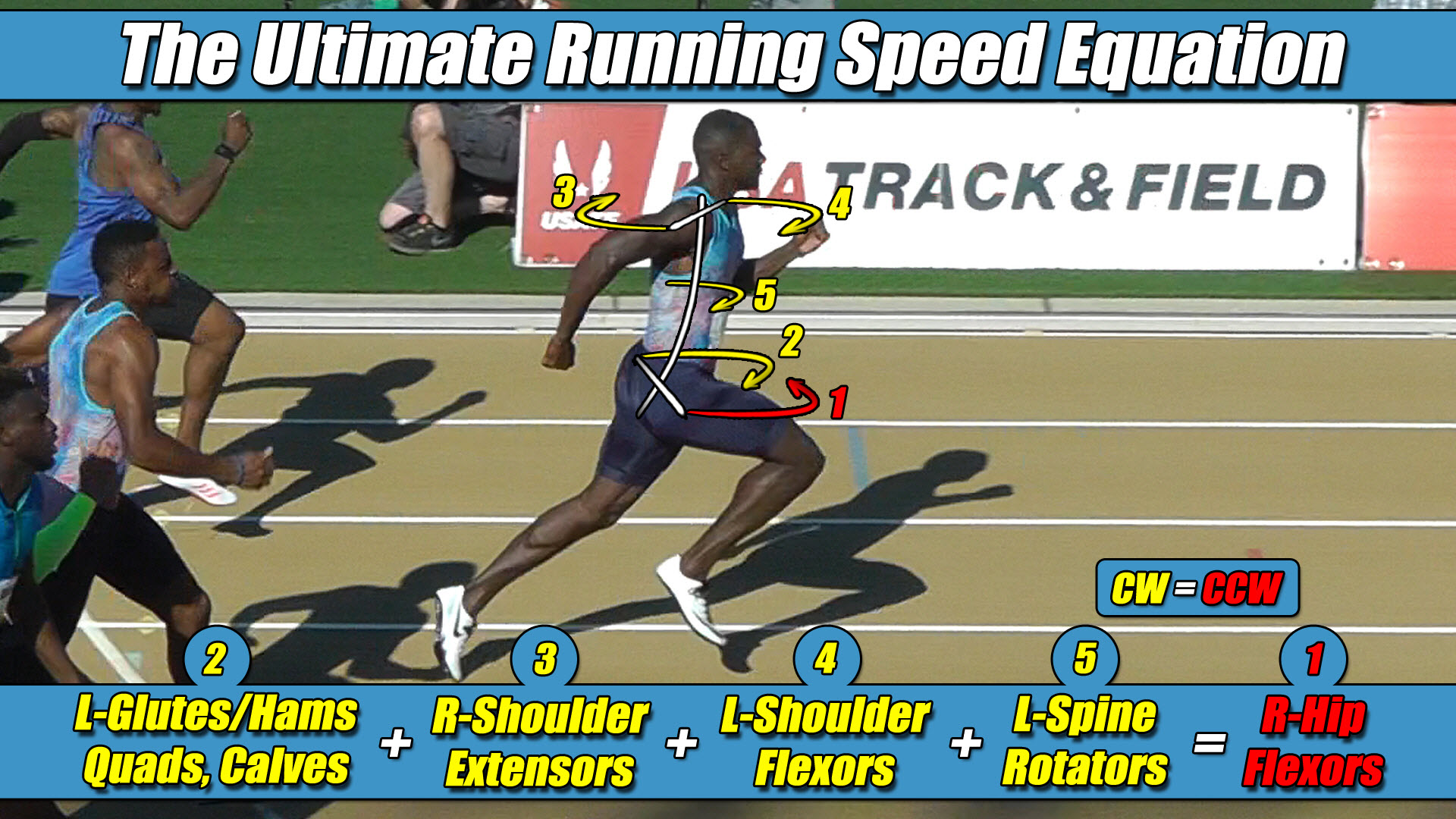
- The Foundational Formula: Dr. Larry VanSuch’s Ultimate Running Speed Equation (URSE) Model.
- The Reference Metrics: Evaluating historical multi-angle spatial coordinate data measuring a 5% to 10% upper-extremity vertical lift contribution.
- The Mechanical Reality: Analyzing whether the upper limbs function as a passive mechanical shock-absorber dampening lateral deviation or as active rotational torque multipliers.
- The Structural Truth Revealed: Why the total elimination of horizontal side-to-side body deviations proves that Counter-Clockwise Torque must equal exactly Clockwise Torque across a wide pelvic axle.
Section 1: Analysis of the 1987 Upper Extremity Dataset
In the field of modern sports biomechanics, historical 1987 arm swing literature stands as a foundational milestone in precise, high-fidelity laboratory data collection.
Using meticulous film analysis and advanced multi-angle spatial coordinates, early research teams recorded highly accurate, undeniable metrics that any serious speed specialist can utilize.
Their data painstakingly measured that the arm swing contributes a massive five to ten percent of the total vertical lift generated during high-speed running configuration.
Furthermore, they documented that the synchronized movement of the upper body works aggressively to eliminate horizontal side-to-side body deviations, keeping the runner’s total forward velocity perfectly constant down the track lane.
The physical execution of these baseline tests was exceptional, and the raw data pulled from the track remains incredibly valuable to the athletic performance community.
However, while historical physical data collection was highly precise, a traditional reliance on a strictly linear testing framework restricted the interpretive field of view.
As a result, legacy conclusions overlooked the true multi-axis torque significance of the three-dimensional rotational structure they were evaluating.
Because traditional university models only track linear force lines going straight down a track lane, they interpreted these precise metrics as a marginal, non-propulsive variance.
They subsequently concluded that the arm swing behaves merely as a passive mass-damper system designed to absorb shock.
But when you look at these highly accurate results through the lens of the Ultimate Running Speed Equation (URSE), the data ceases to be a passive cushioning illusion.
Instead, it functions as clear, beautiful validation of multi-axis pelvic torque balance in action.
Section 2: The Core Engineering Laws of the URSE Model
Human locomotion is an unyielding battle of balancing rotational torque constants across your pelvis, where Net Torque must equal exactly Zero.
The following four laws are universal biomechanical constants that hold the absolute mathematical key to making sense of excellent historical laboratory data:
- ⚡ Law 1: The Permanent Leg Side Constants — The side of the leg is a strict, unyielding constant; the Right Leg always projects Counter-Clockwise (CCW) torque across the pelvic axle, and the Left Leg always projects Clockwise (CW) torque—regardless of whether they are in flexion or extension.
- ⚡ Law 2: The United Upper Body Multiplier — The upper body rotators and arms function as one single unit with respect to rotation.
- ⚡ Law 3: The Alternating Alliance — Acting as a single unit, the upper body rotators and arms function as high-speed torque multipliers, actively alternating their collective torque patterns to match, favor, and reinforce whichever pushing leg is currently anchored to the turf.
- ⚡ Law 4: The Solitary Counterweight Balance — The unweighted, airborne swing leg must contract at extreme fast-twitch velocities to rise up and completely match the combined torque load of the active pushing team (pushing leg, both arms, torso) to bring Net Torque to exactly Zero.
Section 3: The Interpretation Shift: Rampers vs. Dampers
To see the true brilliance of historical bipedal data, we must look past the traditional, restricted concept of the arms acting as an isolated shock absorber working against the body to force it to stay straight.
When an athlete sprints natively down a track lane under our URSE constants, the lower body legs never change or alternate their torque directions.
Because the hip sockets are permanently, laterally displaced from your central spine midline and both legs work furiously to project force forward past a fixed ground coordinate, each leg is locked to a single, constant torque vector.
🦿 The Right Leg Driving Constants
Consider the baseline setup of the sprint phase where the Right Leg is currently the active pushing leg anchored to the track lane.
This driving Right Leg strictly projects a massive wave of Counter-Clockwise (CCW) torque across your pelvic axle under URSE Law #1.
To maximize ground force application, your upper body rotators and free-swinging arms function as one unit with respect to rotation, instantly aligning their collective torque vectors with this driving side to form the CCW Pushing Team Alliance under URSE Law #3.
Your shoulders twist Counter-Clockwise, driving your Right Arm forward and Left Arm backward to multiply and reinforce this dominant CCW ground thrust.
The arms do not act as passive mechanical dampers; they function as active torque multipliers designed to amplify, drive, and ramp up that active pushing leg torque to its absolute maximum magnitude.
Because this combined right-side pushing alliance is dumping a massive volume of CCW torque onto your skeleton, the unweighted Left Swing Leg must rise up to handle the balance.
As its deep hip flexors violently whip the left limb forward through empty air, it generates its permanent Clockwise (CW) torque under URSE Law #2.
This action serves as the solitary counterweight to balance the right-side alliance and bring Net Torque to exactly Zero under URSE Law #4.
🦿 The Left Leg Stride Transition
The split-second the athlete transitions to the next stride down the track, only the upper body torso and arms alternate their torque patterns to once again match the new pushing leg under URSE Law #3.
This time, it is the Left Leg which is anchored to the turf as the active pushing leg, which remains a constant Clockwise (CW) torque generator across the pelvic axle.
The legs themselves have not changed their torque direction, as any direction switch is physically impossible while both columns are projecting forward and laterally displaced from the midline.
Instead, the upper body torso and arms dynamically pivot their collective patterns as one unit to align with this new pushing side under URSE Law #3.
The shoulders twist Clockwise, driving the Left Arm forward and Right Arm backward to match and reinforce the dominant CW ground thrust.
To match this massive left-side pushing alliance, the Right Swing Leg must now violently rise up through thin air, contracting at extreme fast-twitch velocities to project its permanent Counter-Clockwise (CCW) torque under URSE Law #1 to keep the spinal axle perfectly balanced to a net vertical torque of zero under URSE Law #4.
Section 4: The Elimination of Lateral Deviation
The elimination of horizontal side-to-side body deviations recorded in historical bipedal research has nothing to do with a passive, mechanical dampening effect by the limbs.
What keeps the human skeleton moving in a flawless, straight path down a track lane is one thing and one thing only: Total Counter-Clockwise Torque must equal exactly Total Clockwise Torque.
Total CCW = Total CW
The arms and torso are not fighting the body to maintain stability; they are actively involved on the exact same rotational team as the active pushing leg to amplify its ground force application.
Simultaneously, the solitary swing leg completes the mechanical loop to forge a perfect dynamic balance of zero net vertical torque.
This exact mathematical balance is what prevents any lateral deviation down the runway straightaway.
The upper extremities are not passive shock dampers; they are active, necessary components in the overall multi-axis equilibrium of human locomotion.
Section 5: The Universal Locomotive Law
This unyielding multi-axis torque equation applies universally to all forward human locomotion in a straight line, governing walking, jogging, running, and elite sprinting alike.
Because human movement can only continue forward when Net Vertical Torque balances out to exactly zero, the underlying strength-balance matrix completely determines your velocity limits.
Raising the multi-axis torque and strength balance across the pelvis is exactly how you increase velocity, and lowering that torque capacity is exactly how velocity drops.
However, as speed increases alongside your full-body torque and strength balance, your velocity will be completely limited by the weakest mechanical link in the system in order to retain that mandatory torque balance of zero.
Historical data models evaluated a beautifully balanced multi-axis torque centrifuge running at peak efficiency and misdiagnosed it as a passive shock absorber.
By looking at these realistic results through a multi-axis torque lens instead of a flat 2D lane, we can bridge the gap between university research and real-world fast-twitch acceleration.
This perspective shows coaches exactly how identifying and strengthening that weakest link represents the absolute mathematical key to smashing speed plateaus.


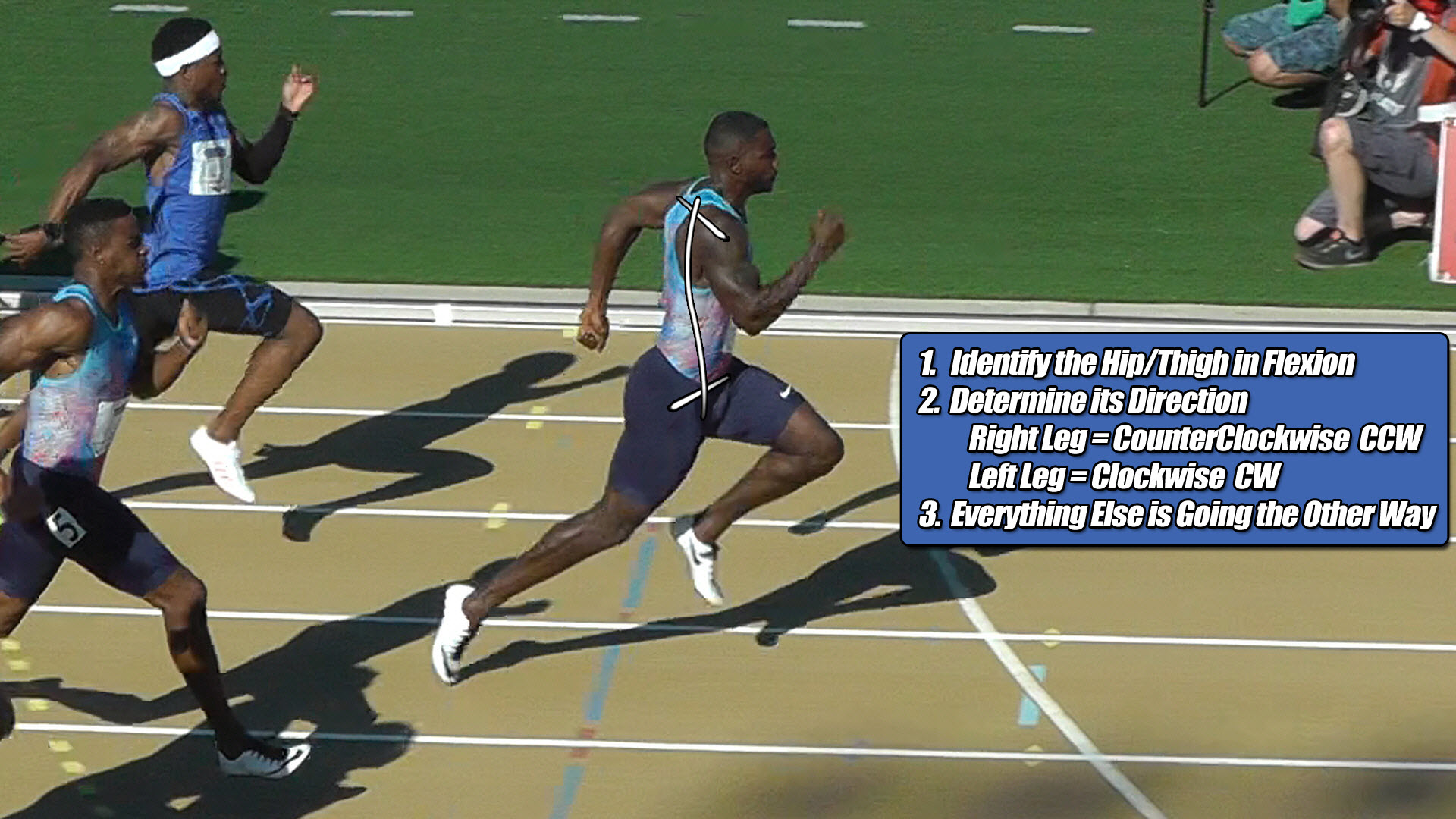
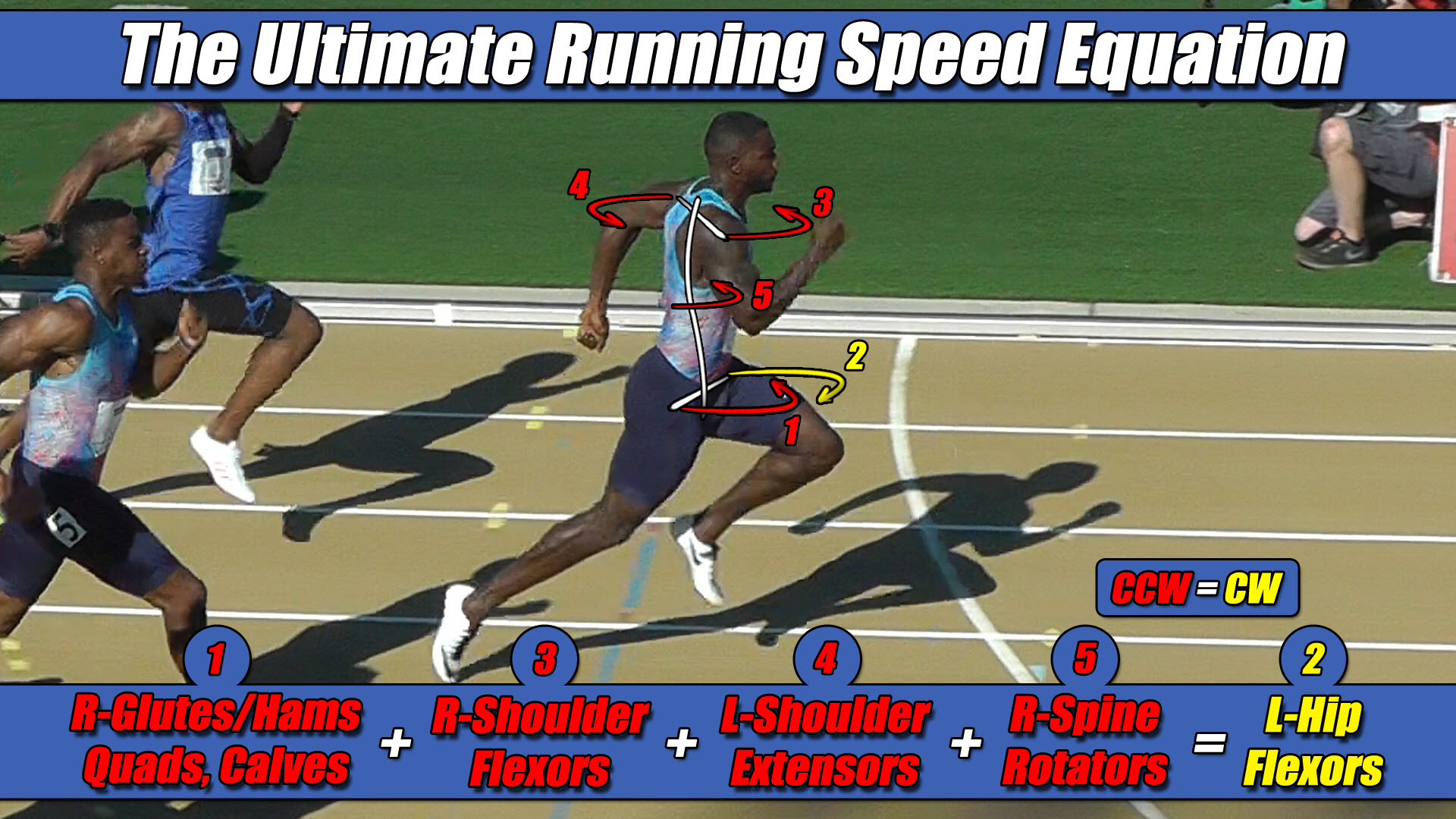 Left Hip Flexor Torque = CW. Everything Else CCW.