🏛️ Advanced Kinematics & Metabolic Data Audit
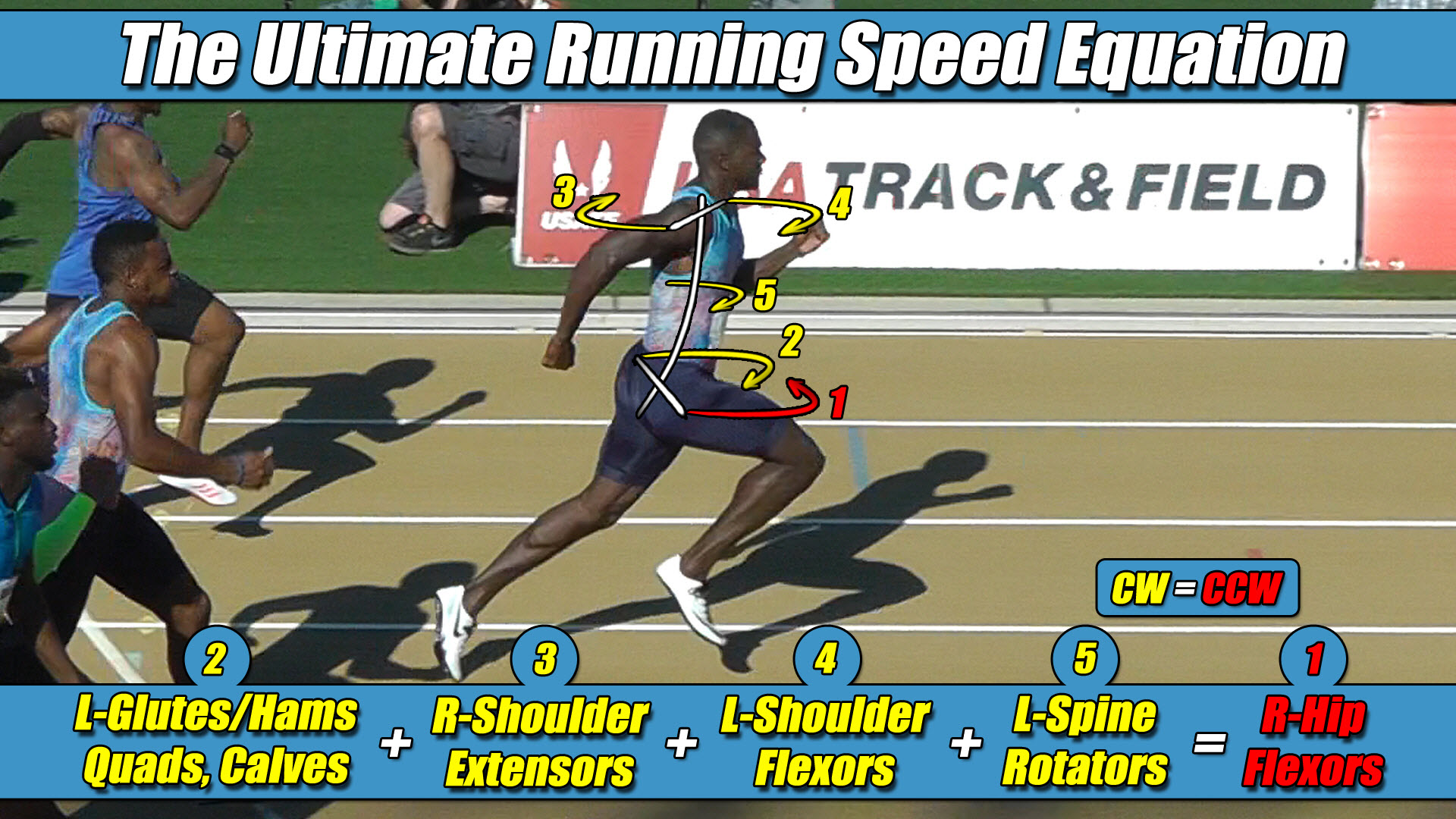
- The Foundational Formula: Dr. Larry VanSuch’s Ultimate Running Speed Equation (URSE) Model.
- The Reference Data: Evaluating legacy metabolic research measuring oxygen consumption spikes during restricted arm motion.
- The Mechanical Reality: Analyzing how locking the hands flat on top of the head forces a severe pelvic torque bottleneck that restricts overground acceleration.
- The Mathematical Inversion: Converting stationary laboratory gas-exchange metrics into real-world track velocity variables.
Section 1: The Fixed-Speed Laboratory Trap
To understand why traditional sports science advice fails to improve your athletic velocity, you must look past superficial laboratory numbers and evaluate the unyielding engineering laws of human locomotion.
University mainframes spent massive research budgets tracking runners on motorized treadmill belts to discover that locking an athlete’s hands flat on top of their head triggers a massive thirteen percent spike in metabolic energy consumption.
Traditional researchers observed this metabolic collapse and emerged with an over-complicated conclusion.
They assumed the arms exist purely as a passive fuel-economy device designed to find the most efficient position to run in.
However, keeping the treadmill belt speed permanently fixed at a slow, moderate jogging pace of 2.8 meters per second limits the interpretive frame of reference.
Because the motorized belt speed never changed during these configurations, the runner’s central nervous system was forced to dramatically spike its internal muscular effort just to stay in one spot while writhing against uneven pelvic forces.
While the recorded energy consumption data strings have real merit, a narrow, two-dimensional interpretive lens misses the multi-axis torque mechanics of the human machine.
Mainstream models build their entire calculation on the dogmatic assumption that human running is a perfectly symmetrical, mirrored loop where the upper body and lower body cleanly mirror each other as balanced halves.
In structural reality, a mirrored loop is a physical impossibility due to the severe mechanical asymmetry between unweighted airborne arms and a grounded stance limb.
Section 2: The Inversion: Holding Metabolic Output Constant
The true mechanical experiment shouldn’t center on measuring the side effects of oxygen consumption at a locked, artificial speed.
Instead, the analysis should evaluate the exact mathematical effects on forward running speed, which represents the primary metric of athletic performance.
If you run the math backward to design the experiment coaches actually care about, you hold the athlete’s metabolic output perfectly fixed and constant.
You instruct the athlete to maintain a uniform, fixed level of physical effort, restrict their upper body arm alignment, and measure whether their forward overground speed increases or decreases.
To derive this velocity decay directly from the published laboratory data, you look at the relationship between energy capacity and relative energy demand.
In the baseline laboratory setup, the treadmill velocity was locked at 100% capacity, resulting in a recorded 13% spike in metabolic demand when the arms were restricted—moving total energy consumption to a factor of 1.13.
By holding the available metabolic energy perfectly fixed at a constant 100% capacity, the resulting velocity factor is calculated by dividing baseline capacity by the restricted consumption factor:
Velocity Factor = 1.00/1.13 ~ 0,8849
Subtracting this resulting velocity factor from your baseline capacity isolates the exact performance decay over solid ground:
1.0000 – .8859 = 11.51%
When you apply this constant energy constraint, locking the hands flat on top of the head causes forward running velocity to instantly drop by -11.51% down the straightaway track line.
This velocity penalty occurs because your upper body and torso operate on the exact same rotational team as your active pushing leg configuration.
They do not work opposite to it as suggested by traditional treadmill interpretations.
Section 3: The Core Engineering Laws of the URSE Model
Under the unyielding engineering laws of the Ultimate Running Speed Equation (URSE), human locomotion is a continuous, high-velocity battle of balancing rotational torque constants across your pelvis where Net Torque must equal exactly Zero.
Every single overground stride splits your body into two distinct torque alliances that must perfectly balance to keep your spine moving straight forward:
- ⚡ Law 1: The Permanent Leg Side Constants — The side of the leg is a strict, unyielding constant; the Right Leg always projects Counter-Clockwise (CCW) torque across the pelvic axle, and the Left Leg always projects Clockwise (CW) torque—regardless of whether they are in flexion or extension.
- ⚡ Law 2: The United Upper Body Multiplier — The upper body rotators and arms function as one single unit with respect to rotation.
- ⚡ Law 3: The Alternating Alliance — Acting as a single unit, the upper body rotators and arms function as high-speed torque multipliers, actively alternating their collective torque patterns to match, favor, and reinforce whichever pushing leg is currently anchored to the turf.
- ⚡ Law 4: The Solitary Counterweight Balance — The unweighted, airborne swing leg must contract at extreme fast-twitch velocities to rise up and completely match the combined torque load of the active pushing team (pushing leg, both arms, torso) to bring Net Torque to exactly Zero.
Section 4: Phase Review of Asymmetric Pelvic Torque
When your right leg, for example, drives your body mass forward past a ground anchor, it generates a massive wave of Counter-Clockwise rotational torque across your pelvis under URSE Law #1.
To amplify this ground force application, your shoulders and torso also twist Counter-Clockwise, together as one unit, to form an unyielding rotational wall designed to raise the upper body’s resistance and anchor your frame under URSE Law #3.
On the other side of the ledger is your swing leg.
Its purpose is to balance out the pushing side torque under URSE Law #4 by creating a high-velocity, diagonal Clockwise torque under URSE Law #2 in this configuration.
Your left swing leg activates its deep hip accelerators violently to whip the leg forward through thin air to accomplish this, resulting in a net pelvic torque of zero.
During the next stride, the roles of the legs switch, but not their directions based on URSE Law #1 and #2. However, the arms and torso will alternate and align with the pushing leg, URSE Law #3.
Section 5: The True Mechanical Verdict: The Pushing-Side Bottleneck
The moment you lock your hands to your head, you forcefully strip the arms out of the pushing alliance.
This action lowers your ability to maintain a higher combined CCW torque (right pushing leg is still the configuration we are talking about) and ultimately collapses your structural strength balance.
Because the pushing leg no longer has its upper body allies working with it to stabilize the spinal axle, the pushing side instantly becomes the structural limiting factor of the entire engine room.
When the Counter-Clockwise rotation of the pushing team drops, the opposite Clockwise torque from the front-side hip flexors must now also drop an identical amount to maintain perfect system balance URSE Law #4.
Because planetary physics dictates that Net Torque across your pelvis must equal exactly Zero to keep you moving straight forward, your central nervous system faces an immediate crisis.
The brain’s internal calculator realizes the pelvis cannot handle normal force output under these lopsided restrictions without risking severe joint injury.
The central nervous system pulls its internal emergency brake and aggressively throttles down the forces of the swinging leg itself, causing your forward velocity to collapse.
Traditional laboratory treadmill studies remain completely blind to these deep torque relationships because their models are based on the flawed relative momentum relationships observed on a motorized belt.
By evaluating running mechanics through a flat, unmoving camera frame, legacy experiments failed to recognize that the swinging leg actively limited its own output to protect the body the exact split second the pelvic axle became unbalanced.
Section 6: Exposing the Fictional Mechanical Premise
The hidden breakdown in legacy metabolic literature is frequently exposed in the very first baseline assumptions of their abstracts.
Historical texts often state that while the mechanical function of the arm swing is already quite clear, there is no consensus regarding its metabolic benefit.
By declaring that the underlying mechanical function is already solved, researchers openly admit to working with a fictional premise from the very first line.
This fictional premise traces straight back to early legacy studies that popularized the rigid textbook assumption that the horizontal angular momentum of the upper body and lower body exist merely as perfectly balanced, opposing halves to cancel each other out in a symmetrical loop.
In structural reality, your arms and torso never rotate opposite your stride to passively balance the torso; they rotate aggressively to favor and reinforce the exact torque direction of the active pushing leg only under URSE Law #3.
Traditional models accepted this imaginary, two-dimensional mirrored loop as an unshakeable law of physics, allowing them to step straight over real-world torque patterns to chase irrelevant gas-exchange data.
Because those studies were built on this complete misunderstanding, they artificially forced a bottleneck onto the pushing team that does not represent real-world track velocity.
In the real world, the opposite occurs: the swing side is almost always the true performance bottleneck due to a total lack of specialized fast-twitch development, forcing the pushing team to actively lower its own ground force output to keep the pelvic axle in balance.


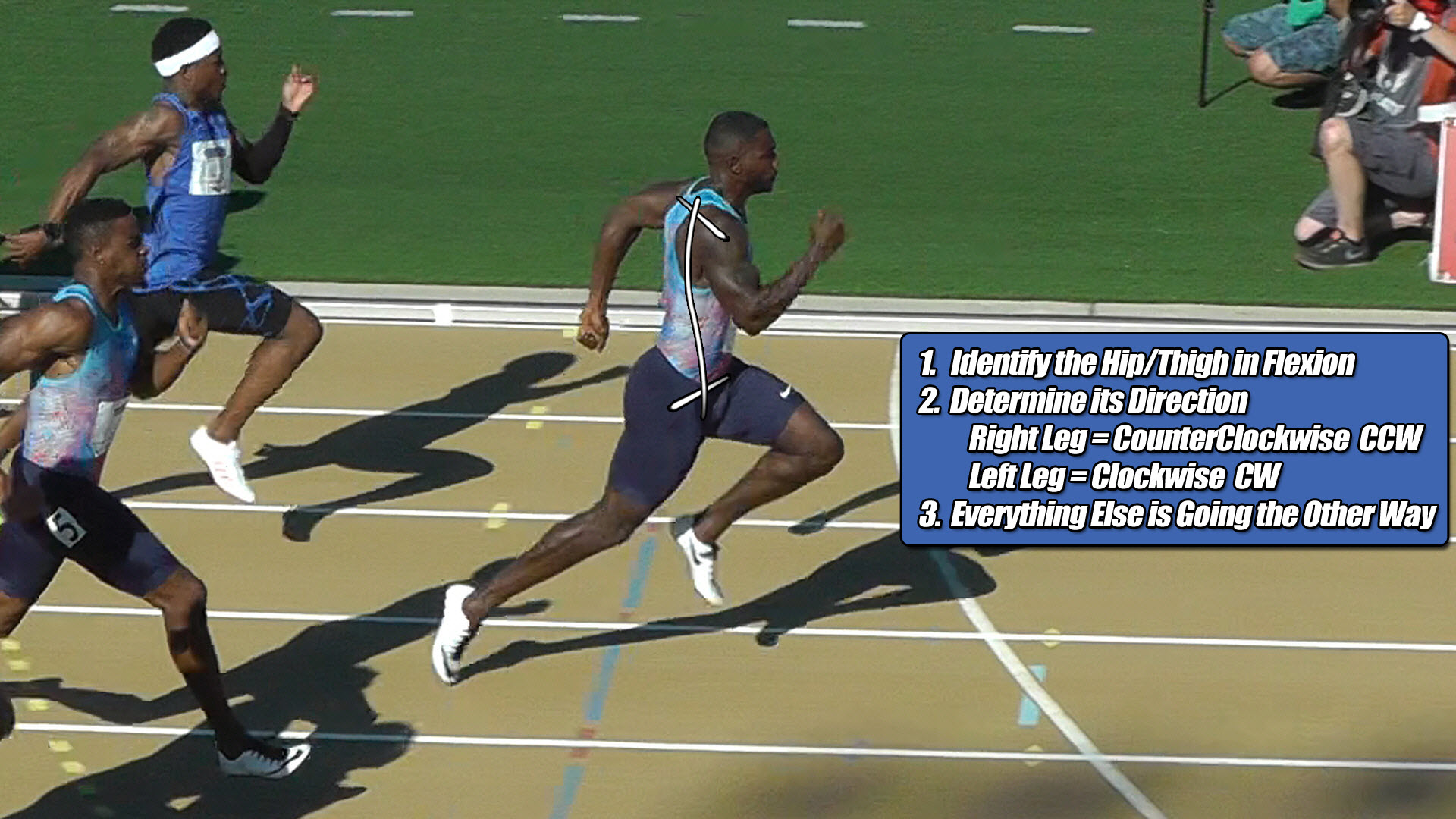
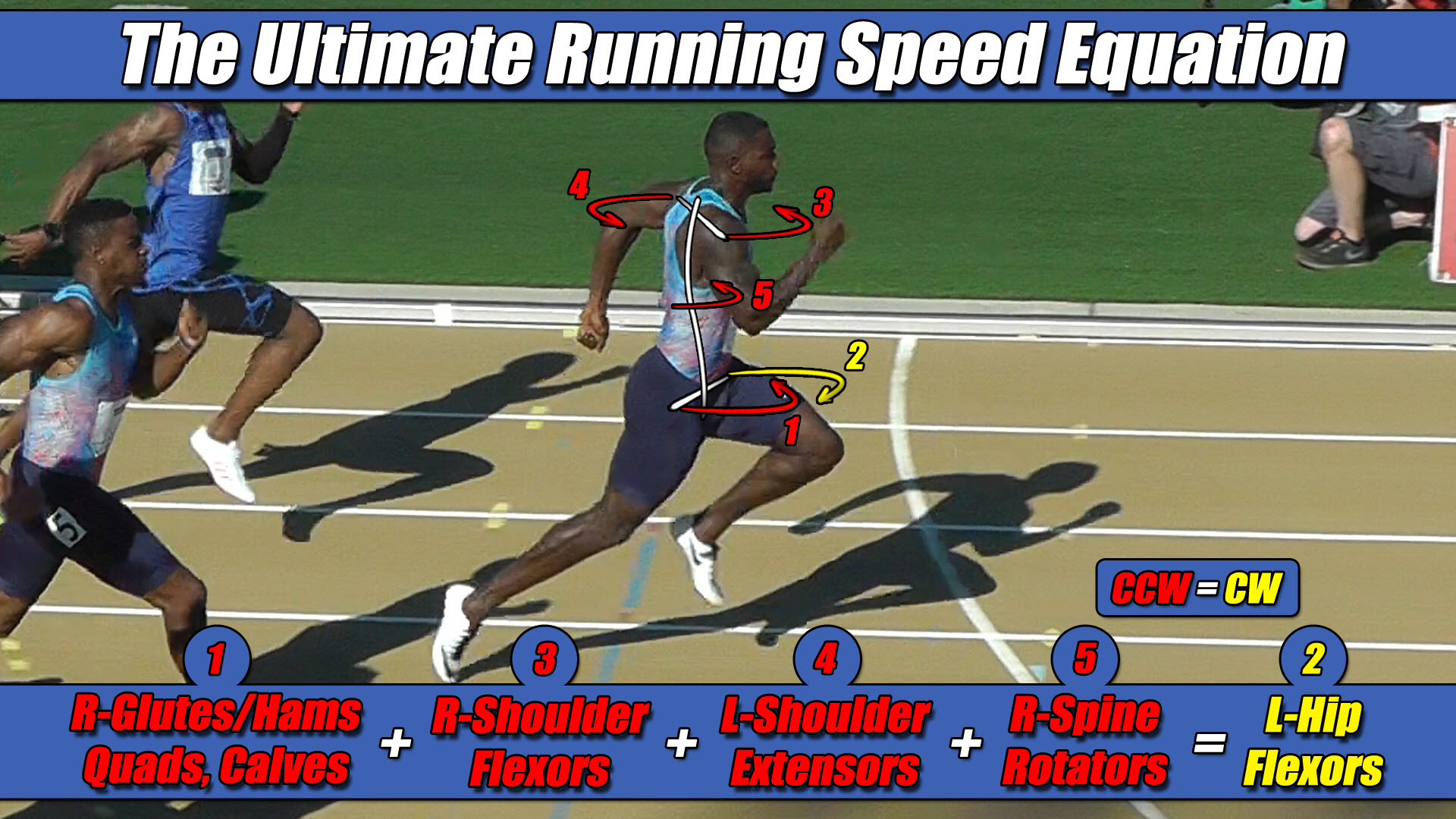 Left Hip Flexor Torque = CW. Everything Else CCW.