🏛️ Advanced Kinematics & Systematic Data Audit
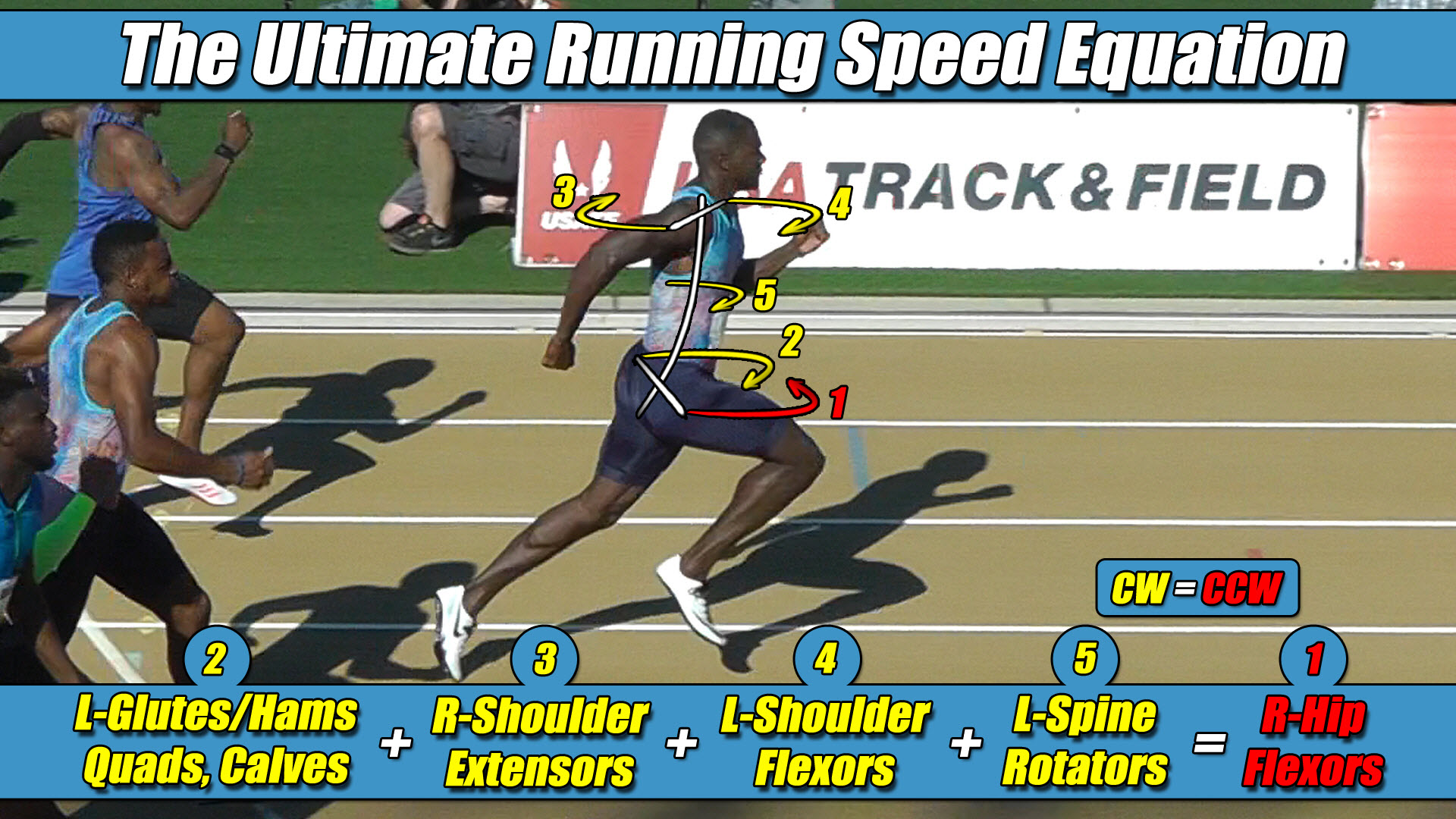
- The Foundational Formula: Dr. Larry VanSuch’s Ultimate Running Speed Equation (URSE) Model.
- The Reference Metrics: Evaluating compiled data points measuring a 10% vertical propulsive force contribution and a 24% step length collapse during upper-extremity restriction.
- The Mechanical Reality: Resolving the historical variance between linear forward-thrust acceleration models and passive upright hip-balancing models.
- The Structural Truth Revealed: Why systematic data ambiguity evaporates when tracking metrics are evaluated across an asymmetric pelvic axle under a net zero torque constraint.
Section 1: Analysis of the Systematic Literature Dataset
In the field of modern sports biomechanics, standard systematic literature reviews stand as valuable milestones in compiling precise, high-fidelity laboratory data collection.
Compiled research papers successfully build massive libraries of raw laboratory data, pulling tracking metrics and force plate values from elite biomechanical studies spanning several decades.
Their compiled data verified two staggering records: first, that the arm drive actively contributes approximately ten percent of the total vertical propulsive force during sprinting, and second, that restricting the upper extremities causes a massive twenty-four percent collapse in initial step length acceleration.
The data gathered from the sports science community was flawless, and the physical metrics are incredibly valuable to anyone seeking to optimize athletic performance.
However, while traditional data compilation was exceptional, a reliance on a strictly linear testing framework restricted the ability to draw repeatable, accurate conclusions.
As a result, mainstream interpretations missed the true multi-axis torque significance of the three-dimensional rotational structure they were evaluating.
Instead of delivering a definitive engineering law, systematic reviews often become a catalog of conflicting opinions from various historical sources.
Because traditional university models only track linear force lines going straight down a track lane, they cannot reconcile why the arms alter running metrics if they are not acting as independent forward pushing oars.
Consequently, legacy investigations often conclude that the exact biomechanical mechanism of the arm swing remains ambiguous and under-investigated.
But when you look at these highly accurate, compiled data points through the lens of the Ultimate Running Speed Equation (URSE), the ambiguity completely evaporates, and the records become clear validation of multi-axis pelvic torque balance in action.
Section 2: The Core Engineering Laws of the URSE Model
Human locomotion is an unyielding battle of balancing rotational torque constants across your pelvis, where Net Torque must equal exactly Zero.
The following four laws are universal biomechanical constants that hold the absolute mathematical key to making sense of all compiled laboratory data:
- ⚡ Law 1: The Permanent Leg Side Constants — The side of the leg is a strict, unyielding constant; the Right Leg always projects Counter-Clockwise (CCW) torque across the pelvic axle, and the Left Leg always projects Clockwise (CW) torque—regardless of whether they are in flexion or extension.
- ⚡ Law 2: The United Upper Body Multiplier — The upper body rotators and arms function as one single unit with respect to rotation.
- ⚡ Law 3: The Alternating Alliance — Acting as a single unit, the upper body rotators and arms function as high-speed torque multipliers, actively alternating their collective torque patterns to match, favor, and reinforce whichever pushing leg is currently anchored to the turf.
- ⚡ Law 4: The Solitary Counterweight Balance — The unweighted, airborne swing leg must contract at extreme fast-twitch velocities to rise up and completely match the combined torque load of the active pushing team (pushing leg, both arms, torso) to bring Net Torque to exactly Zero.
Section 3: The Dynamic Torque Engine: How the Machine Operates
To see the true brilliance of human engineering, we must look past the superficial concept of the arms acting as a simple, forward-propelling rowing oar.
When an athlete sprints natively down a track lane under our URSE constants, the lower body legs never change or alternate their torque directions.
Because the hip sockets are permanently, laterally displaced from your central spine midline and both legs work furiously to project force forward past a fixed ground coordinate, each leg is locked to a single, constant torque vector.
🦿 The Right Leg Driving Constants
Consider the baseline setup of the sprint phase where the Right Leg is currently the active pushing leg anchored to the track lane.
This driving Right Leg strictly projects a massive wave of Counter-Clockwise (CCW) torque across your pelvic axle under URSE Law #1.
To maximize ground force application, your upper body rotators and free-swinging arms function as one unit with respect to rotation, instantly aligning their collective vectors with this driving side to form the CCW Pushing Team Alliance under URSE Law #3.
Your shoulders twist Counter-Clockwise, driving your Right Arm forward and Left Arm backward to multiply and reinforce this dominant CCW ground thrust.
The arms do not act as passive dampers; they function as active torque multipliers designed to amplify, drive, and ramp up that active pushing leg torque to its absolute maximum magnitude.
Because this combined right-side pushing alliance is dumping a massive volume of CCW torque onto your skeleton, the unweighted Left Swing Leg must rise up to handle the balance.
As its deep hip flexors violently whip the left limb forward through empty air, it generates its permanent Clockwise (CW) torque under URSE Law #2.
This action serves as the solitary counterweight to balance the right-side alliance and bring Net Torque to exactly Zero under URSE Law #4.
🦿 The Left Leg Stride Transition
The split-second the athlete transitions to the next stride down the track, only the upper body torso and arms alternate their torque patterns to once again match the new pushing leg under URSE Law #3.
This time, it is the Left Leg which is anchored to the turf as the active pushing leg, which remains a constant Clockwise (CW) torque generator across the pelvic axle.
The legs themselves have not changed their torque direction, as any direction switch is physically impossible while both columns are projecting forward and laterally displaced from the midline.
Instead, the upper body torso and arms dynamically pivot their collective patterns as one unit to align with this new pushing side.
The shoulders twist Clockwise, driving the Left Arm forward and Right Arm backward to match and reinforce the dominant CW ground thrust.
To match this massive left-side pushing alliance, the Right Swing Leg must now violently rise up through thin air, contracting at extreme fast-twitch velocities to project its permanent Counter-Clockwise (CCW) torque to keep the spinal axle perfectly balanced to a net vertical torque of zero.
Section 4: The Elimination of Lateral Deviation
The elimination of horizontal side-to-side body deviations recorded across various university laboratories has nothing to do with a passive, mechanical dampening effect by the arms.
What keeps the human skeleton moving in a flawless, straight path down a track lane is one thing and one thing only: Total Counter-Clockwise Torque must equal exactly Total Clockwise Torque.
Total CCW = Total CW
The arms and torso are not fighting the body to maintain stability; they are actively involved on the exact same rotational team as the active pushing leg to amplify its ground force application.
Simultaneously, the solitary swing leg completes the mechanical loop to forge a perfect dynamic balance of zero net vertical torque.
This exact mathematical balance is what prevents any lateral deviation down the runway straightaway.
The upper extremities are not passive shock dampers; they are active, necessary components in the overall multi-axis equilibrium of human locomotion.
Section 5: The Universal Locomotive Law
This unyielding multi-axis torque equation applies universally to all forward human locomotion in a straight line, governing walking, jogging, running, and elite sprinting alike.
Because human movement can only continue forward when Net Vertical Torque balances out to exactly zero, the underlying strength-balance matrix completely determines your velocity limits.
Raising the multi-axis torque and strength balance across the pelvis is exactly how you increase velocity, and lowering that torque capacity is exactly how velocity drops.
However, as speed increases alongside your full-body torque and strength balance, your velocity will be completely limited by the weakest mechanical link in the system in order to retain that mandatory torque balance of zero.
Section 6: Applying the URSE Master Key to Historical Case Studies
Now that we see exactly how the multi-axis URSE engine works, we can apply these mechanical principles directly on top of the two primary historical case studies compiled in legacy reviews, completely resolving their academic ambiguity.
🏛️ Case Study 1: The Linear Forward-Thrust Acceleration Theory
- The Academic Conclusion: Historical acceleration theories argue that the explosive arm swing during early block starts and acceleration phases contributes directly to forward velocity by creating a linear, forward-propelling thrust in the direction of progression.
- The URSE Diagnostic Audit: This conclusion is fundamentally incomplete because it attempts to explain a rotational speed increase using a linear rowing description. The arms do not push the athlete forward through empty air. Instead, they are intricately involved in an alternating torque pattern throughout the entire structural framework. When the right driving leg, for example, drives backward into the turf, it projects a massive wave of Counter-Clockwise torque across the pelvic axle under URSE Law #1. Acceleration occurs because your upper body torso and arms function as one unified rotational unit, instantly twisting Counter-Clockwise to match and reinforce that active pushing leg under URSE Law #3. They act as active torque multipliers, maximizing the capacity of that dominant driving column so your foot can express maximum horizontal and vertical horsepower into the lane with zero structural resistance. Traditional conclusions missed the mark because they evaluated a fictional, forward-propelling linear loop. The arms absolutely contribute to that explosive acceleration burst, but they behave as active rotational torque multipliers designed to reinforce the side constant of the pushing leg. The left swing leg on the opposite side, CW per URSE Law #2, swings aggressively forward to maintain a net torque balance of zero URSE Law #4.
🏛️ Case Study 2: The Upright Passive Hip Balancing Theory
- The Academic Conclusion: Legacy maximum-velocity theories focus entirely on the fully upright sprinting phase, concluding that the arm drive contributes zero percent to forward propulsion and serves strictly as a passive balancing mechanism to absorb the rotary momentum of the hips.
- The URSE Diagnostic Audit: This conclusion is fundamentally flawed because it treats the arms as an isolated dampening mechanism working against the lower body. The arms do not passively cushion hip deviations through the air. Instead, they function as active components in an alternating torque pattern. When the right driving leg, for example, strikes the track template, it projects a massive wave of Counter-Clockwise torque across the pelvic axle under URSE Law #1. The maintenance of upright velocity occurs because your upper body torso and arms function as one unified rotational unit, instantly twisting Counter-Clockwise to match and reinforce that active pushing leg under URSE Law #3. They act as active multipliers, reinforcing the dominant driving column so the foot can express maximum overground horsepower with zero structural resistance. Traditional interpretations fumbled because they analyzed a fictional, passive mass-damper loop. The upper extremities actively contribute to top-end maximum velocity by reinforcing the side constant of the pushing leg, while the solitary swing left leg, URSE Law #2, violently fires CW to counter that total torque load under URSE Law #4.
Section 7: The Final Mechanical Verdict
When restricted movement testing configurations tape down the upper body unit and record a massive twenty-four percent collapse in initial step length, they witness the Weakest Link Law in real-time.
By freezing the upper body torque multipliers, the configuration forcefully compromises the pushing team’s torque capacity.
This restriction forces the central nervous system to instantaneously throttle down the swing leg’s extension velocity to preserve a net vertical torque of zero.
Legacy literature compiled an exceptional database of high-fidelity laboratory data, but because standard frameworks lacked a multi-axis torque lens, their conclusions came up a little short and published an archive of academic ambiguity.
By evaluating these verified metrics through our unyielding pelvic constants, we clear out the academic clutter.
This perspective shows coaches exactly how identifying and strengthening that weakest mechanical link represents the absolute mathematical key to breaking speed plateaus and reclaiming the narrative of speed science.


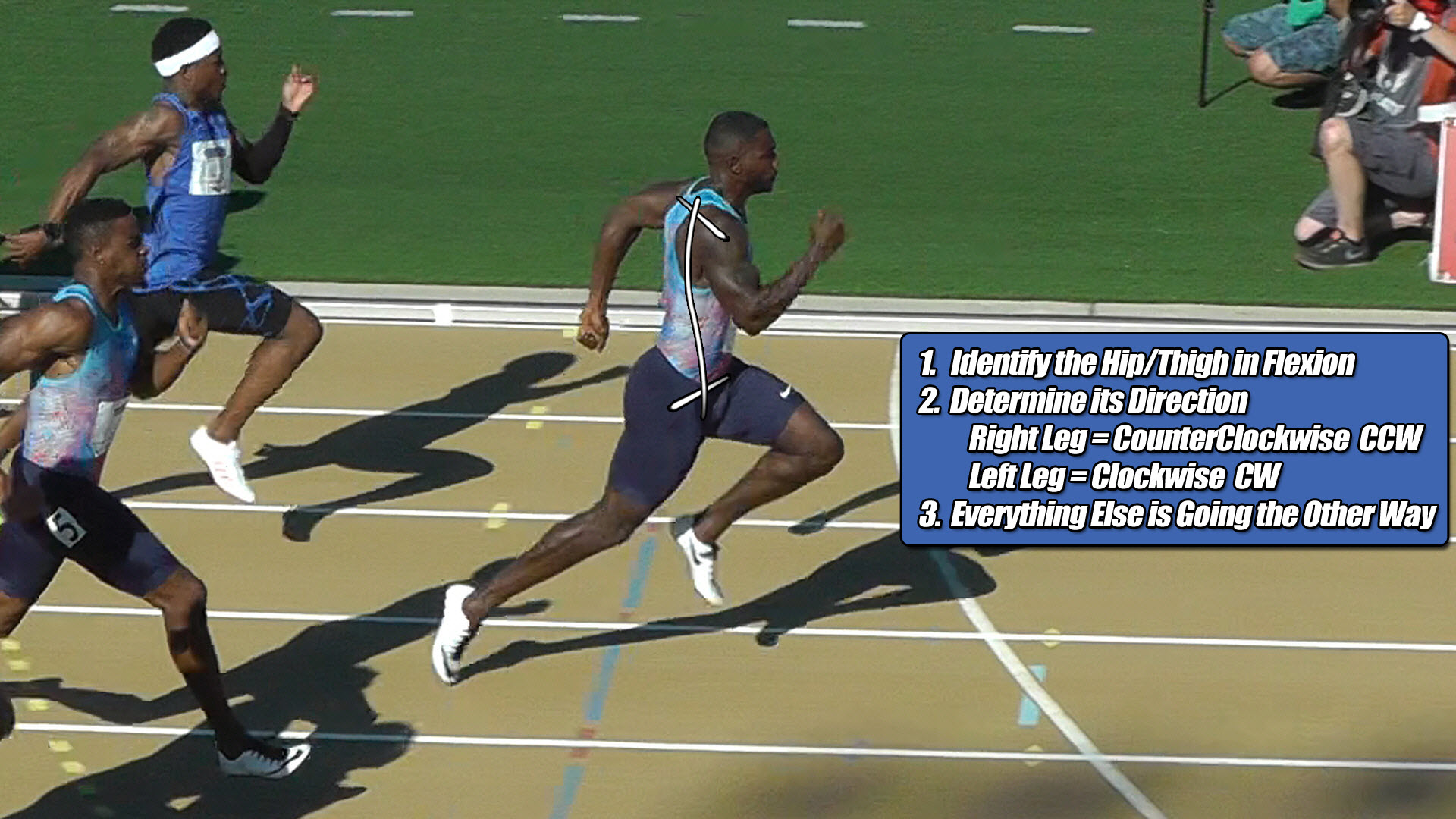
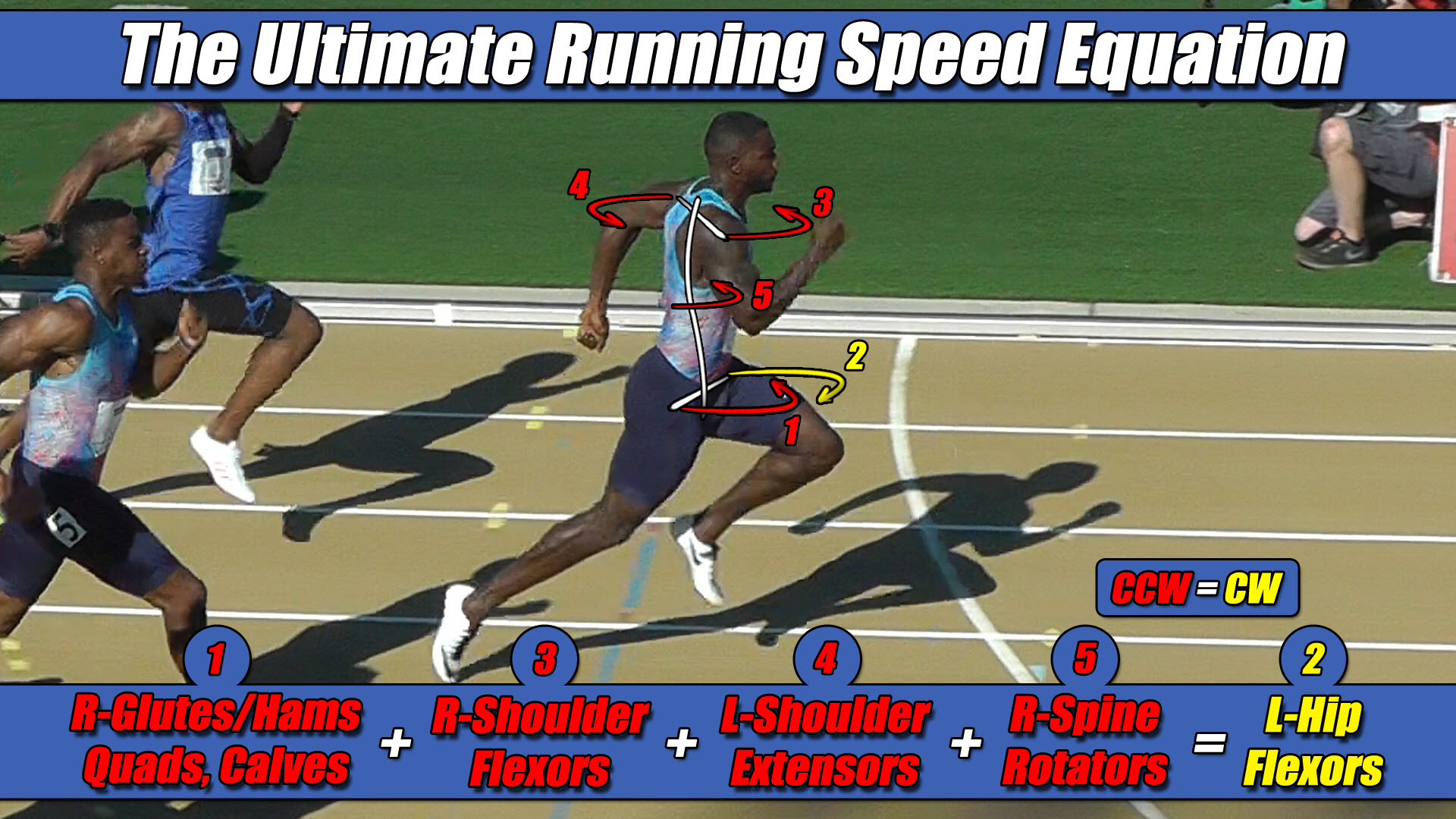 Left Hip Flexor Torque = CW. Everything Else CCW.