
Home » Running Mechanics Explained » Why Sprinting “Harder” Doesn’t Always Make You Faster
🚨 What If More Effort Isn’t Always More Speed?
Athletes hear it all the time.
Push harder.
Run harder.
Try harder.
It sounds obvious.
And sometimes effort absolutely matters.
But maybe incomplete.
👉 What if trying harder can sometimes disrupt the very mechanics that create speed?
💥 That changes the conversation.
⚡ Why More Effort Does Not Always Mean Better Speed
It is easy to assume:
more effort = more speed.
But that is not always true.
Sometimes more effort creates:
• extra tension
• rhythm disruption
• movement that feels strained
• force that does not carry through movement cleanly
👉 More effort does not automatically create more speed.
Sometimes it creates more interference.
That is a very different lens.
🔍 What If Strain Sometimes Fights Speed?
This may be the hidden twist.
Sometimes athletes are not too relaxed.
They are trying so hard…
that effort begins fighting itself.
😳
Because then the issue is not effort itself.
It is:
👉 how well the body supports aggressive movement during sprinting.
Huge difference.
👉 To understand why relaxed sprinting may reflect better movement support rather than lower effort:
➡️ Why Running Relaxed May Be a Result of Better Mechanics
🔄 Better Speed Does Not Always Feel Harder
This surprises some athletes.
Sometimes better speed feels:
• smoother
• lighter
• less forced
• more fluid
That does not mean less output.
It means:
👉 less interference disrupting movement.
Very different.
👉 Sometimes speed improves not because athletes try harder…
but because the body supports aggressive movement more effectively.
💥 That is a radically different way to think about speed.
🧠 What If “Harder” Is Sometimes A Movement-Support Problem?
Sometimes trying harder does not increase speed…
because the issue is not missing effort.
The issue is:
👉 how effectively the body supports force during sprinting.
That changes the question from:
How do I try harder?
to:
👉 How do I help my body support speed more effectively?
That is a much deeper question.
💬 What Better Speed Can Feel Like
Athletes often feel this before they can explain it.
When mechanics improve:
• speed feels less strained
• rhythm feels easier
• force feels cleaner
• effort feels more effective
👉 Sometimes athletes describe this as feeling powerful…
without feeling tight.
Because better mechanics often allow force to move through the body more cleanly during sprinting.
That is a very different feeling than simply trying harder.
👉 To understand why posture and movement support influence how force carries through sprinting:
➡️ Why Sprinting Faster Starts With Better Posture
🚀 Why Trying Harder Is Not Always The Same As Running Faster
Maybe trying harder and running faster…
are not always the same thing.
😳
Sometimes speed does not improve because athletes add more effort.
Sometimes speed improves because:
💥 the body supports aggressive movement more effectively.
That is a major distinction.
👉 Sprinting harder is not always the same thing as sprinting better.
And sometimes trying harder can interfere with the very mechanics producing speed.
That matters enormously.
👉 To understand why visible effort does not always equal better mechanics:
➡️ Why Quick Feet Drills Don’t Always Improve Speed
🚀 What This Means For You
Most athletes ask:
How do I run harder?
A deeper question may be:
👉 What helps my effort translate into better movement during sprinting?
That question may lead much farther.
And much closer to real speed.
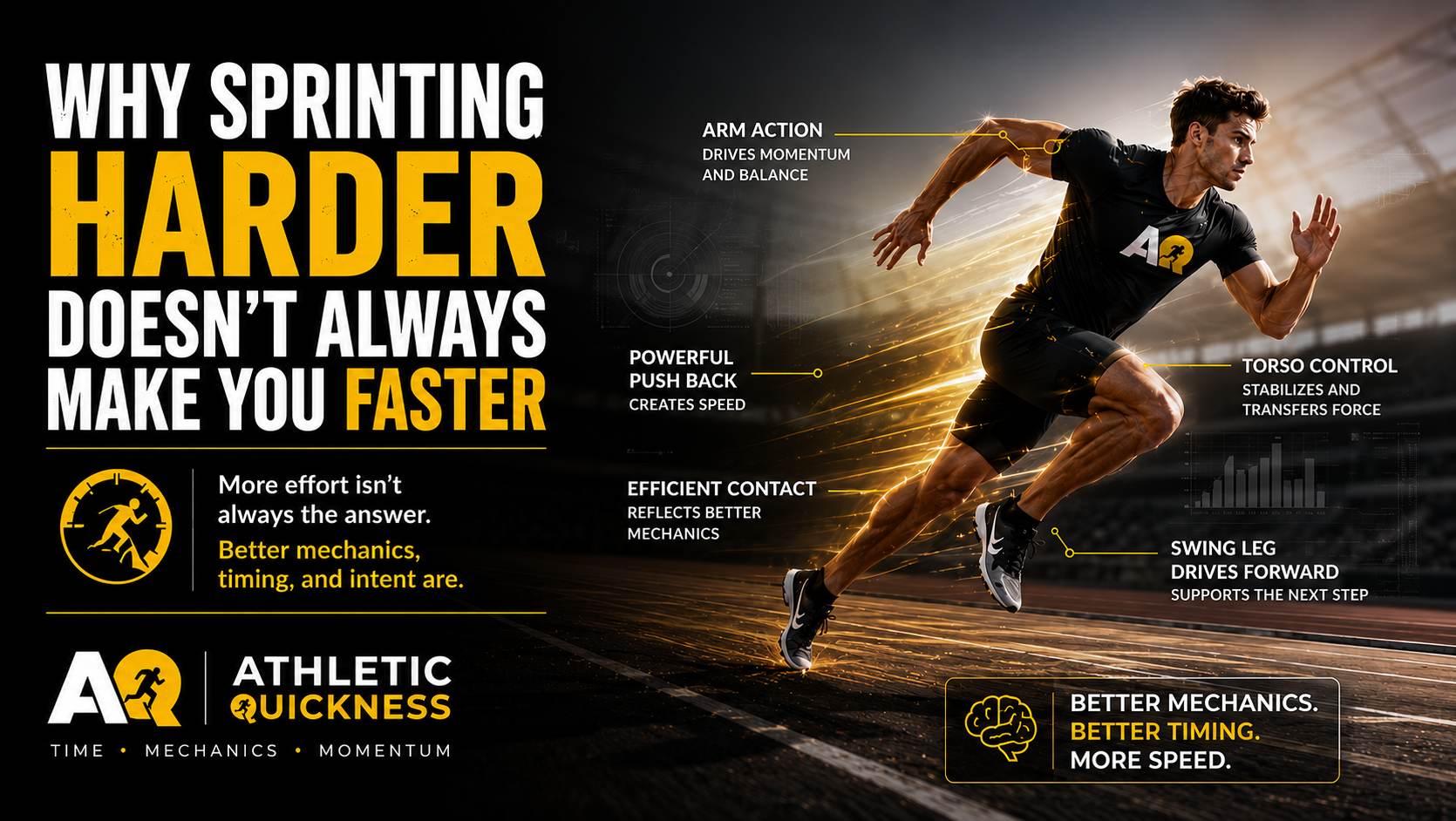
💥 AQ doesn’t see sprint speed as:
• effort alone
• tension alone
• pushing harder at all costs
AQ sees sprint speed as:
👉 how effectively the body supports aggressive movement during sprinting.
That means:
• pushing-leg mechanics
• swing-side support
• rhythm
• force transfer
• whole-body movement support
all influence whether effort actually becomes speed.
That is a radically different lens.
And often a much more useful one.
🧭 Go Deeper
👉 Learn why relaxed sprinting may reflect better movement support rather than lower effort:
➡️ Why Running Relaxed May Be a Result of Better Mechanics
👉 This article explains why quick movement alone does not automatically create speed:
➡️ Why Quick Feet Drills Don’t Always Improve Speed
👉 Learn how posture influences force transfer and movement support:
➡️ Why Sprinting Faster Starts With Better Posture
👉 This article explains how whole-body movement support influences contact quality and speed:
➡️ What Are Ground Mechanics? (And Why Your Foot Isn’t the Problem)
🎯 Start Here
👉 Want to improve running mechanics instead of just trying harder?
💥 Start here:
➡️ Run Faster With Isometric Training
👉 AQ training focuses on:
• simultaneous push + swing support
• movement timing
• aggressive movement continuity
• force transfer
• strength balance
• whole-body movement support
❓ FAQ
Does trying harder make you run faster?
👉 Not always. More effort can sometimes create interference instead of improving speed.
Can too much tension slow sprinting down?
👉 Yes. Excess tension can disrupt rhythm, movement support, and force transfer during sprinting.
Why do elite sprinters look effortless?
👉 AQ argues efficient speed often reflects better movement support rather than lower effort.
Is sprinting harder the same as sprinting faster?
👉 Not necessarily. Trying harder does not automatically improve the mechanics producing speed.
How can I run faster without forcing it?
👉 Improving how the body supports aggressive movement during sprinting may matter more than simply adding effort.