🧠 Introduction
If you are a track sprinter fighting to lower your 200m or 400m dash times, you are likely locked in a brutal cycle of over-training.
Standard track culture tells you that if you want to hold your speed through the curve and down the final straightaway, you need to run more grueling volume.
You stack up exhausting 300-meter repeats, lunges, and heavy leg presses until your legs feel like lead.
Yet, despite your dedicated work ethic, your stride turnover feels incredibly heavy over the last 50 meters, your hamstrings feel constantly tight, and your scoreboard times refuse to budge.
Adding more mileage onto an already fatigued nervous system will not break your plateau.
You aren’t slowing down at the end of your races because you lack basic cardio endurance; you are slowing down because your high-volume workouts completely ignore the high-velocity transmission of the human sprint cycle.
⚖️ Harry’s 3-Week Multi-Distance Breakthrough
Look at the exact tracking data from Harry Deogan, a competitive sprinter from Ludhiana, India, who completely shattered his record ceilings using a zero-equipment approach:
- Before 200m Time: 27.53 seconds
- After 200m Time: 26.20 seconds (A massive 1.33-second drop!)
- Before 400m Time: 59.96 seconds
- After 400m Time: 57.00 seconds (A staggering 2.96-second drop!)
- The Timeline: Exactly 3 weeks
Harry didn’t achieve these dramatic clock breakthroughs by purchasing expensive weight room machines or running double sessions.
He dropped seconds off his times by targeting a severe muscle-coordination blind spot.
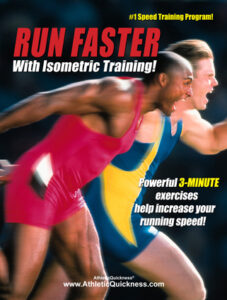
👉 Learn more about the exact Run Faster Speed Training Protocol Harry used to drop seconds off his multi-distance times and shatter his record ceilings in just three weeks here:
Elite Multi-Sport Sprinting Velocity
🔄 The Physics: Why Running Volume Fails the Final Straightaway
Traditional training treats sprinting as a basic linear equation of pushing against the track. But according to the engineering laws of the Ultimate Running Speed Equation (URSE), sprinting is a strict battle of balancing rotational torque.
During a 200m or 400m sprint, your pelvis is a constant battleground. Every single stride requires two opposing muscle groups to balance out to a net torque of zero:
The Pushing Team:
Your dominant stance leg detonates your glutes, hamstrings, quadriceps, and calves violently down into the track surface.
This massive, high-velocity thrust forcefully propels your hip socket forward past its fixed axis, instantly initiating a massive wave of rotational torque across that side of your pelvic grid. This is because it is displaced laterally, away from the body’s midline.
Actively compounding this forward propulsion is your high-speed upper body flywheel (your arms and deep torso rotators).
Working in perfect alliance with that downward pushing leg, it unifies its rotational torque vector directly with the lower body engine room, functioning as an explosive mechanical multiplier that instantly locks and anchors the spinal chassis to forcefully drive, amplify, and maximize your total ground forces.
The Swing Team:
Operating in absolute, high-velocity solitude completely opposite to that pushing engine sits your swing-phase engine—your deep hip flexors (the deep psoas and iliacus winches), which act as your core skeletal transmission.
Human locomotion is not a sequence of isolated steps; at the exact same time the pushing team is detonating force on one side of your pelvic axle, the swing team must be explosively active on the other.
This means while your stance leg and torso flywheel are actively driving backward into the turf, your airborne swing-side engine must violently contract at extreme fast-twitch velocities to whip the heavy, unweighted limb forward through thin air.
This simultaneous, concentrated effort works alone on its side of the algebraic ledger to actively push back against that unified pushing team (pushing leg, arms, and torso), maintaining the critical strength balance across your body needed to prevent energy leaks and keep you running straight down the track line with total, maximized velocity.
–When your training consists entirely of running endless laps and conditioning the pushing muscles, you create a massive strength-balance lopsidedness.
Your pushing leg is explosive, but your deep swing-phase engines are completely weak and underdeveloped by comparison.
As you enter the final leg of a 200m or 400m race, your ignored hip flexors run completely out of gas.
They can no longer contract fast enough to counter the forward torque of your pushing leg.
Your brain detects this structural instability and triggers a built-in neurological safety governor—actively throttling down your ground force production to protect your spine from twisting apart.
You hit a wall not because your lungs are failing, but because your nervous system is putting on the brakes to protect your frame.
 To learn more about how your entire body unifies its pushing team, swing team, and rotational forces to maximize velocity, explore our central biomechanical physics registry here: the running process
🚀 Shifting Gears: The 9-Minute Fast-Twitch Reset
To lift that safety governor and hold your top-end velocity through the finish line, you cannot rely on slow, heavy weights or exhausting cardio laps. You must isolate and train the contraction speed of your hip flexors and deep internal rotators.
The Athletic Quickness protocol achieves this by combining high-tension resistance bands with short, 15-second isometric holds in an authentic, upright sprinting position.
By locking your skeleton against a live, fluctuating elastic band vector, you completely eliminate momentum.
Your nervous system is forced to bypass its normal, fatigued coordination patterns and instantly fire its deepest, fast-twitch muscle fibers to stabilize the joint.
The moment these lagging swing contributors scale up to match your pushing muscles, your overall strength-balance ceiling rises.
The neurological restriction is removed, your stride cycle naturally snaps into alignment, and you hold your top-gear turnover effortlessly to the finish line.
🎯 Take the 9-Minute Running Speed Challenge
Stop trying to solve a high-velocity mechanical problem with superficial form drills that ruin your natural stride.
Your pushing muscles already have all the raw horsepower they need; it’s time to build the transmission and forge the hinges that can safely handle it.
If you are ready to unlock immediate explosive velocity, our system is specifically engineered to:
- Permanently override your brain’s internal neurological safety governor.
- Drop your 40-yard dash marks and shatter stubborn personal sprint plateaus.
- Eliminate structural energy leaks down the straightaway track turf.
Join over 2.4 million athletes who have stepped up to the line using our unweighted, 15-minute isometric training holds.
 Take our free, unweighted 9-Minute Running Speed Challenge and witness your leg turnover effortlessly accelerate right at home by mastering our targeted hip flexor training and other critical areas needed for speed, here: new hip flexor exercises