
Home » Speed Training Science » Why This Type of Speed Training Works (The Science Behind It)
🧠 Introduction
Many athletes work hard.
They lift.
They sprint.
They train consistently.
👉 Yet speed often improves far less than expected.
Why?
Because many methods improve:
• force potential
• strength output
• conditioning
💥 but may not improve how the body supports aggressive movement during sprinting.
That is a huge distinction.
Because sprint speed is not simply:
❌ producing force.
💥 Sprint speed depends on how much force the body can produce while staying balanced during aggressive movement.
And that is where this training approach becomes different.
⚡ Why Speed Is More Than Strength Or Effort
Many athletes assume speed comes from:
• getting stronger
• working harder
• doing more sprint work
👉 Those can help.
But sprint speed depends on more than effort alone.
Because during sprinting:
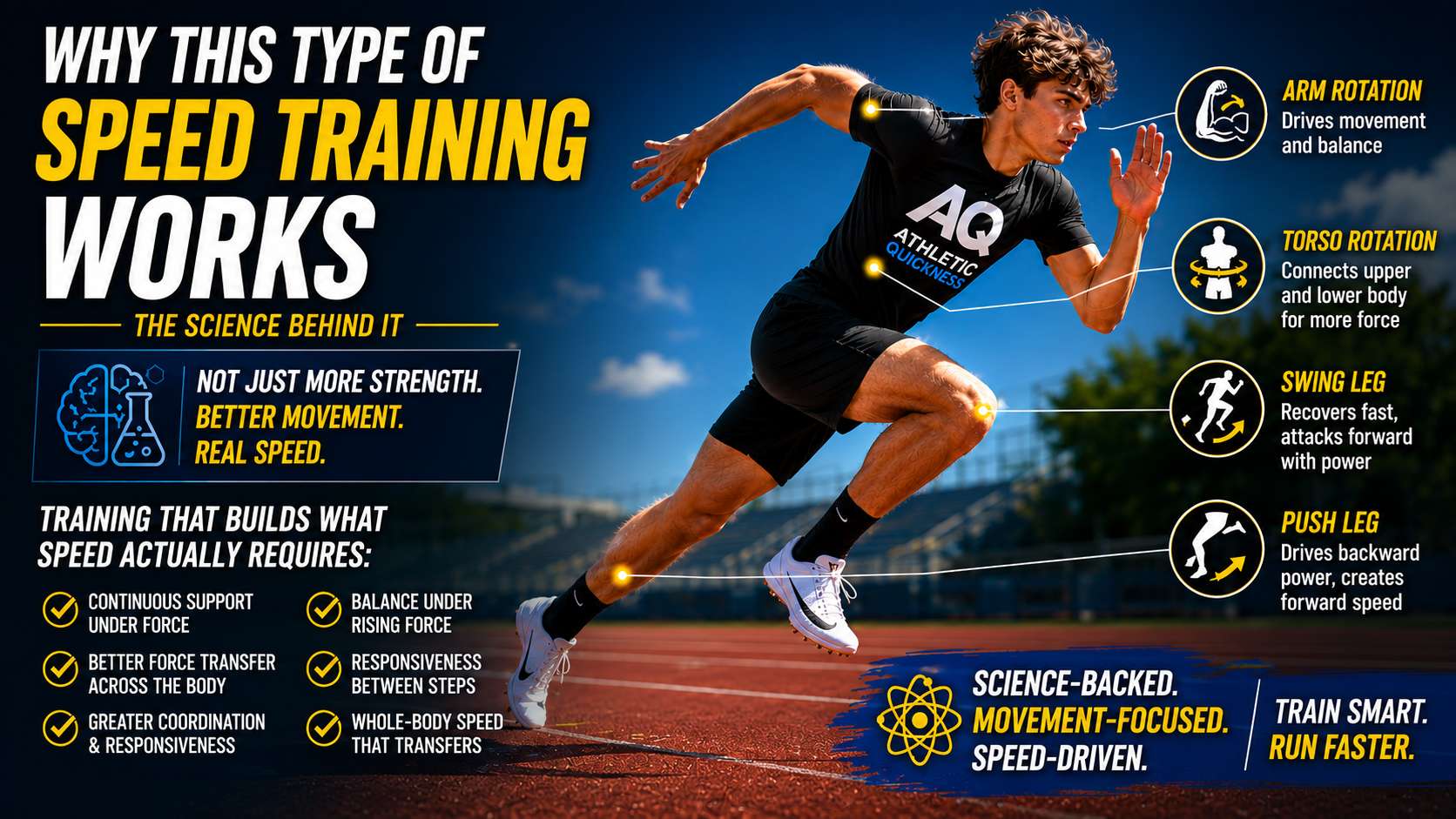
• the pushing leg drives aggressively backward
• the swing leg attacks aggressively forward
• the arms twist to support movement
• the torso rotates to connect both sides of the body
👉 all continuously.
And the faster sprinting becomes,
👉 the harder it becomes for the body to continue supporting those aggressive movement relationships cleanly under force.
That is massively important.
Because some athletes improve force output…
💥 while the body still struggles to support that force efficiently during sprinting.
Which means the body may struggle to continuously support:
• push leg force
• swing leg speed
• arm rotational contribution
• torso rotational balance
👉 together under rising force.
That is where many speed plateaus begin.
🔄 What Makes This Training Different
Traditional training often uses:
👉 stable,
predictable resistance.
This approach intentionally creates:
💥 continuously changing support demands.
That matters enormously.
With fluctuating resistance bands during isometric holds,
small positional changes can alter:
• resistance direction
• resistance intensity
• balance demands
• muscular response requirements
👉 continuously.
And that forces the body to constantly reorganize support relationships under force,
👉 all while trying to maintain a steady position.
That is very different from simply:
❌ moving weight from point A to point B.
Because sprinting itself is not:
❌ perfectly stable force expression.
💥 Sprinting is continuous aggressive movement support under changing force conditions.
Which means:
• the pushing leg continues driving backward aggressively
• the swing leg continues attacking forward aggressively
• the arms continue rotating to support movement
• the torso continues helping connect both sides of the body
👉 while force relationships continuously change.
That is one reason this training can transfer differently to sprint performance.
🧠 Why Fluctuating Resistance Matters
This is one of the most overlooked concepts in AQ training.
During fluctuating resistance holds,
👉 the body is rarely perfectly still.
Tiny shifts occur constantly.
And those shifts may require:
• continuous balance adjustment
• constant muscular response changes
• ongoing force redistribution
• aggressive movement support under instability
That is huge.
Because the body has to be trained to continuously support force relationships (between arms, legs, torso) while conditions constantly change.
Which means continuing to support:
• push leg force
• swing leg speed and repositioning
• arm rotational support
• torso rotational balance
👉 simultaneously.
That is extremely sprint-specific conceptually.
And honestly?
This is one reason the training often feels:
• unusually demanding
• unstable
• reactive
• difficult to fully settle into
The body is continuously reorganizing support relationships under force.
🚨 Why This Can Matter For Sprint Development
Sprint speed often improves when athletes not only improve push leg strength but also:
• aggressive swing leg support
• arm movement continuity
• torso rotation
• balance under rising force
• responsiveness between steps
👉 simultaneously.
That is where this training aims differently.
Because the goal is not:
❌ isolated force expression.
The goal is:
💥 increasing aggressive movement the body can continue supporting while remaining balanced.
Which means improving:
• pushing leg force expression
• swing leg speed and force
• arm rotational contribution
• torso rotational support
👉 together.
That is a very different training target.
And honestly?
That difference may explain why some athletes:
• get stronger
• lift heavier
• work harder
👉 yet still struggle to sprint faster.
🔑 Why This Can Fill Gaps Other Methods Leave
Traditional methods often improve:
• strength foundations
• force potential
• muscular output
Important qualities.
👉 But sprint speed still depends on whether the body can organize and support those rising forces during aggressive movement.
Huge distinction.
Because force potential and sprint speed are not automatically identical.
💥 The body may suppress force it cannot continue supporting cleanly during sprinting.
That is one of the most important AQ ideas overall.
And honestly?
This is why some athletes:
• look explosive
• lift impressive weight
• produce high force
👉 but still struggle to create separation while sprinting.
This training attempts to improve:
💥 how the body supports aggressive movement under force.
Which means improving how the body supports:
• push leg force
• swing leg speed
• arm rotational speed
• torso rotational contribution
👉 together under rising force.
That is where the transfer difference may occur.
⚙️ Why The Nervous System Matters So Much
Many speed discussions focus only on muscles.
👉 But muscles do not operate independently.
The nervous system helps regulate:
• timing
• responsiveness
• movement support
• force relationships
• balance under aggressive movement
And sprint speed depends heavily on those qualities.
Because sprinting happens:
👉 fast,
violently,
and continuously.
That means the body must constantly:
• organize force
• support opposing torque relationships
• redistribute balance
• maintain movement continuity
under speed.
Which means continuously supporting:
• push leg aggression
• swing leg repositioning speed
• arm rotational support
• torso movement connection
👉 together.
That is one reason AQ training emphasizes:
💥 continuous support adaptation under force.
Not just isolated muscular output.
🚀 What This Means For You
Many athletes already work hard enough to sprint faster.
👉 The issue is often whether the body can continue supporting aggressive movement efficiently under force.
That changes how speed training should be viewed.
Because the goal is not:
❌ simply producing more force.
The goal is:
💥 improving how the body organizes,
supports,
and transfers aggressive movement during sprinting.
Which means:
• the pushing leg drives aggressively backward
• the swing leg attacks aggressively forward
• the arms twist to support movement
• the torso rotates to connect both sides of the body
👉 all continuously.
💥 Faster sprinting depends on how well the body continues supporting all of these aggressive movements together under force.
That is the AQ difference.
🧭 You Are Here
You are currently exploring:
👉 WHY THIS TYPE OF SPEED TRAINING WORKS: how AQ training improves aggressive movement support, force organization, and continuous movement adaptation under changing sprint force conditions.
🌐 See how this fits into the complete AQ speed system:
Learn how AQ approaches:
force production,
movement support,
timing between steps,
strength balance,
and sprint speed development.
➡️ SPEED TRAINING SCIENCE: Why Most Methods Fail (And What Actually Works)
🪜 Continue Deeper Into AQ Sprint Training:
Learn why stronger athletes do not always become faster when sprint movement can no longer continue supporting rising force cleanly.
➡️ Why Traditional Training Can Make You Stronger—But Not Always Faster
Learn how resistance bands help challenge continuous force support and movement reorganization differently than traditional stable resistance.
➡️ How Resistance Bands Improve Speed (And What They Add Beyond Weights)
Learn what actually creates sprint force and why faster sprinting depends on more than isolated pushing-leg output.
➡️ What Actually Creates Force in Running? (And Why Most Athletes Get It Wrong)
🚀 Ready To Run Faster?
If you are ready to turn this information into real speed:
➡️ Run Faster With Isometric Training
❓Common Questions
Why can this method improve speed differently?
Because it challenges how the body supports aggressive movement under continuously changing force conditions.
Are resistance bands the main reason it works?
👉 Not by themselves.
It is how fluctuating resistance is used within the training system.
Why are isometric holds important?
Because they can force continuous support adjustments under force rather than simple repetitive movement.
Is this replacing strength training?
No.
💥 It can complement foundational strength work while improving how force is supported during sprinting.
What makes this different from ordinary band training?
👉 The fluctuating resistance,
continuous support demands,
and aggressive movement emphasis.