
Home » Why You're Not Getting Faster » You Don’t Run With One Leg At A Time
📖 Part 11 of 18
🧠 Introduction
In the last article, we discovered something important.
The glutes, hamstrings, quads, and calves may continue improving.
Yet speed doesn’t always improve the same way.
That realization naturally creates another question.
If the muscles responsible for pushing continue getting stronger…
💥 why doesn’t speed continue improving the same way?
Many athletes find themselves exactly at this place.
Because they have been led to believe sprinting is primarily about:
👉 pushing
👉 driving
👉 producing force
👉 attacking the ground
And one leg certainly does those things.
But there may be a problem with viewing sprinting that way.
🤔 There Are Two Sides To This Sprinting Story
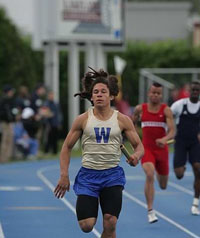
Look at any sprinting photo.
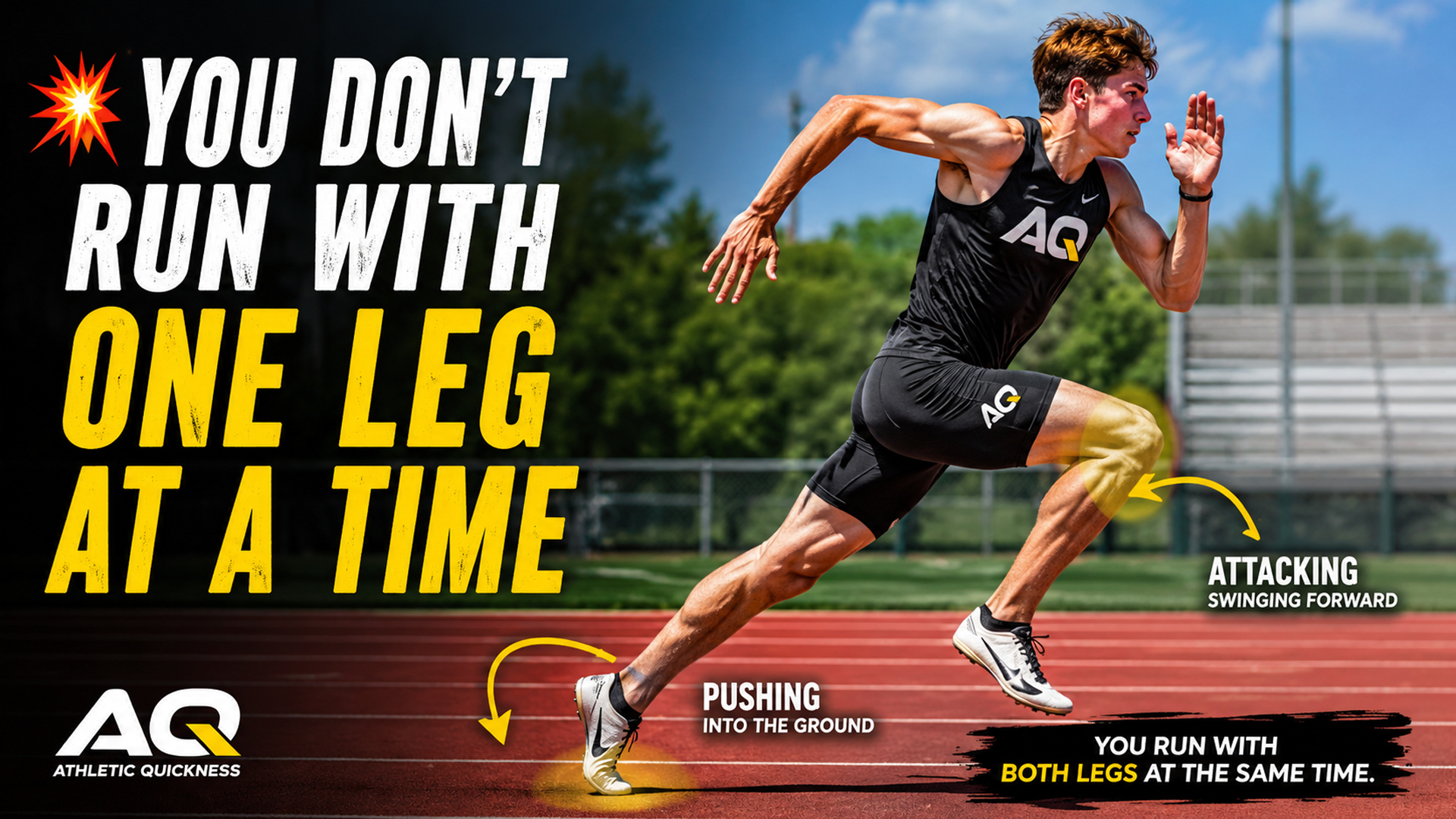
On one side of the body, a leg is pushing into the ground from behind.
On the other side of the body, a leg is attacking, swinging forward.
One side is contacting the ground.
The other side is moving through the air.
Both are active.
Both are moving.
Both are participating.
💥 You don’t run with one leg at a time.
You run with both legs at the same time.
That may sound obvious now.
But many athletes spend years thinking almost entirely about the leg touching the ground.
The pushing leg.
The driving leg.
The force-producing leg.
Meanwhile, the opposite leg often receives far less attention.
👀 The Leg Everyone Watches
Watch a sprint race.
Most people immediately notice:
👉 the push
👉 the drive
👉 the force
👉 the ground contact
And that’s understandable.
The pushing leg is easy to see.
It’s producing force against the ground.
It’s visibly helping project the athlete forward.
Naturally, much of sprint training ends up focusing on that side of the movement.
Push harder.
Drive harder.
Produce more force.
Sound familiar?
🤣
We’ve already spent several articles discussing the muscles most often associated with that side of sprinting.
And for a while:
that approach often works.
The glutes improve.
The hamstrings improve.
The quads improve.
The calves improve.
And often:
👉 speed improves too.
Which only reinforces the belief that sprinting is primarily about the leg touching the ground.
Until one day…
the stopwatch begins telling a different story.
🤔 What About The Other Leg?
Now look at the opposite leg.
While one leg is pushing into the ground from behind…
the other leg is attacking, swinging forward.
While one leg is helping finish a stride…
the other leg is helping prepare the next one.
Both are active.
Both are participating.
Both are involved in every step.
Yet many athletes spend remarkably little time thinking about that side of the movement.
Not because it doesn’t exist.
Not because it isn’t visible.
Because most conversations about speed continue revolving around pushing.
And when most of the attention goes toward one side of the movement…
it’s easy for the other side to become an afterthought.
Think about your own training.
How much time have you spent trying to improve:
👉 pushing
👉 driving
👉 force production
👉 ground contact
Now compare that to the amount of time you’ve spent trying to understand:
👉 what the opposite leg is doing
👉 how it contributes
👉 whether it influences speed
For many athletes, the difference is enormous.
Not because they don’t care about speed.
Because they were never taught to look there.
And if sprinting depends on both legs…
perhaps overlooking one of them could become one reason you’re not faster.
💥 Imagine Running With Only One Side
Let’s perform a simple thought experiment.
Suppose one leg could push perfectly.
Suppose it could:
👉 produce force
👉 drive aggressively
👉 attack the ground
👉 project the body forward
Now suppose the opposite leg contributed almost nothing.
Would sprinting still work the same way?
Of course not.
🤣
Every stride depends on both legs participating.
One side is helping finish a stride.
The other side is helping prepare the next one.
One side is pushing.
The other side is swinging.
Both are involved.
Both are active.
Both are contributing.
💥 Every stride is a two-sided event.
Not a one-sided event.
And if that’s true…
perhaps speed depends on more than the leg touching the ground.
🤯 Maybe This Is Part Of The Problem
For years, many athletes have been asking:
👉 How can I push harder?
👉 How can I drive harder?
👉 How can I produce more force?
👉 How can I attack the ground better?
Those are reasonable questions.
But perhaps another question deserves attention too.
💥 What is the other leg doing?
Because if sprinting depends on both legs…
and one side has been receiving most of the attention…
perhaps there is more to speed than many athletes realize.
Maybe speed isn’t determined by one leg alone.
Maybe speed depends on how both legs participate together during every stride.
And if that’s true…
perhaps focusing almost entirely on one side of the movement could become one reason you’re not faster.
🧭 Continue The Journey
We’ve now identified something many athletes never stop to consider.
💥 You don’t run with one leg at a time.
You run with both legs at the same time.
One side pushes.
The other side swings.
Both participate during every stride.
But if both sides contribute…
what exactly is the swinging side doing?
And how important might it be?
Many athletes spend years developing the pushing side of sprinting.
Far fewer spend time understanding the swinging side.
💥 That may be another reason you’re not faster.