

Home » Why You're Not Getting Faster » Why Running Finally Feels Different (When It Clicks)
🧠 Introduction
At some point, something changes.
👉 not just your times
💥 but how running actually feels
👉 and for a lot of athletes…
👉 it catches them off guard
👉 because it doesn’t feel like:
👉 working harder
👉 pushing more
👉 trying to force speed
💥 it feels like the opposite
👉 like something finally clicked
⚡ The First Thing You Notice
It’s not effort.
👉 it’s how easy things
👉 start to feel
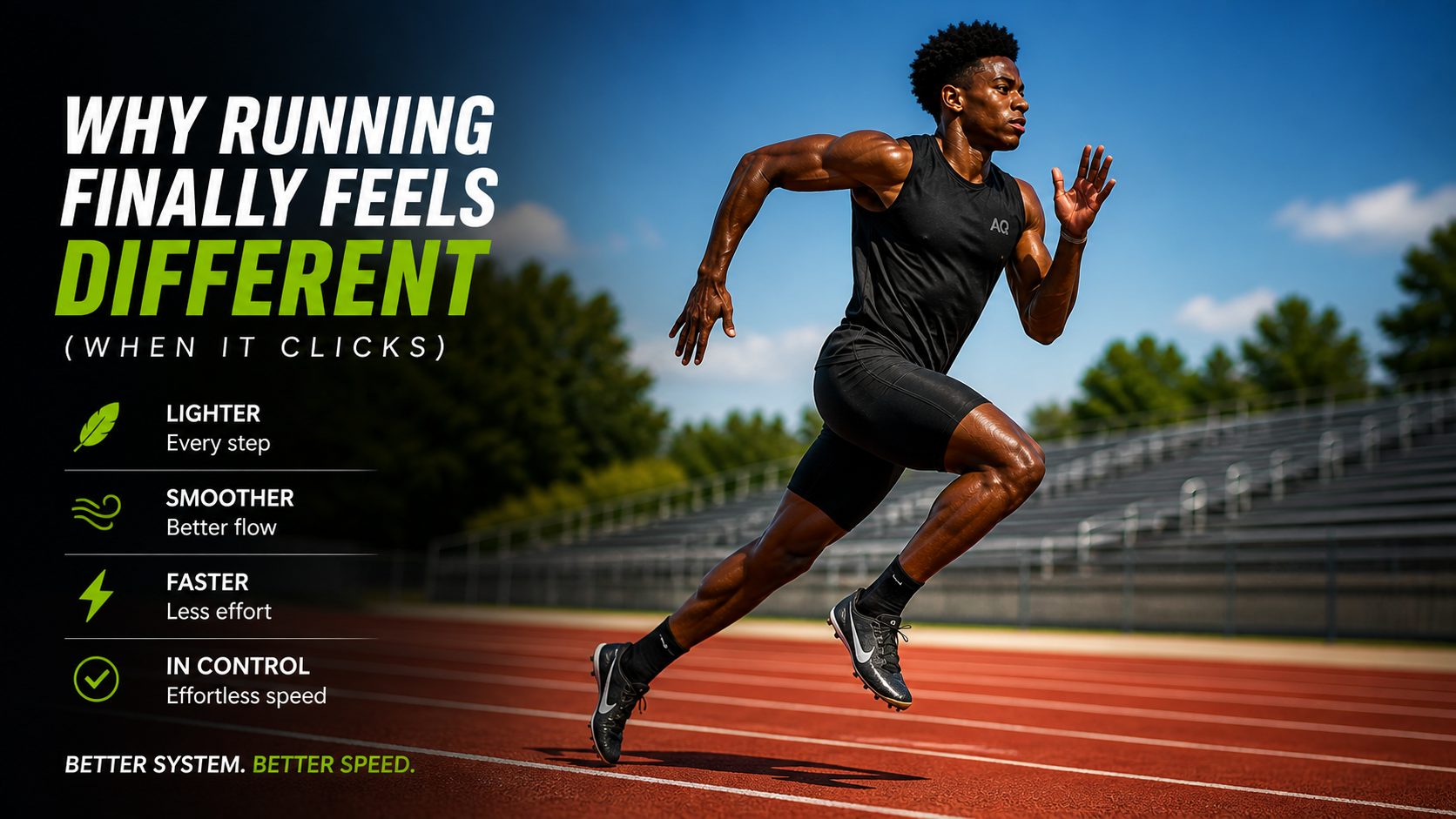
👉 your stride feels lighter
👉 your steps feel quicker
👉 your stride starts feeling
👉 more fluid and responsive
💥 almost like your body
👉 is moving on its own
👉 without you trying
👉 to control it
🧠 Why This Feels So Different
Because most athletes are used to:
👉 working for speed
👉 trying to create it
👉 forcing it to happen
💥 but that’s not
👉 how speed actually works
👉 when the system is aligned:
👉 your push becomes easier to express
👉 your swing keeps up
👉 your arms support everything
💥 and the system starts supporting
👉 and expressing force together
⚠️ What You Stop Feeling
This is just as important.
👉 you stop feeling like
👉 you’re fighting each step
👉 you stop feeling heavy
👉 you stop feeling out of sync
💥 like something is no longer
👉 in the way
⚡ The “Effort Shift”
Before:
👉 more effort = trying to go faster
After:
👉 less effort = moving faster
💥 that’s the shift
👉 not because you’re doing less
💥 but because the system
👉 is doing more
🧠 Why It Feels Almost Effortless
This is where a lot of athletes hesitate.
👉 because it feels too easy
👉 like you should be working harder
💥 but that’s the old model
👉 real speed feels:
👉 smooth
👉 controlled
👉 repeatable
💥 not forced
⚡ When It Really Clicks
At some point, you may notice:
👉 you can access speed quickly
👉 your timing between steps
👉 stays consistent
👉 your stride starts feeling automatic
💥 like you found another gear
👉 but without trying
👉 to shift into it
🧠 What’s Actually Happening
Nothing magical.
👉 your system is no longer
👉 competing with itself
👉 the push, swing, and upper body
👉 are working together
💥 so the system supports force
👉 more cleanly
👉 and speed becomes easier to express
⚠️ Why This Doesn’t Get Taught
Because it doesn’t look like effort.
👉 and most training
👉 is built around:
👉 working harder
👉 doing more
👉 pushing limits
💥 but speed responds differently
👉 it responds to:
👉 timing between steps
👉 system balance
👉 force support
🚀 What This Means for You
When the system starts working correctly:
👉 speed stops feeling forced
👉 your stride feels lighter
👉 your steps feel more responsive
👉 and speed becomes easier to access
💥 not because less effort exists
👉 but because the system
👉 is finally supporting speed correctly
👉 and for many athletes
👉 that’s the moment
👉 running finally feels different
🧭 Go Deeper
➡️ What Real Speed Improvement Actually Looks Like
➡️ Why This Approach to Speed Training Works (When Others Don’t)
🎯 Start Here
Real speed is not supposed to feel heavy.
👉 when the system supports speed correctly
👉 running starts feeling lighter
👉 faster
👉 and more natural
➡️ Run Faster With Isometric Training
A system-based approach to improving timing, force support, balance, and speed expression.
❓ FAQ
Why does running suddenly feel easier?
👉 because the system is finally supporting and expressing force more efficiently
Should speed feel effortless?
👉 not effortless in the sense of no work — but smoother, lighter, and easier to access
Why do athletes often feel “stuck” before this happens?
👉 because the system is usually competing against itself instead of working together
What are the first signs that things are clicking?
👉 lighter strides, more responsive steps, smoother timing, and easier access to speed








