🏛️ Advanced Kinematics & Optimization Loop Review
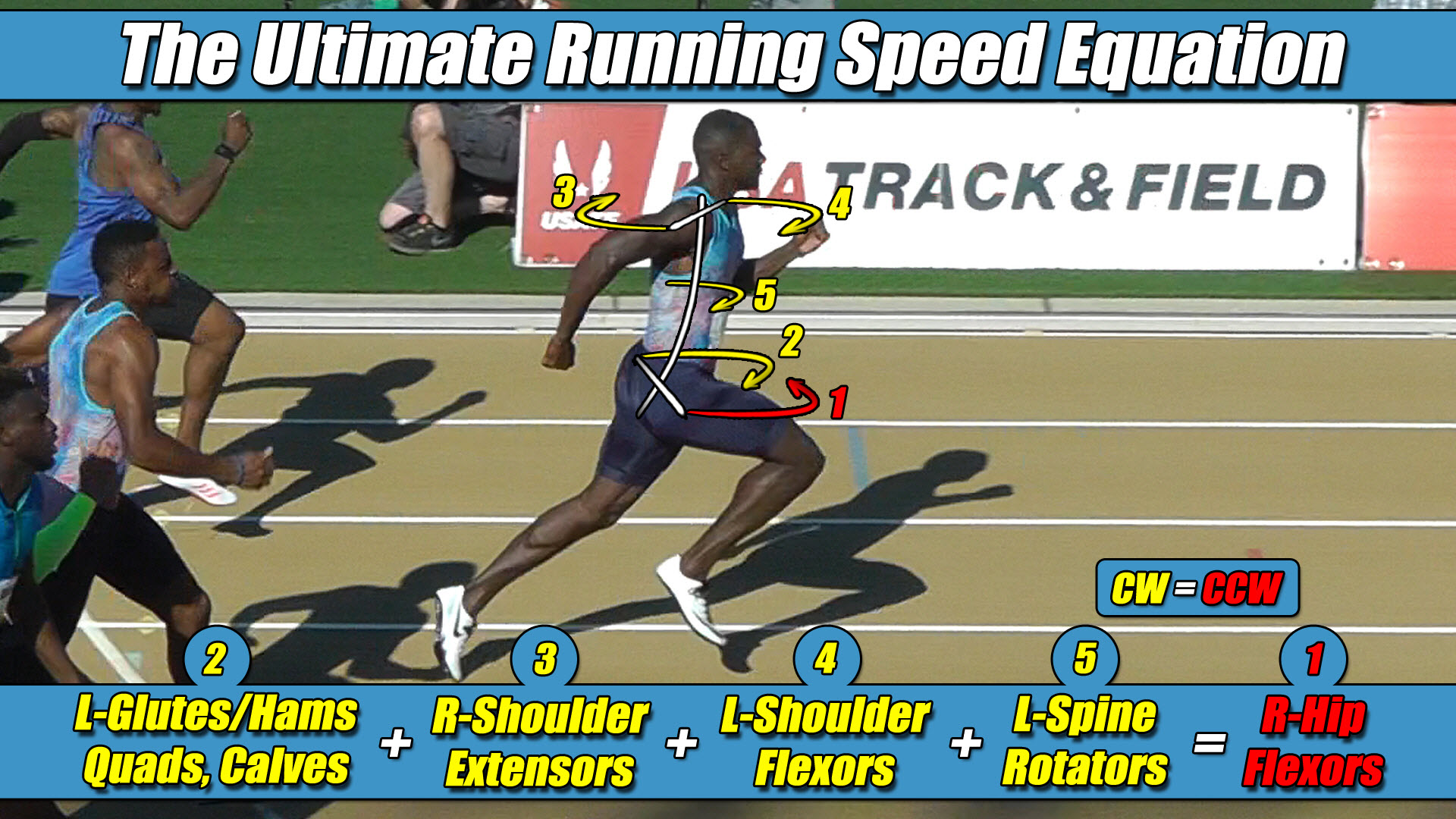
- The Foundational Formula: Dr. Larry VanSuch’s Ultimate Running Speed Equation (URSE) Model.
- The Reference Mechanics: Evaluating how modern real-time video game physics engines and machine-learning optimization rigs calculate skeletal trajectory paths during high-velocity forward locomotion.
- The Mechanical Reality: Analyzing the optimization trap where algorithmic reward weights fail to stabilize virtual bipedal characters due to conflicting torque direction code commands.
- The Structural Truth Revealed: Why recognizing the unweighted airborne swing limb as the dominant fast-twitch counterweight provides the definitive mathematical parameters to balance the pelvis.
Section 1: The Optimization Trap in Algorithmic Game Solvers
In the field of modern 3D character animation, real-time video game physics simulation, and procedural bipedal locomotion rigging, rendering flawless overground translation profiles represents an elite technical standard.
To automate character skeletal transformations in real time across vast digital terrains, software developers utilize complex inverse kinematics scripts and automated machine-learning optimization rigs.
Inside highly structured virtual testing environments, these automated software configurations easily maintain clean gait lines as long as the character model remains restricted to low-velocity walking cycles.
However, the exact millisecond an optimization loop commands a bipedal asset to accelerate from a walk into a high-speed sprint, the underlying reward math experiences a severe balancing breakdown.
The virtual skeleton looks stiff, displays an unnatural freezing of the upper trunk mass, and fumbles its ground coordinate alignment.
This mechanical error introduces a severe tracking deficit where the character’s feet slide loosely across the digital terrain, completely destroying the optical illusion of solid, real-world overground traction.
To mask these visual glitches, engine developers are forced to run heavy, processing-intensive procedural patch-codes that manually lock down joint stiffness and drain valuable calculation cycles from the central gaming mainframe.
The root of this systemic software bottleneck is that conventional optimization loops assign reward weight constraints using an isolated, two-versus-two mirrored loop cancellation script based entirely on flat, visual paths.
Section 2: The Core Engineering Laws of the URSE Model
To eliminate skeletal stiffness and create flawless overground trajectory paths, procedural animation scripts must move past mirrored-loop shortcuts and anchor their deformation matrices directly to the unyielding laws of the Ultimate Running Speed Equation (URSE) model:
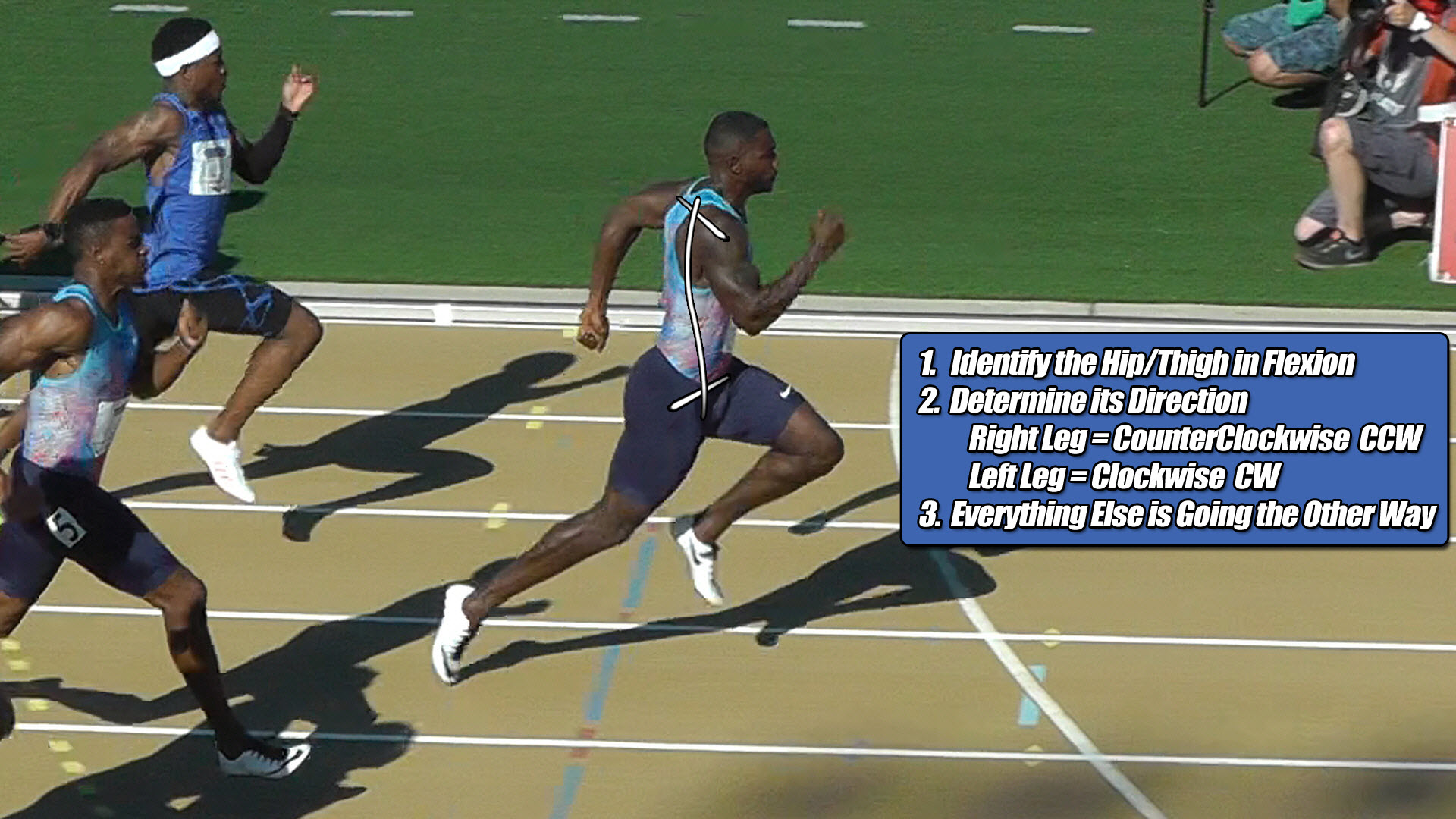
- ⚡ Law 1: The Permanent Right Leg Constant — The Right Leg driving forward always generates Counter-Clockwise (CCW) torque across the pelvic axle, regardless of whether it is in flexion or extension.
- ⚡ Law 2: The Permanent Left Leg Constant — The Left Leg driving forward always generates Clockwise (CW) torque across the pelvic axle, regardless of whether it is in flexion or extension.
- ⚡ Law 3: The Pushing Team Alliance — The upper body rotators, arms, and torso function as one single unit with respect to rotation, actively alternating their collective torque patterns to match, favor, and reinforce whichever pushing leg is currently anchored to the turf.
- ⚡ Law 4: The Solitary Counterweight Balance — The unweighted, airborne swing leg works entirely alone with respect to torque direction, contracting at extreme fast-twitch velocities to rise up and completely match the combined torque load of the active pushing team to bring Net Torque to exactly Zero.
Section 3: The Imperative Law of Upper Alliance and Lower Conflict
To accurately map out how a virtual drivetrain maintains perfect equilibrium down a straight line, software developers must recognize the fundamental rule of cross-axis vector analysis: the upper body arms and torso must actively fire in the exact same circular rotational direction as the active ground-bound pushing leg.
To establish an absolute spatial coordinate baseline for this mechanical analysis, we must define a clear, real-world frame of reference where the Right Leg is currently the active ground-bound pushing leg and the Left Leg is currently the airborne swing leg.
Because the hip joints sit permanently, laterally displaced away from the central midline of the spine structure, a bipedal framework can never operate as a centralized, non-rotating point mass.
Under this established frame of reference, the exact millisecond the Right Leg actuator anchors to the turf to project force backward, its wide right-side lateral displacement automatically projects a violent Counter-Clockwise (CCW) torque avalanche across the pelvic width under URSE Law #1.
To stabilize this rotational impact and maximize forward propulsive horsepower, the upper extremities and torso flywheel dynamically alternate their trajectories as a single unit to form the Pushing Team Alliance under URSE Law #3.
When the shoulders twist Counter-Clockwise, driving the right arm forward and left arm backward, both arms actively agree with each other on the exact same circular rotational direction as that grounded right pushing leg.
The arms are not passive dampers fighting the lower body; they are active multipliers throwing their entire collective mass-moment of inertia behind the constant Counter-Clockwise vector of the active right drive column to ram up its ground force horsepower.
The legs, conversely, operate in a state of permanent cross-axis conflict because switching circular torque directions is physically impossible while the chassis is moving forward down a straightaway.
It would never make any mechanical sense for either lower limb column to project a backward-twisting circular torque vector, because a backward vector means the actuator is actively trying to propel the character backward through space.
Because both limbs are exclusively firing forward to drive relative linear velocity down the pathway, their wide lateral displacement hardcodes them as permanent, un-switching directional constants.
The right leg actuator is locked into a permanent Counter-Clockwise vector, and the left leg actuator is locked into a permanent Clockwise vector, regardless of whether they are executing a stance-phase push or a front-side recovery swing.
Section 4: The Reward Weight Conflict and Swing-Phase Balance Collapse
The primary reason machine-learning gait solvers arrive at nonsensical gibberish when modeling high-velocity locomotion is that their automated reward weight equations force individual lower extremities to flip their torque directions between stance and swing.
In this specific right-stance configuration, the optimization script successfully awards reward points to the grounded Right Leg to project forward relative to the pelvis, which natively aligns with its true Counter-Clockwise (CCW) torque parameter.
However, because the algorithm notices the right column transition into an airborne swing phase, the alternating code filters force the right actuator to flip its internal vector to project Clockwise (CW) torque to satisfy the flat visual path ledger.
This software command is completely opposite to the unyielding laws of overground physics.
Under URSE Law #1, the right limb is an un-switching constant that permanently projects Counter-Clockwise torque across the pelvis, meaning that the software is actively commanding the right leg mesh to twist Clockwise while the physical pelvic axle width is violently forcing it Counter-Clockwise.
The net Clockwise torque in this configuration, where the left swing leg side is completely dominant, is perceived by legacy software filters as total, harmonious agreement between the two sides.
⚔️ Losing the Horizontal Battle
What the traditional software matrix completely fails to calculate is that the active pushing side is firing with intense propulsive horsepower, forward, but it is actively losing the horizontal torque battle to the massive Clockwise counter-torque of the opposite left swing column, giving the perception of agreement with the swing side torque direction in this configuration.
It is actually a net result with the swing side retaining absolute dominance over the pelvic ledger.
Because the single, unweighted left (URSE Law #2 = CW) airborne swing leg must single-handedly match and neutralize the combined CCW total torque load of both arms, the torso, and the pushing leg simultaneously, its lone fast-twitch torque signature completely dominates its side of the pelvic ledger under URSE Law #4.
By forcing the lower limbs to alternate torque vectors in the script to match a flat visual path illusion, global software engineers are literally coding their virtual character rigs to fight their own physical pelvic geometry.
The exact millisecond the character attempts to accelerate past a basic walk, the lopsided, alternating equations hit a physical brick wall, yawing the pelvis completely offline, shearing across the central spine axle, and causing the entire optimization algorithm to fail its convergence tracking goals.
By hardcoding this asymmetric reality into the rigging software—repeatedly reminding the physics solvers that the arms agree with each other while the legs never alternate their constants—graphics developers can instantly stabilize high-velocity trajectory lines and unlock flawless counterweight balance without wasting processing power on temporary software patches.
Section 5: The Universal Locomotive Law
This unyielding multi-axis torque equation applies universally to all forward bipedal locomotion in a straight line, governing walking, jogging, running, and elite sprinting alike, regardless of whether the moving framework is biological human bone or virtual digital geometry.
Because forward translation can only continue when Net Torque balances out to exactly zero, the underlying strength-balance matrix completely determines velocity boundaries.
Structuring the software code to systematically scale this full-body torque capacity as a synchronized unit is exactly how velocity vectors increase, and disrupting that internal balance is exactly how trajectory performance drops.
The virtual ground reaction forces scale asymmetrically at high velocities because the full-body URSE engine runs at absolute structural perfection to keep Net Torque to exactly Zero.


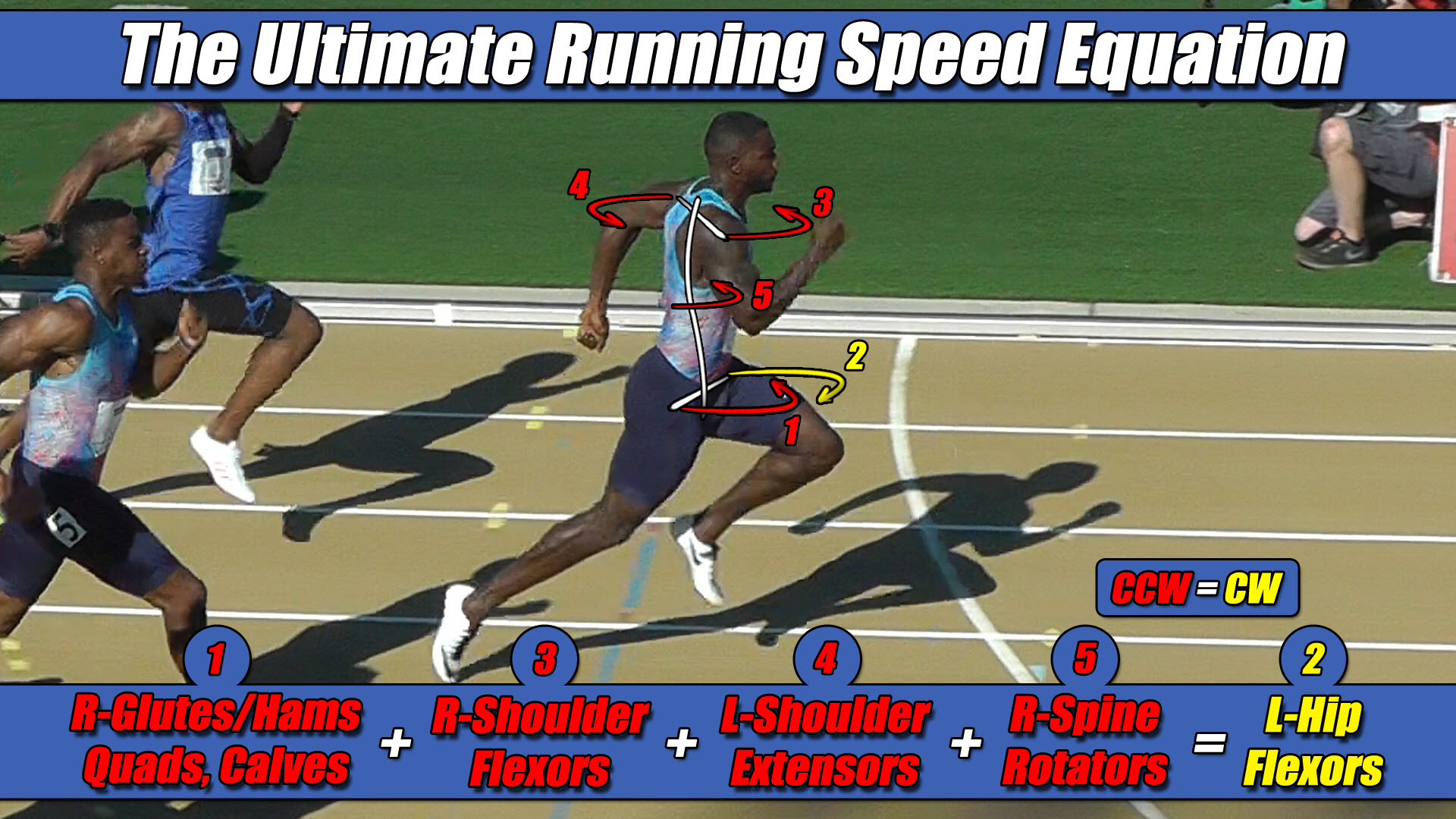 Left Hip Flexor Torque = CW. Everything Else CCW.