Not getting faster even though you train hard? Learn what most speed programs miss—and what actually helps you improve.

Not getting faster even though you train hard? Learn what most speed programs miss—and what actually helps you improve.
Shoulder extensors complete the arm cycle in running. Learn how backward arm movement supports balance, coordination, and speed performance.
Spine rotators don’t create speed—they connect your system. Learn how rotation transfers force and improves coordination for faster running.
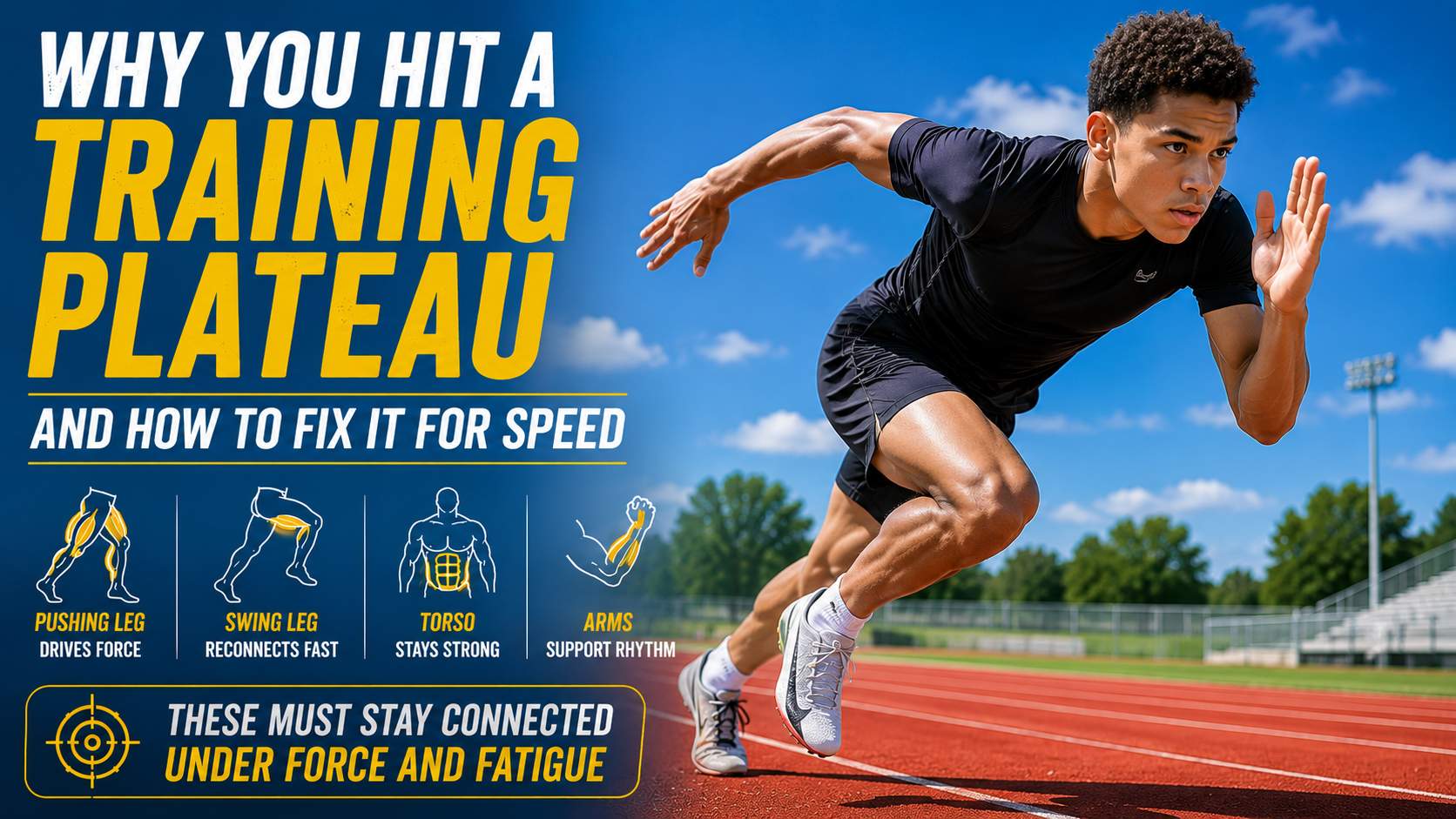
Discover what causes training plateaus and how AQ restores sprint-system support, timing between steps, and aggressive movement continuity.

Learn how faster muscle recruitment helps the sprint system cycle faster, support more force, and improve running speed.
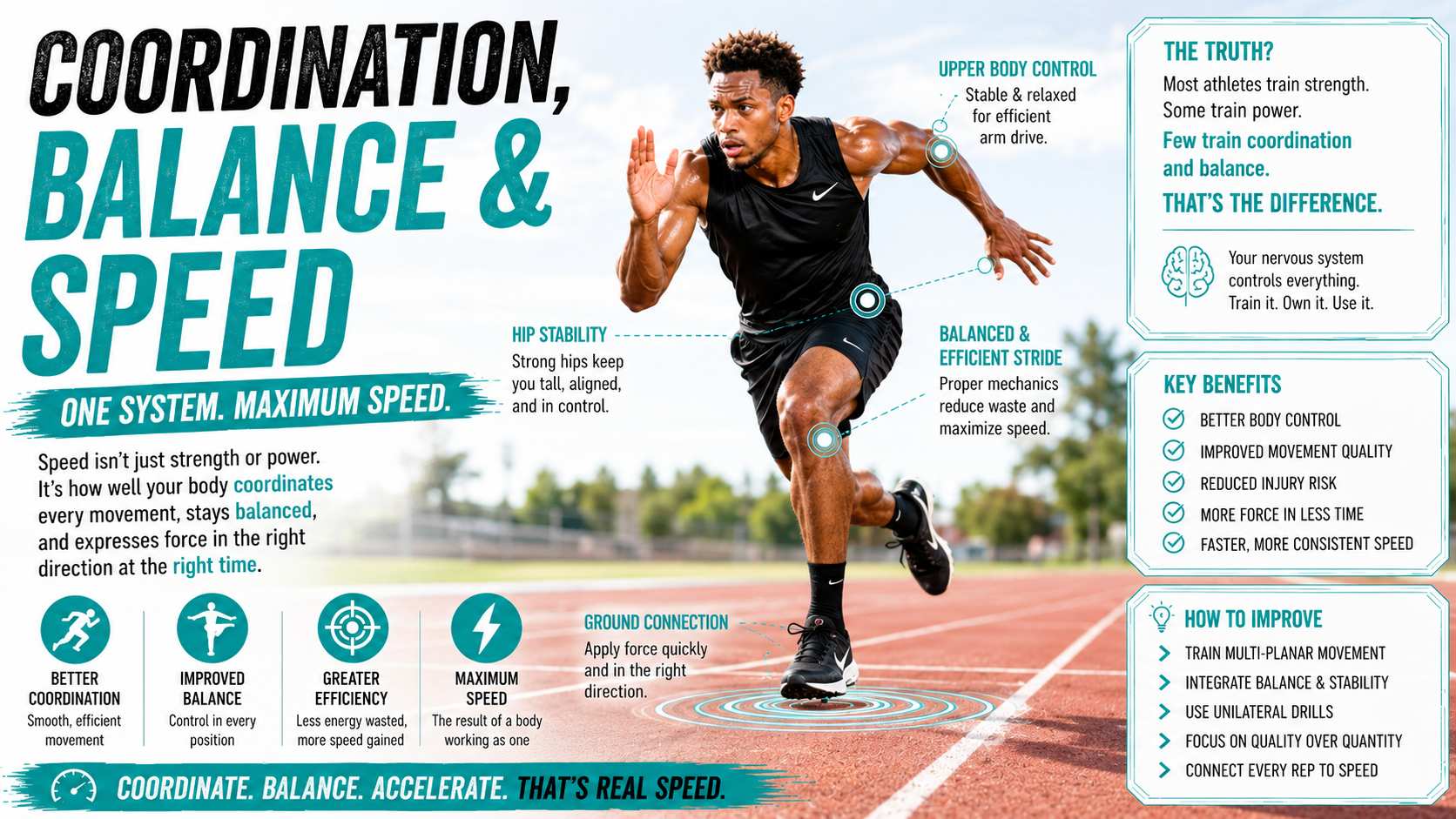
Most athletes rely on strength training to get faster—but strength alone doesn’t always translate into speed. This article explains the key difference between traditional strength training and isometric training, showing how each develops a different part of performance. Learn why combining both is essential for improving coordination, applying force more efficiently, and unlocking real running speed.

Learn why combining both helps the sprint system support force more aggressively, transfer force more cleanly, and improve sprint speed.

Learn how muscle shaking exposes hidden support weaknesses and helps improve sprint-system timing, support continuity, and aggressive movement control.
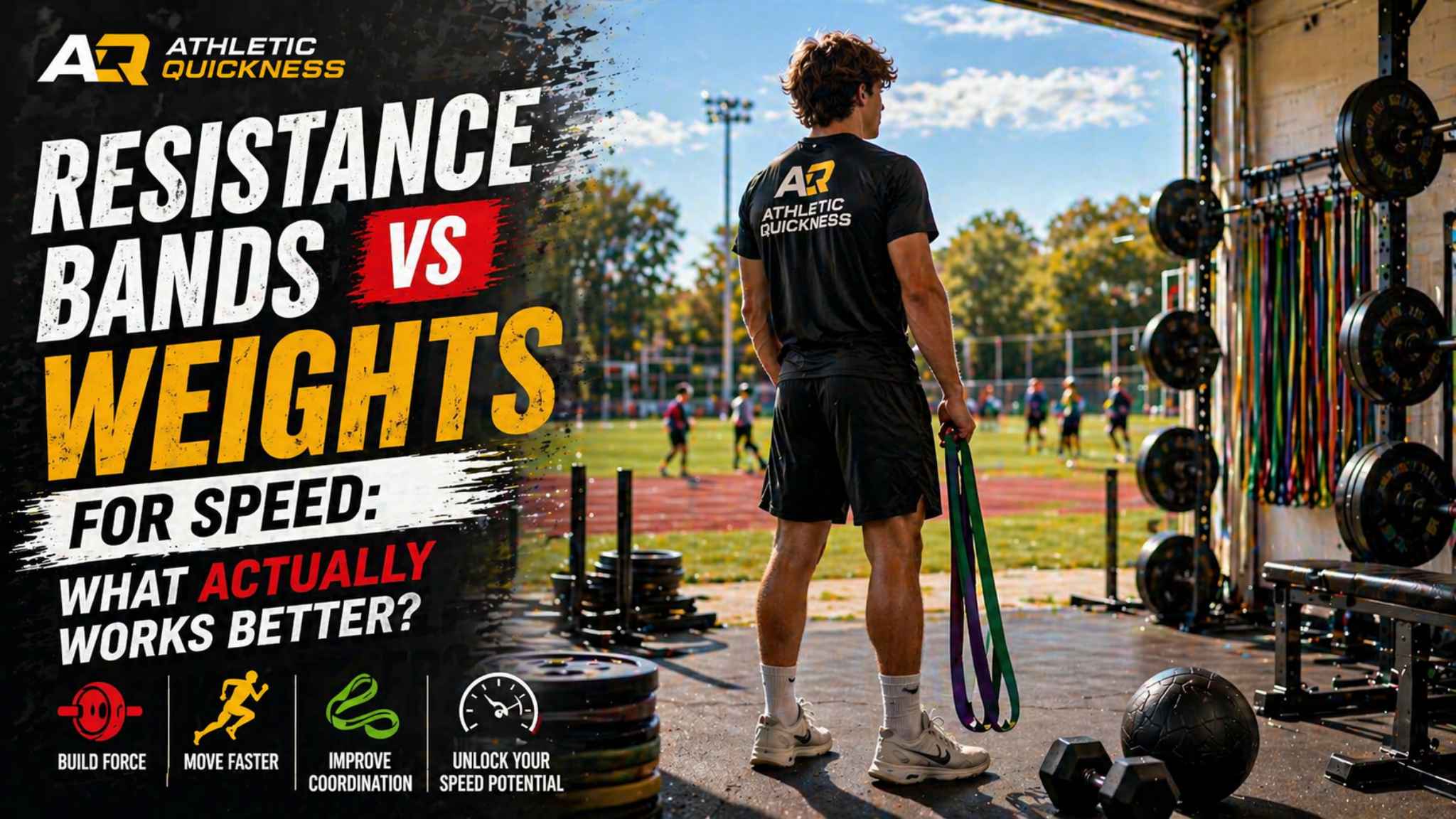
Are resistance bands or weights better for speed? The answer isn’t one or the other. Learn how each method develops a different part of performance—and why combining strength with coordination-based training is the key to running faster.
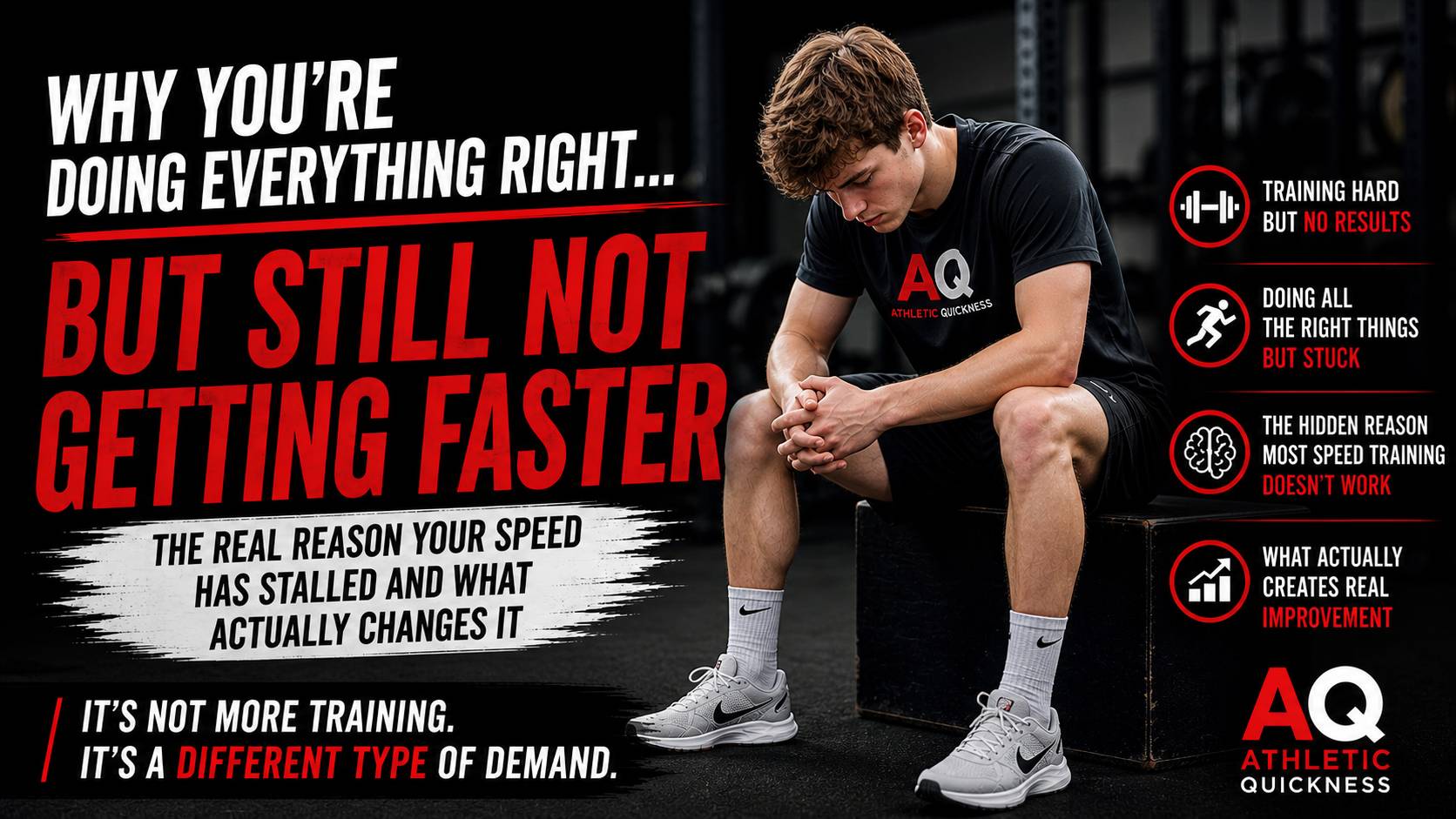
🧠 Introduction If you’ve been trying to get faster for a while… 👉 you’ve probably done everything you were told to do: • lifted weights• ran sprints• trained harder• pushed yourself 👉 And maybe you got stronger 👉 But your speed? 👉 didn’t change much 💥 Or maybe it stopped improving altogether 👉 If this […]
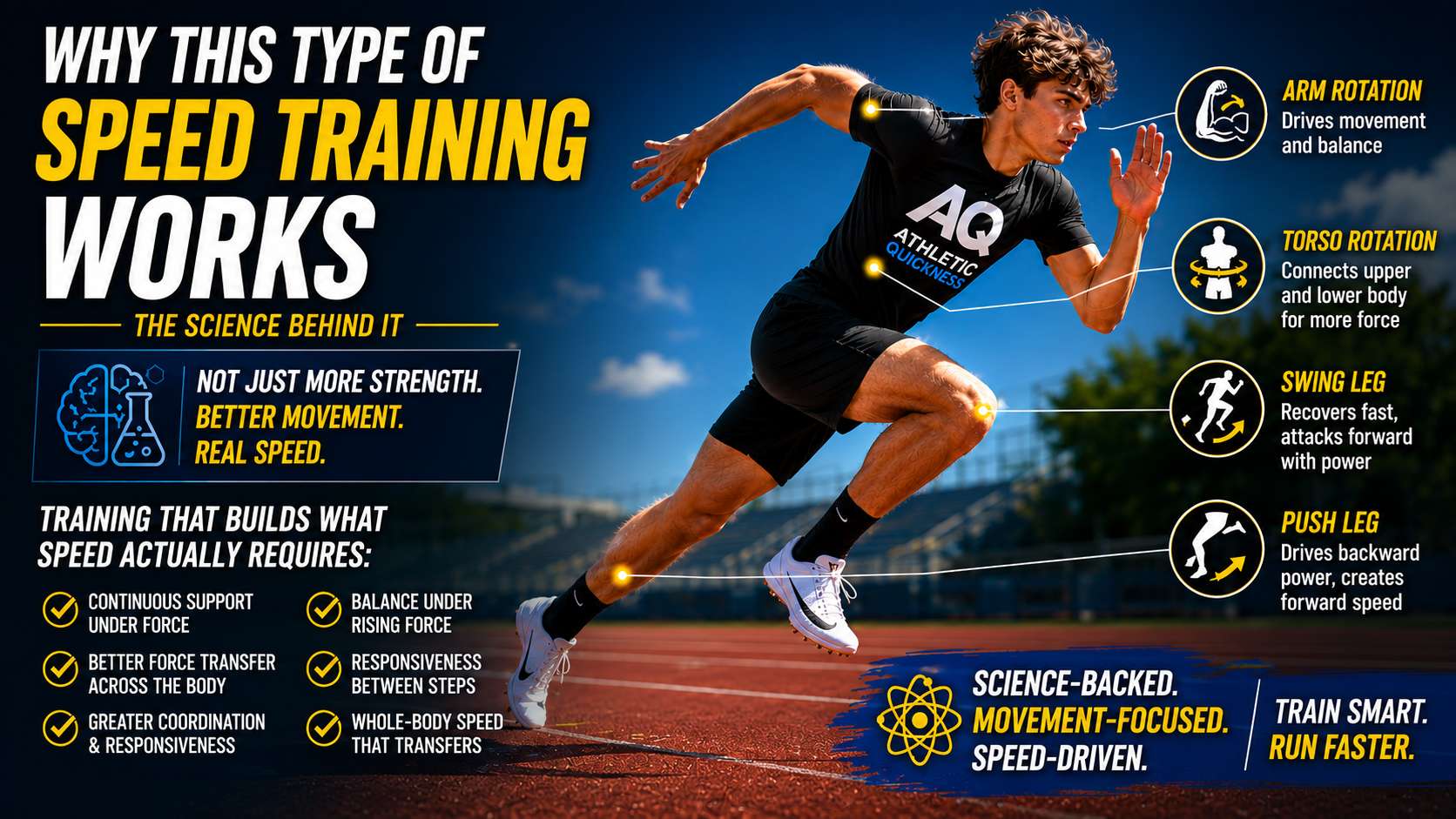
Learn why some speed training methods work better by improving timing between steps, aggressive movement support, and how the sprint movement responds under rising force demands.

Discover how resistance bands improve speed by increasing timing pressure, movement instability, and aggressive movement support demands beyond traditional weight training.
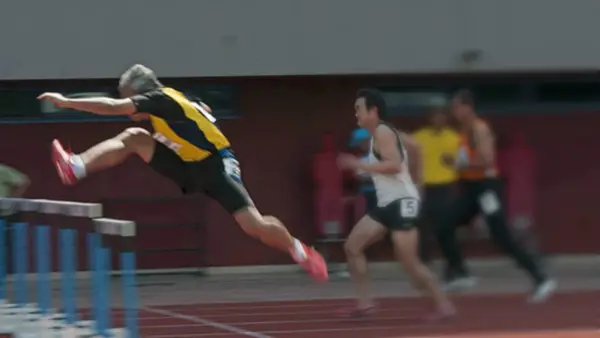
⚡ Dropped 100m hurdle time by over a full second after age 50
Continued improving every year despite getting older—proving speed gains don’t have an age limit.
👉 How was he getting faster while everyone else slows down?
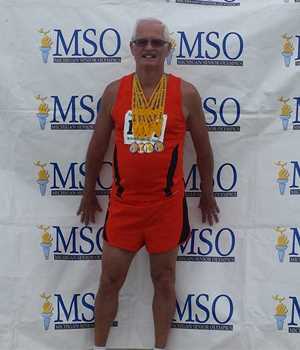
⚡ Dropped 100m hurdle time by 1.09 seconds after age 50
Continued improving year after year while competing at the international level. 💥Learn what he did!!
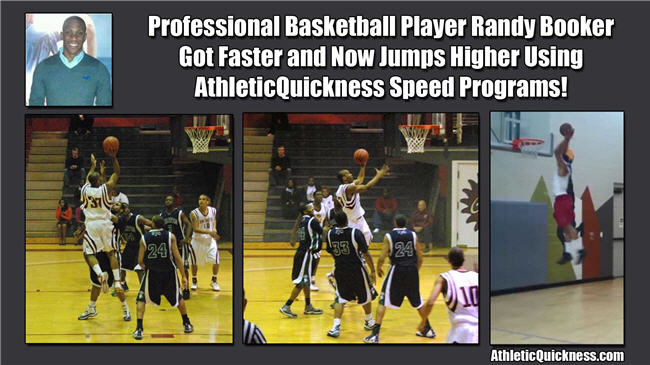
🏀 International Pro Basketball Player (Randy Booker)
⚡ Increased vertical jump and game speed in just 2 weeks
Now jumping higher, moving faster, and performing at a new level. ⚡What changed?
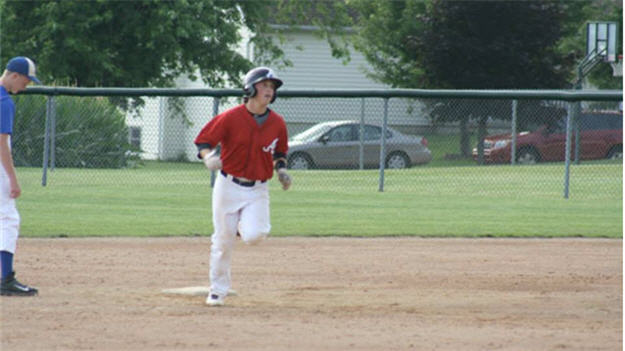
⚾Went from bench player to All-State performer and championship leader
Improved speed and power to become a key contributor on a title team.
👉 What turned his performance around so quickly?

💥 What If Muscle Confusion Isn’t What You Think? Most athletes hear “muscle confusion” and think: 👉 changing workouts • switching exercises• trying new routines• mixing things up 👉 And while that can help… 👉 it misses what actually matters ⚠️ The Common Definition (And Why It Falls Short) The typical idea is: • change […]

Chris J. – New Jersey
Event 1: 40
Before Time 1: 5.27
After Time 1: 4.90
Story: I’ve have been wanting to become a running back for my football team and had trouble increasing my speed. I did many strength exercises like leg presses, leg extensions, and leg curls. I did get results in muscle size, but not that increase of speed.
So, I went to youtube and watched the Speed Challenge video and did the thigh flexor exercise and I found quick results in my 40 yard dash! This increase in speed in so little time amazed me!”

User name: John
City, State: Odenville, AL
Event 1: 40
Before Time 1: 4.88
After Time 1: 4.79
Story: i ran a 4.6 forty yard dash as a junior in highschool. now after two years in college..i’m running a high 4.8 so i am looking to get back to my former speed so that i can possibly walk on a football team. after two weeks i am seeing my time drop and now i think i can get it all the way back down to maybe a 4.5. thanks for offering the Run Faster Program..i think it is really going to work for me.

“My name is Adam Thomas and I go to Eagle’s View Academy in Jacksonville, FL. I am a senior that has graduated and I am on my way to playing college football this upcoming season for Methodist University.
I have started to use your Speed Training,from June 1 to June 15, which has drastically dropped my 40 yard dash time from a 4.56 to a “MOVING” 4.41. I thank you, and you have blessed me and prepared me better for the next level.”
Event 1: 40
Before Time 1: 4.56
After Time 1: 4.41
User name: David
City, State: Elk Grove Village, IL
Event 1: 100
Before Time 1: 11.9
After Time 1: 11.5
Story: I was really doubtful that this program would work, but when I finally tried it, it felt great. I feel so much faster. I’ve gone from an 11.9 to an 11.5 and can’t wait to get the whole package and see how much faster I get.

User name: Dylan
City, State: Auckland, NEW ZEALAND
Event 1: 40
Before Time 1: 5.8
After Time 1: 5.4
Event 2: 200
Before Time 2: 24.8
After Time 2: 24.1
Story: The Run Faster program is incredible! After just 14 days i have seen huge results as i feel more athletic, explosive and quick as i play soccer.
This increase in speed allows me to make goal scoring situations a lot more frequently.
It has helped my game hugely and i strongly recommend the program to any soccer player!

User name: Christian Sam
City, State: Allen, Tx
Event 1: 40
Before Time 1: 5.43
After Time 1: 5.16
Story: I wasn’t that fast, i mean i was fast but not that fast. so we ran 40’s at school and i got a 5.43, so i wasn’t satisfied, i saw yalls program, i ordered the RUN FASTER program and i did it.
I felt light right after the first workout, i did it the full 2 weeks, and my 40 dropped!! i was so happy. I’m still using it and i know hopefully I’ll be in the 4.8’s soon.
Thanks Dr. Van Such, this was amazing!!