🏛️ Advanced Kinematics & Full-Body Integration Review
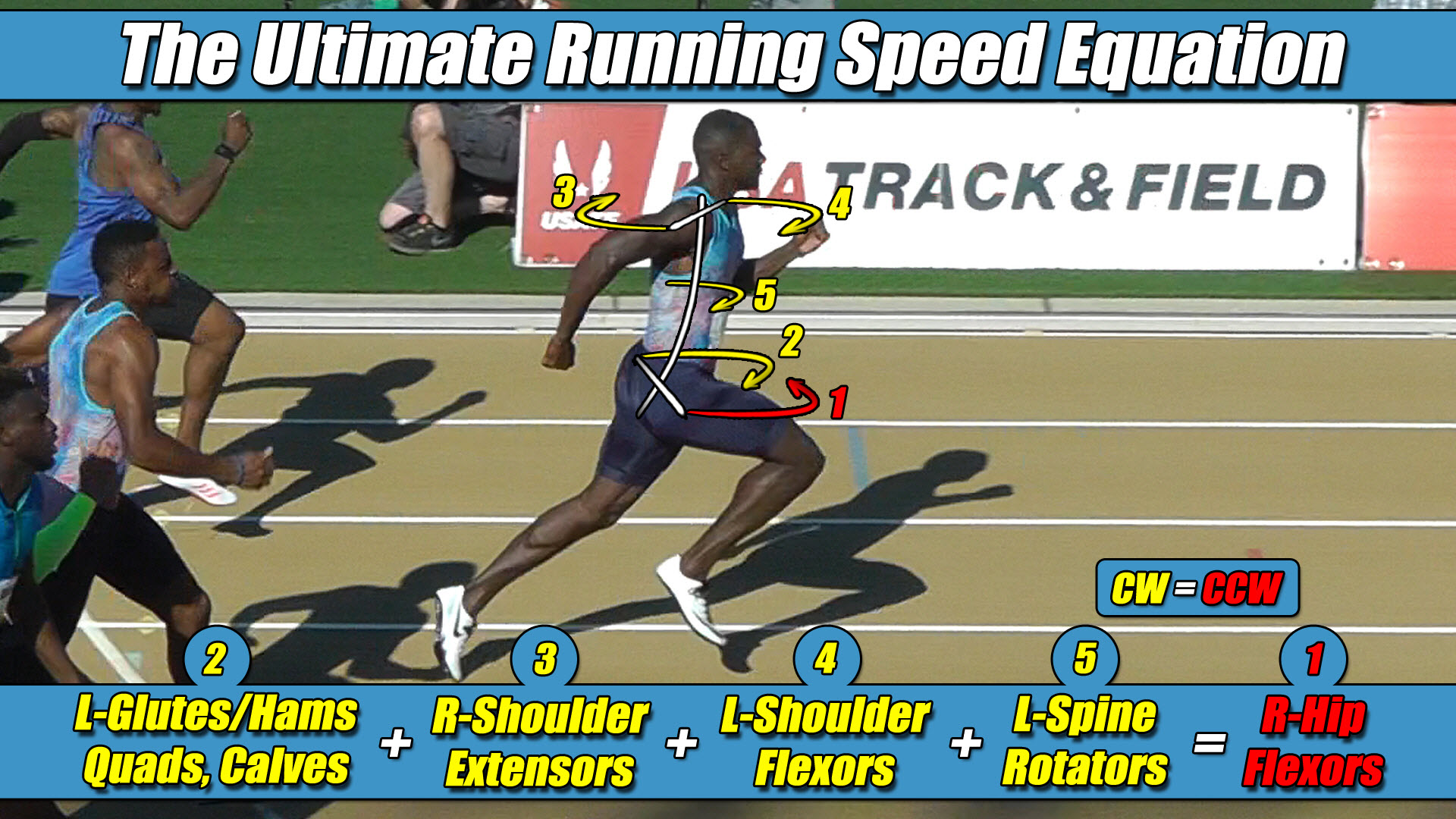
- The Foundational Formula: Dr. Larry VanSuch’s Ultimate Running Speed Equation (URSE) Model.
- The Reference Mechanics: Evaluating how modern real-time video game physics engines and inverse kinematics (IK) rigging systems calculate full-body joint coordination profiles during high-velocity forward locomotion.
- The Mechanical Reality: Analyzing the systemic software error where developers over-isolate lower-limb joints, causing severe mesh distortion, foot-sliding errors, and unnatural torso freezing at top-end speed values.
- The Structural Truth Revealed: Why coordinating and balancing five distinct mechatronic torque zones across the entire virtual framework provides the definitive parameters to stabilize the pelvis.
Section 1: The Isolated Matrix Fallacy in Virtual Rigging Foundations
In the field of modern 3D character animation, real-time video game physics simulation, and procedural bipedal locomotion rigging, rendering flawless overground translation profiles represents an elite technical standard.
To automate character skeletal transformations in real time across vast digital terrains, software developers utilize complex inverse kinematics scripts and multi-segment coordinate matrices.
Inside highly structured virtual testing environments, these automated software configurations easily maintain clean gait lines as long as the character model remains restricted to low-velocity walking cycles.
However, the exact millisecond an animation loop commands a bipedal asset to accelerate from a walk into a high-speed sprint, the underlying trajectory equations experience a severe balancing breakdown.
The virtual skeleton looks stiff, displays an unnatural twisting artifact along the waist polygon segments, and fumbles its ground coordinate alignment.
This mechanical error introduces a severe tracking deficit where the character’s trunk mass looks completely frozen, while the lower limbs appear to slide loosely across the digital terrain.
The ultimate engineering blind spot within modern virtual rigging design is that traditional development teams attempt to force speed or balance by over-developing a single, isolated segment of the character drivetrain.
They focus 100% of their computation loops on hyper-developing the linear lower-body joints responsible for downward ground propulsion, completely mirroring a primitive training bottleneck found in mainstream athletics where coaches over-load isolated lower-body muscles.
Locomotion is not an open-ended equation of linear pushing power; it is a strict, full-body equation of multi-axis rotational balance across the entire framework.
Section 2: The Core Engineering Laws of the URSE Model
To eliminate skeletal stiffness and create flawless overground trajectory paths, procedural animation scripts must move past mirrored-loop shortcuts and anchor their deformation matrices directly to the unyielding laws of the Ultimate Running Speed Equation (URSE) model:
- ⚡ Law 1: The Permanent Right Leg Constant — The Right Leg driving forward always generates Counter-Clockwise (CCW) torque across the pelvic axle, regardless of whether it is in flexion or extension.
- ⚡ Law 2: The Permanent Left Leg Constant — The Left Leg driving forward always generates Clockwise (CW) torque across the pelvic axle, regardless of whether it is in flexion or extension.
- ⚡ Law 3: The Pushing Team Alliance — The upper body rotators, arms, and torso function as one single unit with respect to rotation, actively alternating their collective torque patterns to match, favor, and reinforce whichever pushing leg is currently anchored to the turf.
- ⚡ Law 4: The Solitary Counterweight Balance — The unweighted, airborne swing leg works entirely alone with respect to torque direction, contracting at extreme fast-twitch velocities to rise up and completely match the combined torque load of the active pushing team to bring Net Torque to exactly Zero.
Section 3: The Five Sovereign Torque Zones of the Stride Engine
To unlock the true velocity potential of a virtual asset without forcing the skeleton to lock up, hardware developers and graphics animators must structure their code templates around a comprehensive array consisting of five distinct rotational torque zones.
Every single member of this five-part portfolio must be actively coordinated and balanced to allow the full-body torque engine to reach its maximum peak magnitude:
- Zone 1: The Triple Extension Drive Joint Solvers — The lower-limb servo chains calculating backward extension to project linear propulsion power against the turf template.
- Zone 2: The Front-Side Hip Flexor Winch Parameters — The airborne swing-phase joints responsible for violently whipping the unweighted recovery mesh forward to act as the primary velocity pace-setter.
- Zone 3: The Cross-Body Shoulder Flexor Controls — The upper-chassis arm rigging driving forward to multiply cross-axis ground forces.
- Zone 4: The Cross-Body Shoulder Extensor Controls — The upper-chassis arm rigging driving simultaneously backward to throw its mass-moment of inertia behind the same circular team vector.
- Zone 5: The Lateral Spine Rotator Flywheel Matrix — The core trunk bone segment network twisting the entire upper-body mass to anchor the upper-lower torque transmission together.
The critical requirement for software architects is that the upper-body zones must actively fire in the exact same circular rotational direction as the active ground-bound pushing leg to form the Pushing Team Alliance under URSE Law #3.
The upper body arms and torso are actively firing in the same circular vector as that pushing leg, locking them into a perfect cross-axis alliance to multiply ground force horsepower.
Section 4: The Full-Spectrum Balanced Integration Blueprint
When a procedural motion script ignores this five-zone portfolio—failing to line up the upper extremities with the grounding drive side—the bipedal character hits an unbreakable velocity wall.
If the software code forces the upper torso to remain rigid or leaves the front-side hip flexor recovery winches underpowered, the massive wave of torque traveling up from the wide pelvic axle width has no mechanical exit path or stabilization loop.
The software successfully commands the grounded Right Leg to push forward relative to the pelvis, but because it treats the limb as an isolated piston, it forces the right column to flip to Clockwise (CW) torque during the airborne swing phase to satisfy a flat visual path math illusion.
This software command is completely opposite to the unyielding laws of overground physics.
Under URSE Law #1, the right limb is an un-switching constant that permanently projects Counter-Clockwise torque across the pelvis, meaning that the software is actively commanding the right leg mesh to twist Clockwise while the physical pelvic axle width is violently forcing it Counter-Clockwise.
The net Clockwise torque in this configuration, where the left swing leg side is completely dominant, is perceived by legacy software filters as total, harmonious agreement between the two sides.
⚔️ Losing the Horizontal Battle
What the traditional software matrix completely fails to calculate is that the active pushing side is firing with intense propulsive horsepower, forward, but it is actively losing the horizontal torque battle to the massive Clockwise counter-torque of the opposite left swing column, giving the perception of agreement with the swing side torque direction in this configuration.
It is actually a net result with the swing side retaining absolute dominance over the pelvic ledger.
Because the single, unweighted left (URSE Law #2 = CW) airborne swing leg must single-handedly match and neutralize the combined CCW total torque load of both arms, the torso, and the pushing leg simultaneously, its lone fast-twitch torque signature completely dominates its side of the pelvic ledger under URSE Law #4.
By forcing the lower limbs to alternate torque vectors in the script to match a flat visual path illusion, global software engineers are coding their virtual character rigs to fight their own physical pelvic geometry.
The exact millisecond the character attempts to accelerate past a basic walk, the lopsided, alternating equations hit a physical brick wall, yawing the pelvis completely offline, shearing across the central spine axle, freezing the torso mass, and forcing the feet to slide out of control across the terrain coordinates.
By hardcoding these five distinct mechatronic zones into the rigging framework—repeatedly reminding the physics solvers that the upper body arms and torso must fire in the same circular direction as the pushing leg—graphics developers can instantly stabilize high-velocity trajectory lines, eliminate foot-sliding glitches, and remove torso stiffness without wasting a single processing cycle on temporary software patches.
Section 5: The Universal Locomotive Law
This unyielding multi-axis torque equation applies universally to all forward bipedal locomotion in a straight line, governing walking, jogging, running, and elite sprinting alike, regardless of whether the moving framework is biological human bone or virtual digital geometry.
Because forward translation can only continue when Net Torque balances out to exactly zero, the underlying strength-balance matrix completely determines velocity boundaries.
Structuring the software code to systematically scale this full-body torque capacity as a synchronized unit is exactly how velocity vectors increase, and disrupting that internal balance is exactly how trajectory performance drops.
The virtual ground reaction forces scale asymmetrically at high velocities because the full-body URSE engine runs at absolute structural perfection to keep Net Torque to exactly Zero.


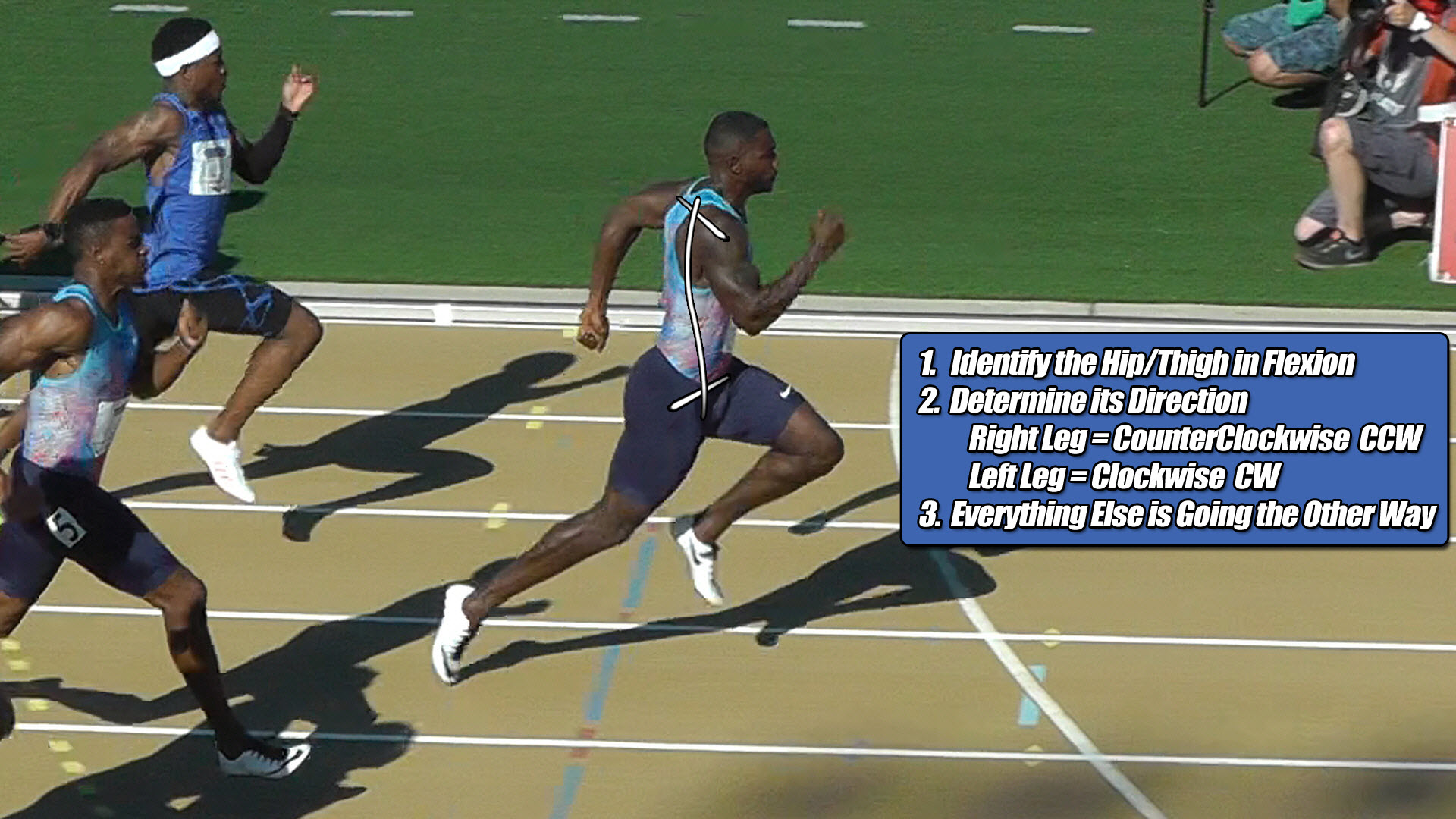
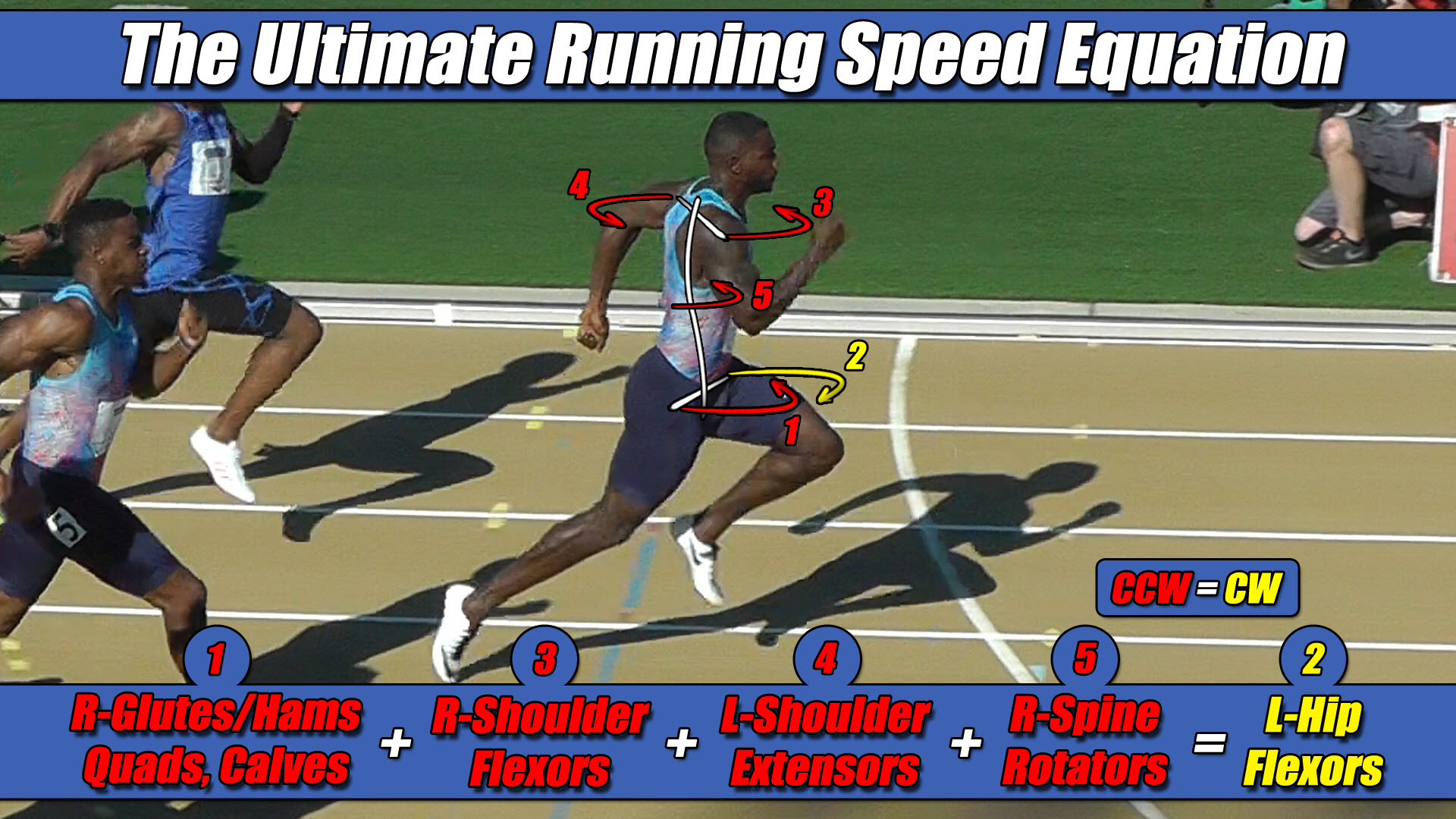 Left Hip Flexor Torque = CW. Everything Else CCW.