🏛️ Advanced Kinematics & Swing-Phase Temporal Audit
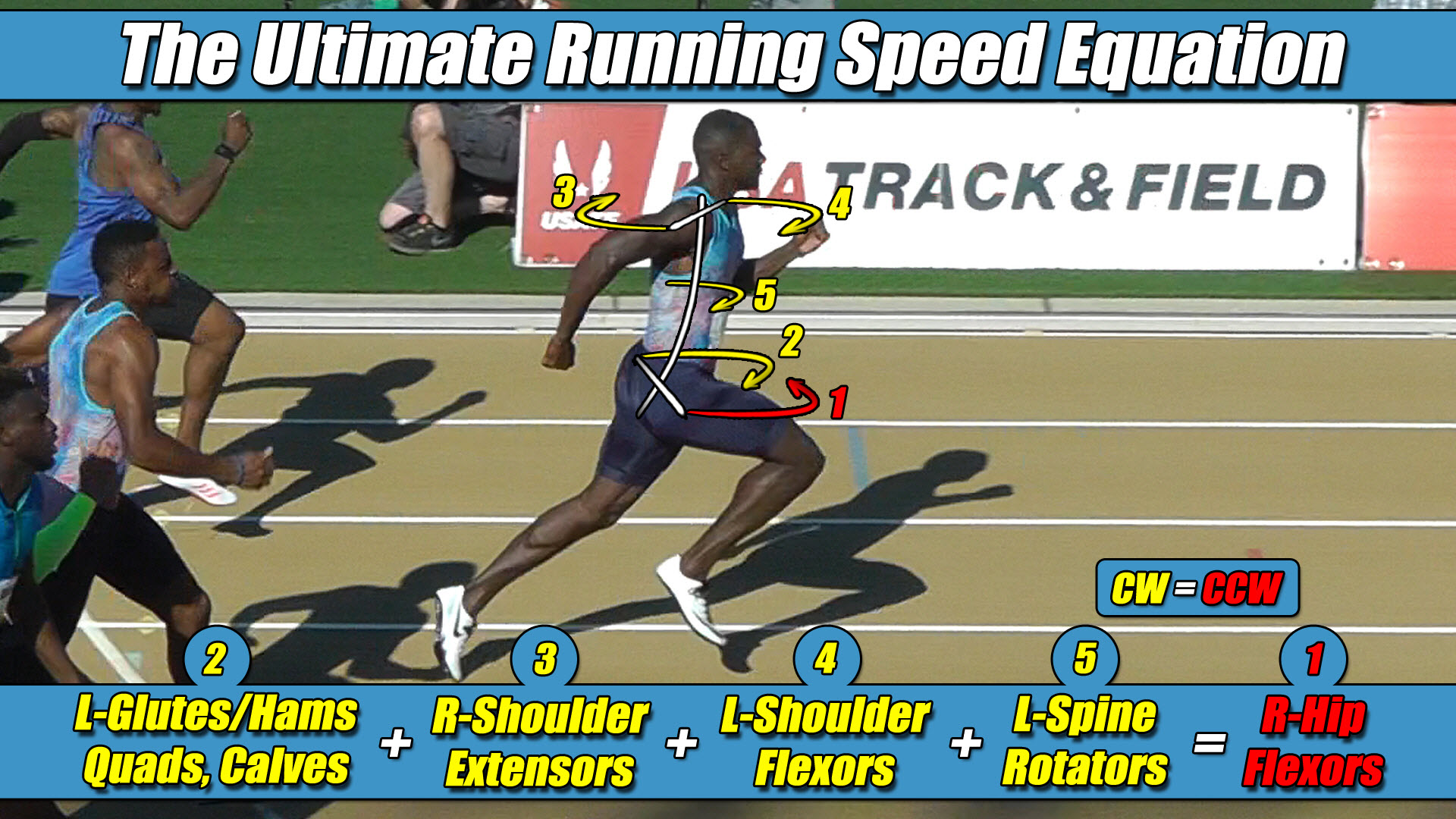
- The Foundational Formula: Dr. Larry VanSuch’s Ultimate Running Speed Equation (URSE) Model.
- The Reference Mechanics: Evaluating legacy treadmill tracking data showing that while ground contact time drops at high speeds, airborne swing-phase duration flatlines at a constant window of roughly 0.37 seconds.
- The Mechanical Reality: Analyzing whether this invariant 0.37-second duration represents an inert recovery loop or an active neural counter-engine operating at its absolute structural limit.
- The Structural Truth Revealed: Why the constant airborne window serves as physical proof of a 3-vs-1 asymmetric torque alliance required to neutralize stance-phase ground thrust and preserve pelvic equilibrium.
Section 1: Analysis of the Invariant Swing-Phase Window
In the field of modern sports biomechanics, historical overground locomotion studies stand as heavily documented benchmarks regarding high-velocity treadmill data collection.
Automated tracking monitors have recorded the undeniable kinematic fact that as an athlete runs faster, the time the foot spends on the ground drops to a small fraction of a second.
However, laboratory clocks also record that the time the leg spends swinging through empty air from back to front flatlines and hits a literal plateau at a constant window of roughly 0.37 seconds.
Traditional interpretations analyze this data through a localized, single-axis vertical lens.
Because the airborne swing-phase duration does not alter as velocity scales up, conventional frameworks conclude that leg swing speed is a passive, non-influential recovery loop.
Under this vertical model, it is assumed that a voluntary downward stomp controls 100% of human velocity adjustments.
However, evaluating a bipedal machine under intense kinetic loads requires an engineering roadmap to explain how the chassis balances these massive forces without compromising pelvic equilibrium.
Lacking a multi-axis torque constant model, traditional interpretations force a three-dimensional rotational machine to fit a flat, single-axis narrative that does not represent real overground physics.
Section 2: The Core Engineering Laws of the URSE Model
To correctly decode these invariant temporal charts, we must evaluate the unyielding multi-axis engineering constants of the Ultimate Running Speed Equation (URSE) pelvic ledger:
- ⚡ Law 1: The Permanent Leg Side Constants — The side of the leg is a strict, unyielding constant; the Right Leg always projects Counter-Clockwise (CCW) torque across the pelvic axle, and the Left Leg always projects Clockwise (CW) torque—regardless of whether they are in flexion or extension.
- ⚡ Law 3: The United Upper Body Multiplier — The upper body rotators and arms function as one single unit with respect to rotation.
- ⚡ Law 3: The Alternating Alliance — Acting as a single unit, the upper body rotators and arms function as high-speed torque multipliers, actively alternating their collective torque patterns to match, favor, and reinforce whichever pushing leg is currently anchored to the turf.
- ⚡ Law 4: The Solitary Counterweight Balance — The unweighted, airborne swing leg must contract at extreme fast-twitch velocities to rise up and completely match the combined torque load of the active pushing team (pushing leg, both arms, torso) to bring Net Torque to exactly Zero.
When evaluated under URSE Law #4, the airborne swing leg ceases to be viewed as a passive passenger or an inert pendulum taking a rest in empty air.
Instead, the recorded 0.37-second window represents a highly active, high-horsepower neural counter-engine operating at its absolute structural fast-twitch limit to balance the pelvic axle.
Section 3: The Shortened Ground Contact Pivot
Because a single-axis model cannot process pelvic rotation, traditional theory reasons that since human beings do not alter or compress that 0.37-second airborne window, the only remaining option to improve velocity is to shorten ground contact time.
Conventional advice claims that the sole method to accomplish this is to execute a harder vertical stomp against the ground to maximize mass-specific force.
Yet, because these models operate with an incomplete mechanical ledger, they struggle to offer practical training solutions on how an athlete is actually supposed to shorten that ground contact time in overground environments.
If improving sprint velocity simply required limiting time on the ground and pounding the deck with high-frequency force, then elite speed jump ropers would be global sprinting champions.
Speed jump ropers generate immense vertical forces and limit their airborne phase to a fraction of a second, yet they remain entirely in one fixed spot.
A vertical stomp inside a single-axis framework possesses zero capacity to drive a horizontal chassis forward.
Section 4: Unlocking the Piston: Solving the Weakest Link
A multi-axis engineering audit completely bridges the gap between vertical force data and real-world athletic performance by introducing the law of full-body torque balance.
If the goal is to increase ground force expression, that performance milestone is actually accomplished by raising your total torque balance capacity across the entire pelvic axle width.
As an athlete focuses on improving glute, hamstring, and quadriceps (GHQC) strength to ramp up ground thrust, they must also raise their counter hip-flexor strength an identical amount.
Sprinting velocity will always be restricted and governed by the weakest mechanical link in the kinetic chain.
If a training protocol continues to rely on isolated GHQC development to stomp the ground harder, the forward velocity needle will not move.
The brain’s central nervous system will actively choke down speed expression because without targeted cross-axis strengthening, the three-dimensional pelvic centrifuge will remain unbalanced.
The upper extremities and torso must actively align with the grounded stance column to form a dynamic, three-limbs-versus-one-limb centrifuge engine.
True full-body strength balance is what governs velocity limits.
Section 5: Single-Axis Vector Models versus Multi-Axis Coordinate Frameworks
With multi-axis laws in hand, the contradictions that plague legacy single-axis papers instantly disappear.
Traditional literature frequently argues that the pushing leg is the sole master of speed, executing the vertical force and lift required to control airborne flight time.
Yet, the exact millisecond tracking monitors register that the air-time flatlines at 0.37 seconds, conventional interpretations shift the baseline, claiming human speed is limited because the airborne limb cannot reposition itself forward any faster.
Basic ballistics dictates that assuming a subject projects their center of mass to an identical height, gravity alone decides the duration of flight time in the air.
If a simple vertical stomp theory were true, a stronger downward thrust would project the runner’s center of mass higher, forcing them to stay in the air significantly longer under gravitational acceleration, but the raw tracking data does not demonstrate this phenomenon.
Instead, the airborne timeline remains locked at a uniform 0.37 seconds during testing configurations.
Our fourth law reveals that this window represents the absolute fast-twitch threshold for the deep hip accelerators to aggressively generate balancing torque.
The swing leg is actively providing the vital counter-torque required to neutralize the crashing force of the driving side alliance (pushing leg, torso, and arms forming a 3-vs-1 asymmetrical torque alliance) to pull the net pelvic ledger back to zero.
Section 6: Turning Digital Hieroglyphics into Clear Strategy
Legacy research teams recorded exceptionally clean data on their monitors; they simply lacked the necessary multi-axial structural laws to decode it.
Without a multi-axis pelvic ledger framework, traditional tracking interpretations struggle to form a practical speed development plan.
Standard workflows look at a monitor screen, see that a software avatar successfully completes a stride cycle, and claim the airborne leg has no active influence on sprinting speed.
This viewpoint remains blind to the reality that the digital Human model survives high velocity thresholds only because under URSE Law #4, the front-side swing indicators pull up on the skeleton at extreme fast-twitch velocities to tolerate, match, and neutralize the high-horsepower drive torque on the opposite side.
The vertical force spike registered on a laboratory plate is not a voluntary stomp.
Instead, it represents the crushing downward footprint left behind because the upper flywheel and the airborne swing leg are violently ripping upward at that exact millisecond to retain a net torque balance of zero.
By passing these celebrated vertical charts through original pelvic constants, the true mechanical purpose of ground force generation is revealed.
There are no passive springs, and there are no hidden linear shortcuts.
The ground reaction forces scale at high velocities because the full-body URSE engine is running at absolute mechanical perfection to keep Net Torque at Zero.


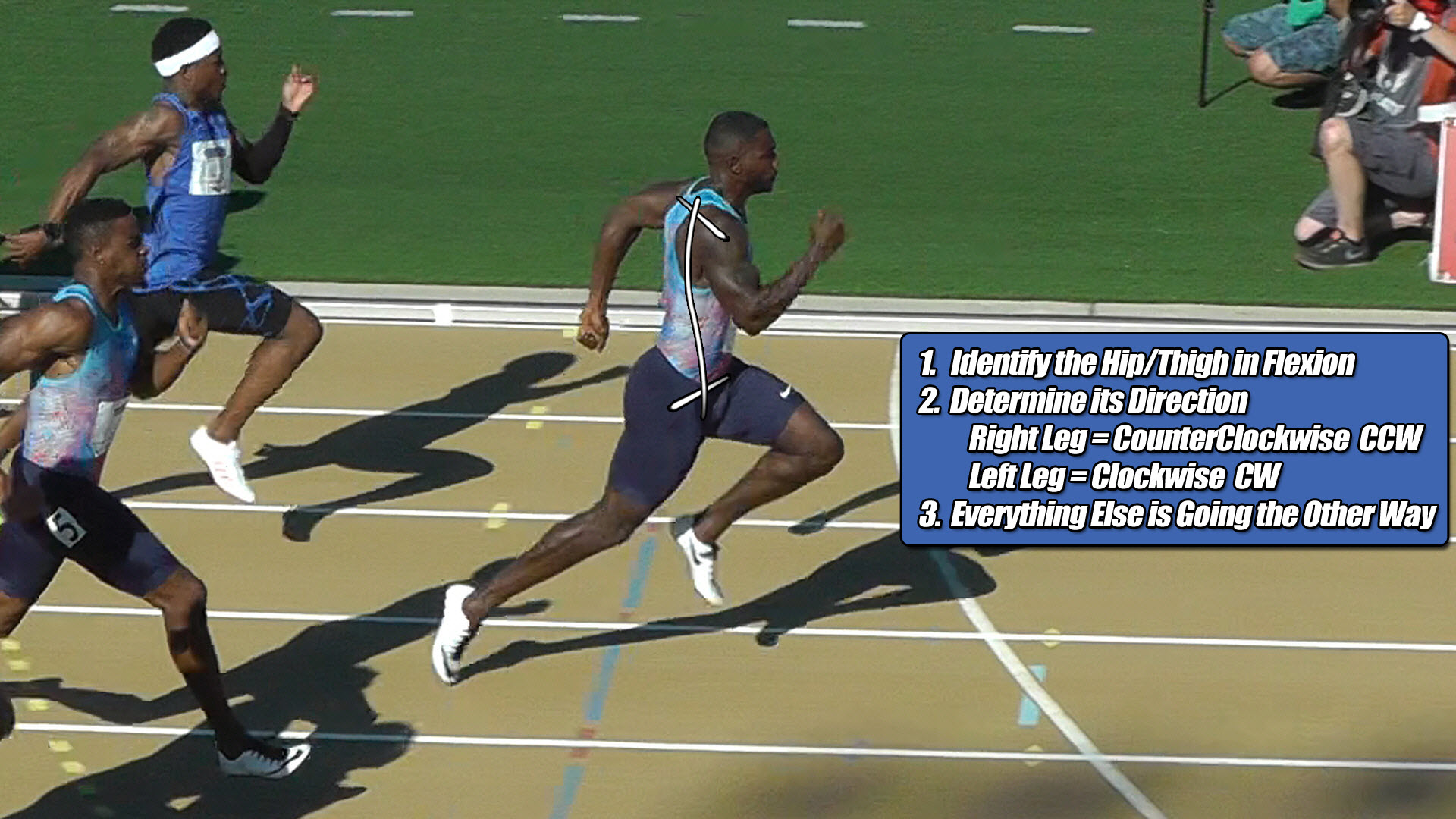
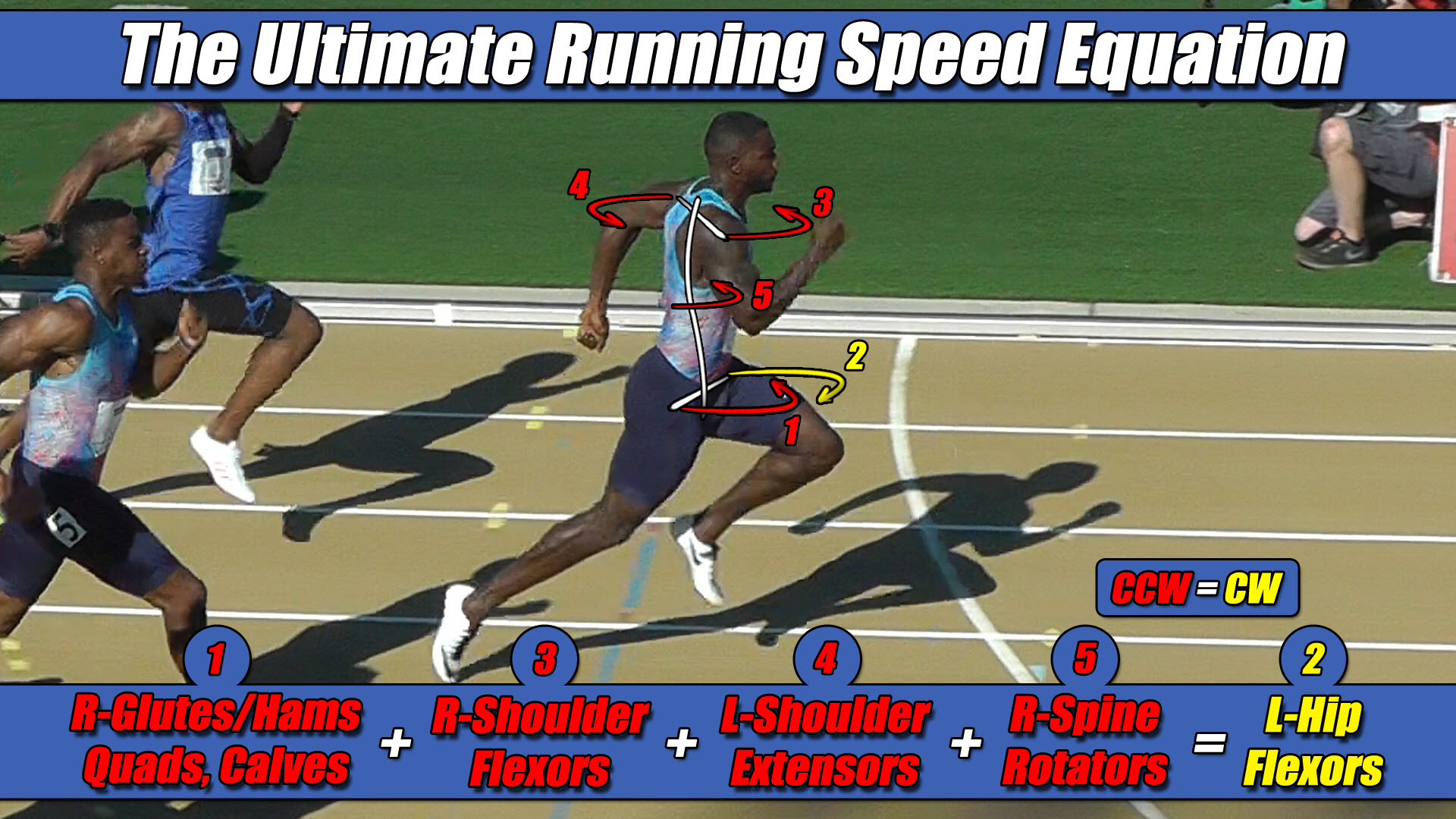 Left Hip Flexor Torque = CW. Everything Else CCW.