Shoulder extensors complete the arm cycle in running. Learn how backward arm movement supports balance, coordination, and speed performance.
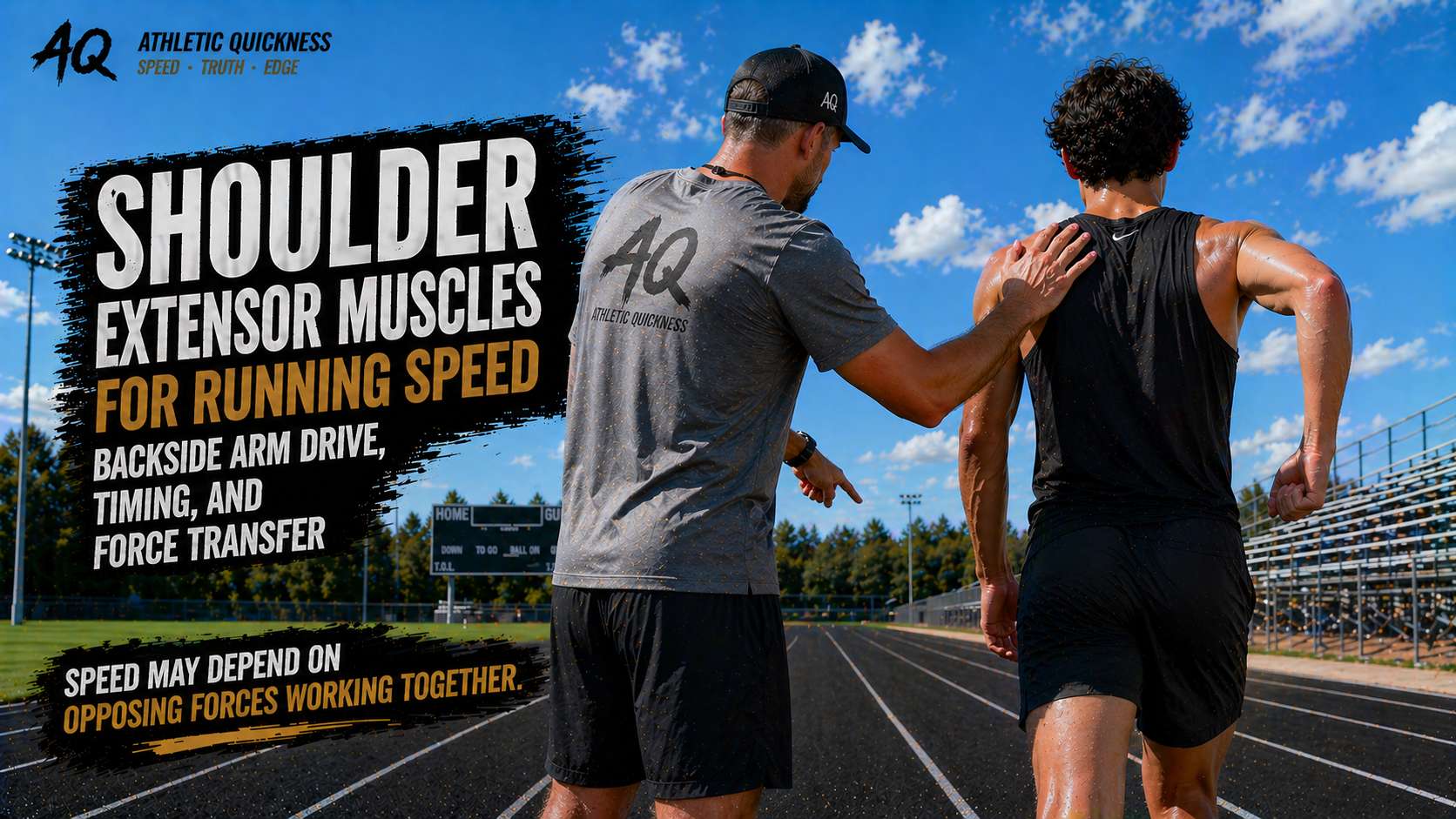

Shoulder extensors complete the arm cycle in running. Learn how backward arm movement supports balance, coordination, and speed performance.
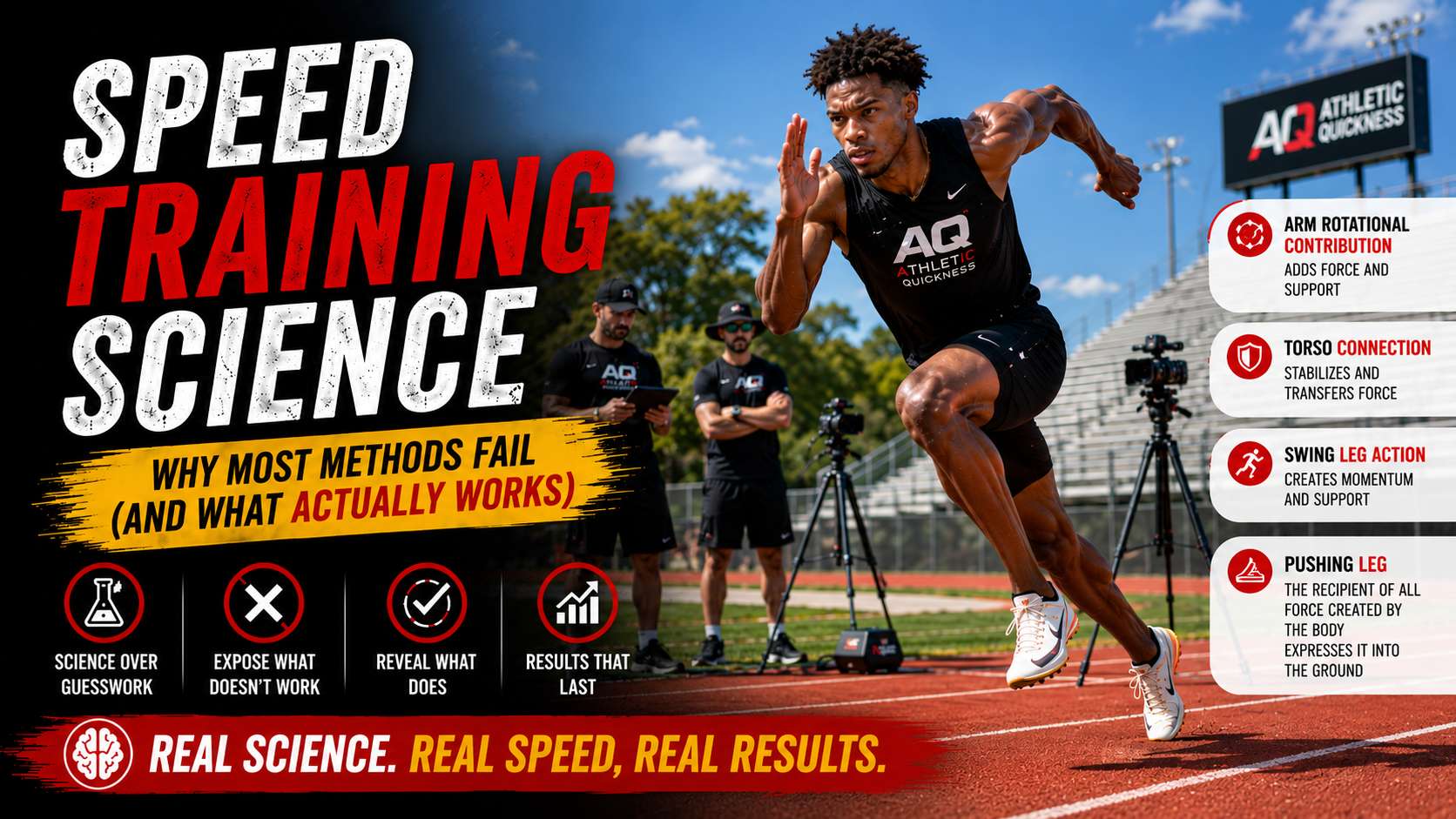
Most athletes train hard but don’t get faster. This article explains the science behind speed training, including muscle contraction, fast twitch fibers, and why traditional methods often fail to improve speed.
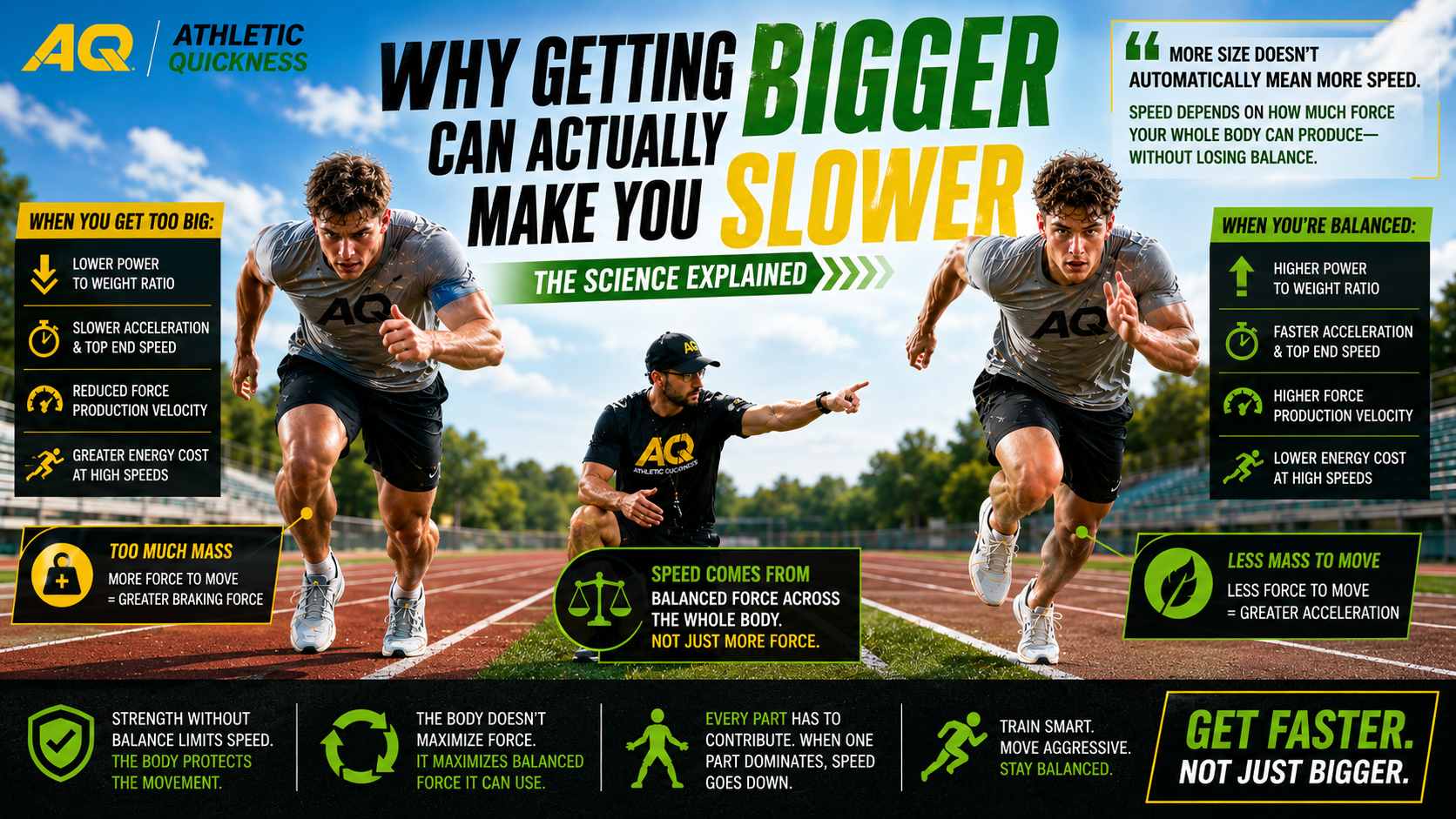
Many athletes believe getting bigger will make them faster—but that’s not always true. Learn how hypertrophy affects muscle function, contraction speed, and why size alone doesn’t translate into real performance.
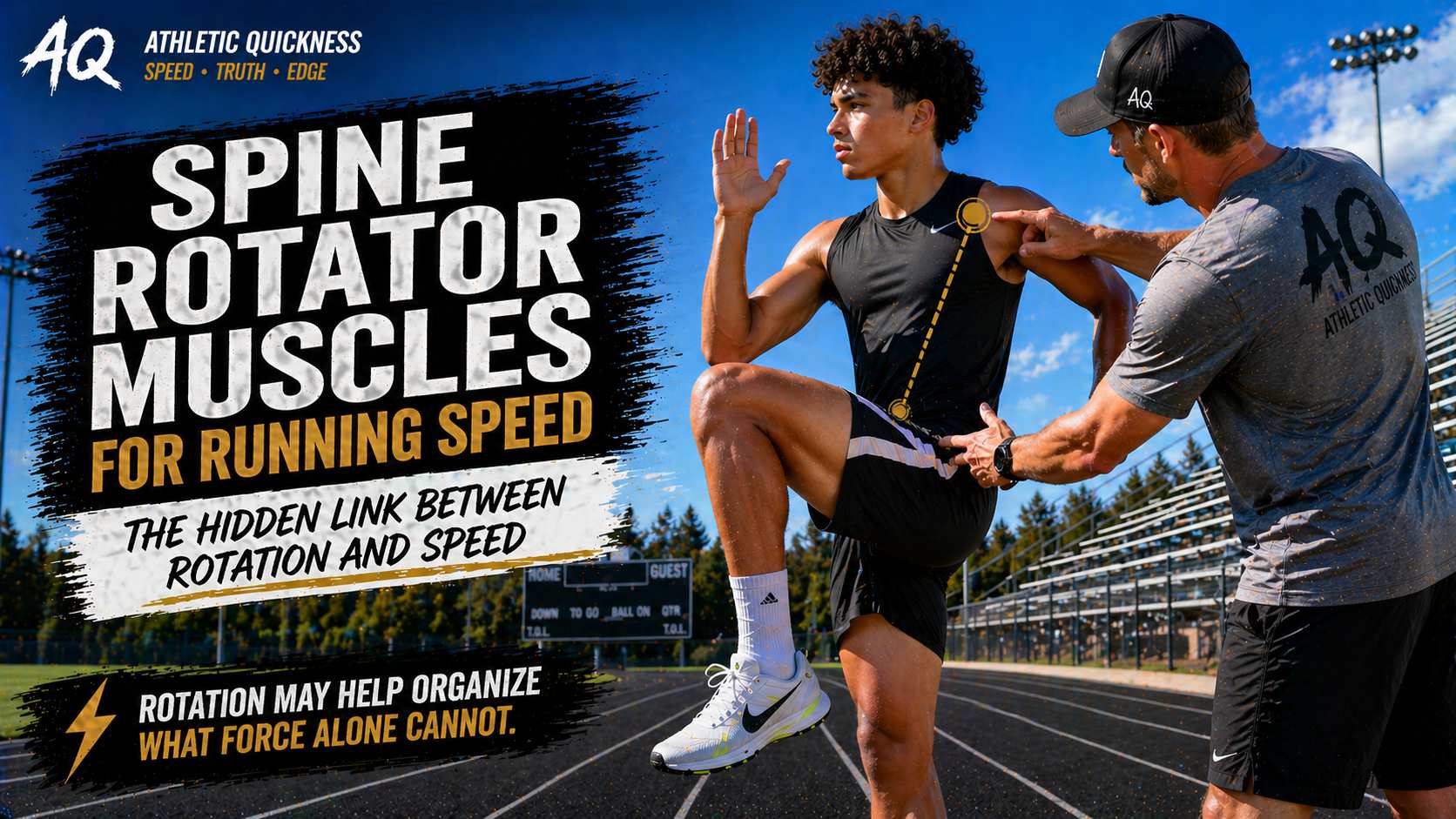
Spine rotators don’t create speed—they connect your system. Learn how rotation transfers force and improves coordination for faster running.
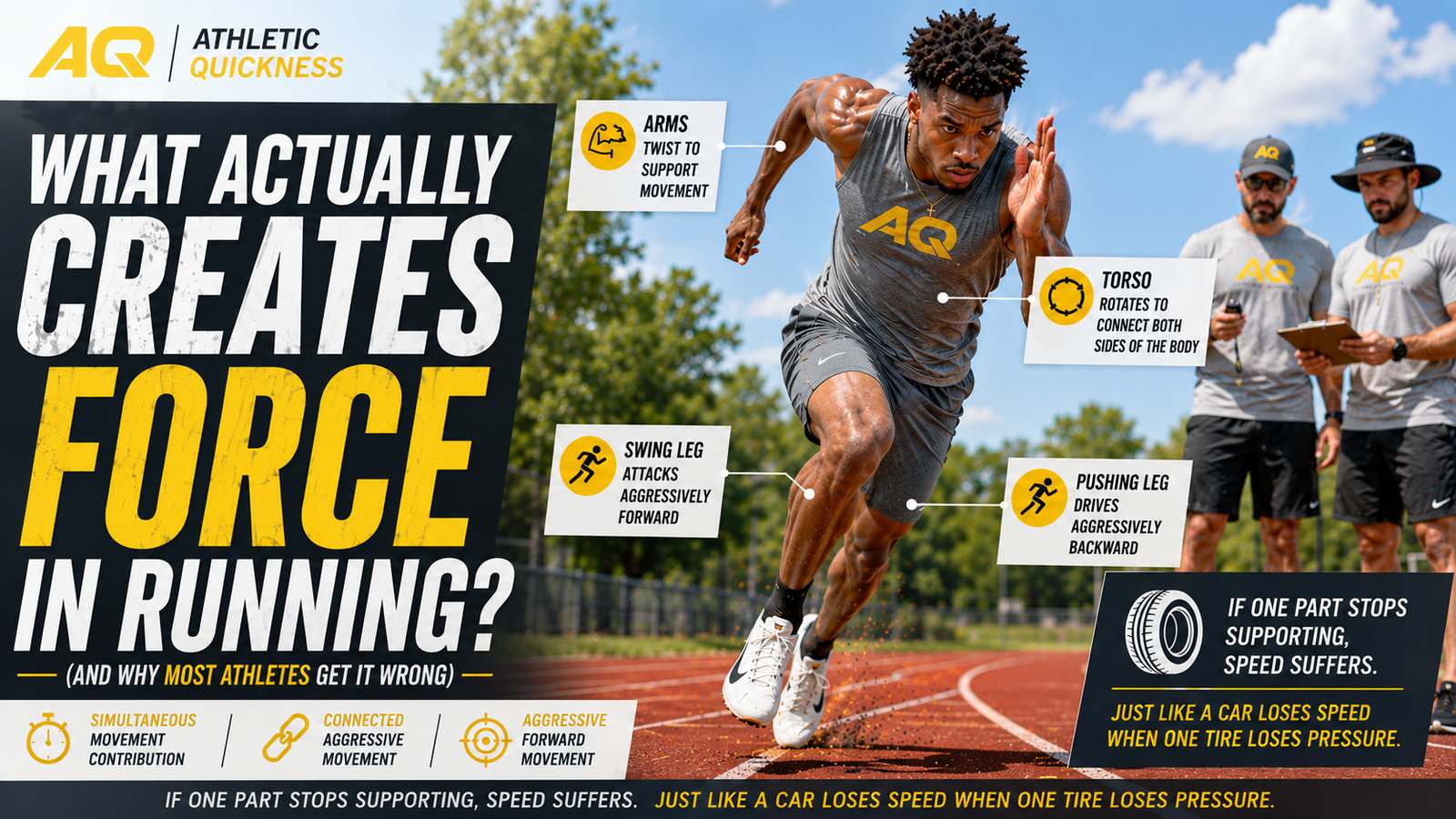
Force is one of the most misunderstood aspects of running. Many athletes think strength alone creates speed, but force depends on how your system applies and transfers energy. Learn what actually creates force in running and how to improve it.
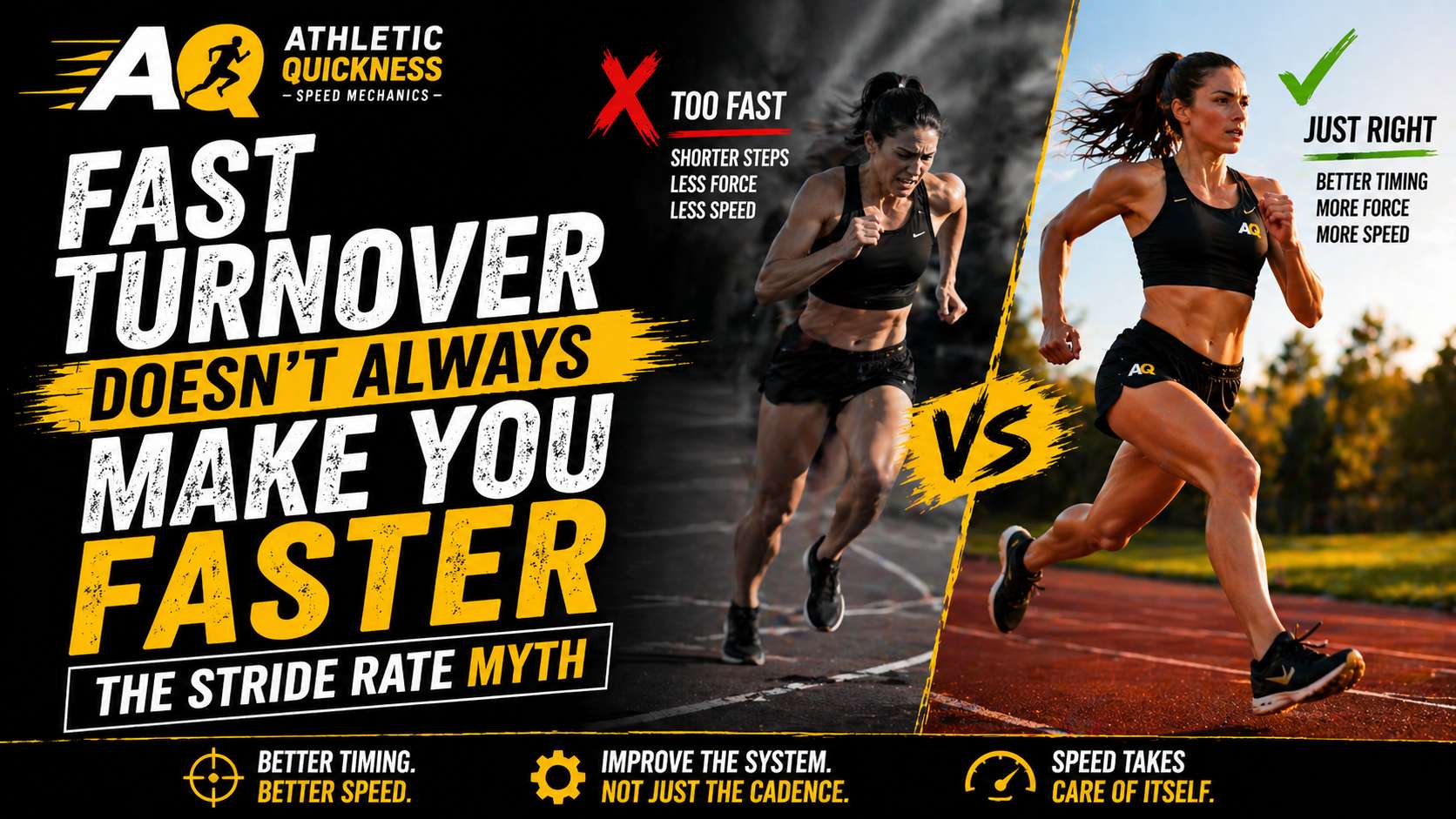
Many athletes believe faster turnover automatically creates more speed. AQ explains why stride rate is often a reflection of sprint-system function and why identifying the real limitation may matter more than simply trying to move your legs faster.

Many athletes try to fix overstriding by changing where the foot lands. AQ explains why overstriding may be the visible outcome of deeper contributor limitations involving the pushing leg, swing leg, arms, torso, and strength balance.

Most athletes assume shorter ground contact time creates faster running. AQ explains why contact time may often be an outcome of contributor relationships already influencing the next step before the foot reaches the ground.

Does foot strike matter for running speed? AQ explains why foot strike deserves attention, but often isn’t the biggest factor limiting sprint performance.
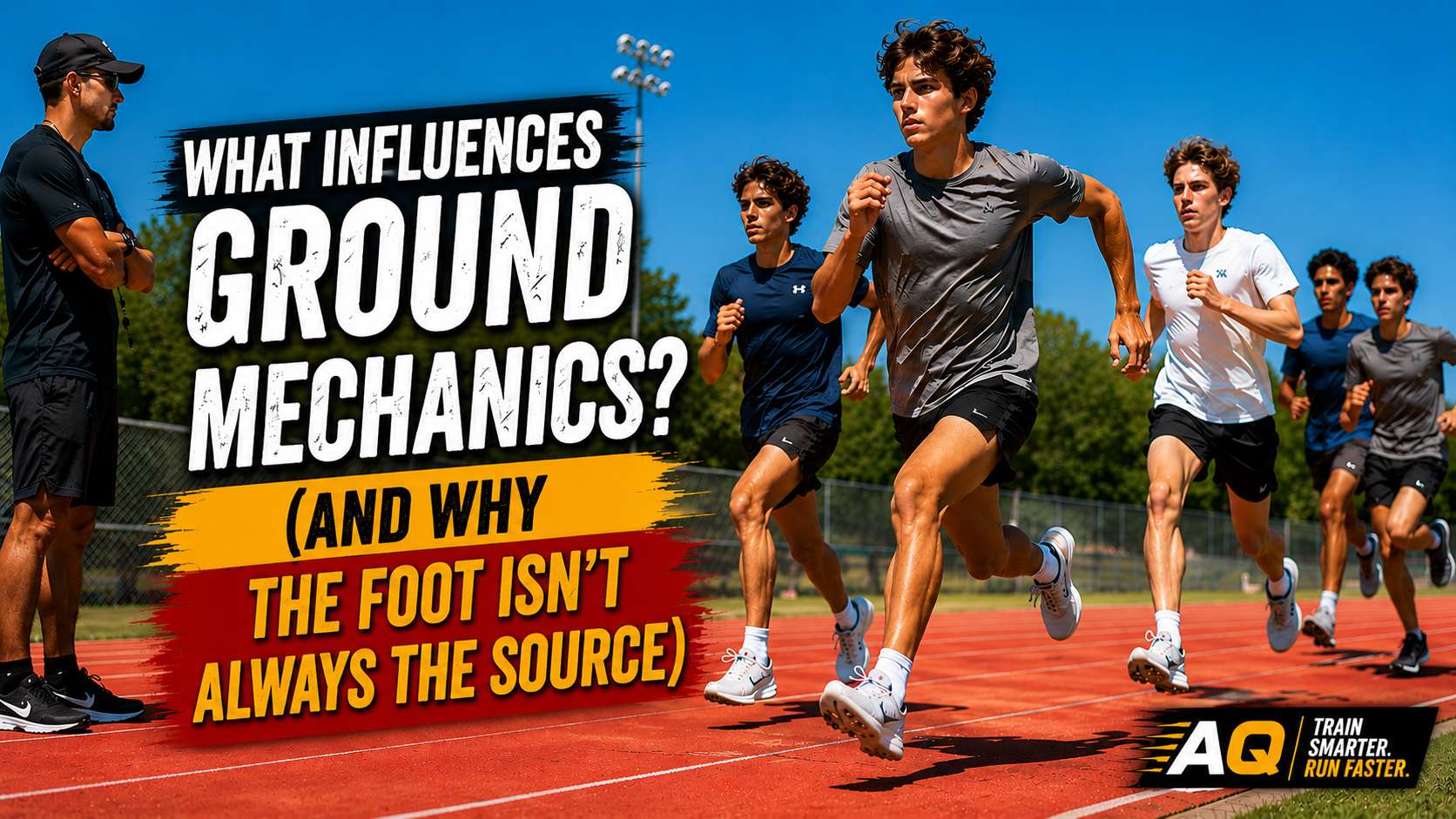
Ground mechanics describe how the foot interacts with the ground during running. AQ explains why the foot may be where ground mechanics become visible, while the sprint system may be what influences them.

Most athletes focus on producing more force to run faster. AQ explains strength balance, force-output balance, and why running speed depends on how much balance the pushing side and swing side can achieve together.

Many athletes focus on visible running form mistakes such as overstriding, upper-body tension, and awkward arm action. AQ explains why some of these movement problems may be compensations that emerged after something deeper began falling behind.
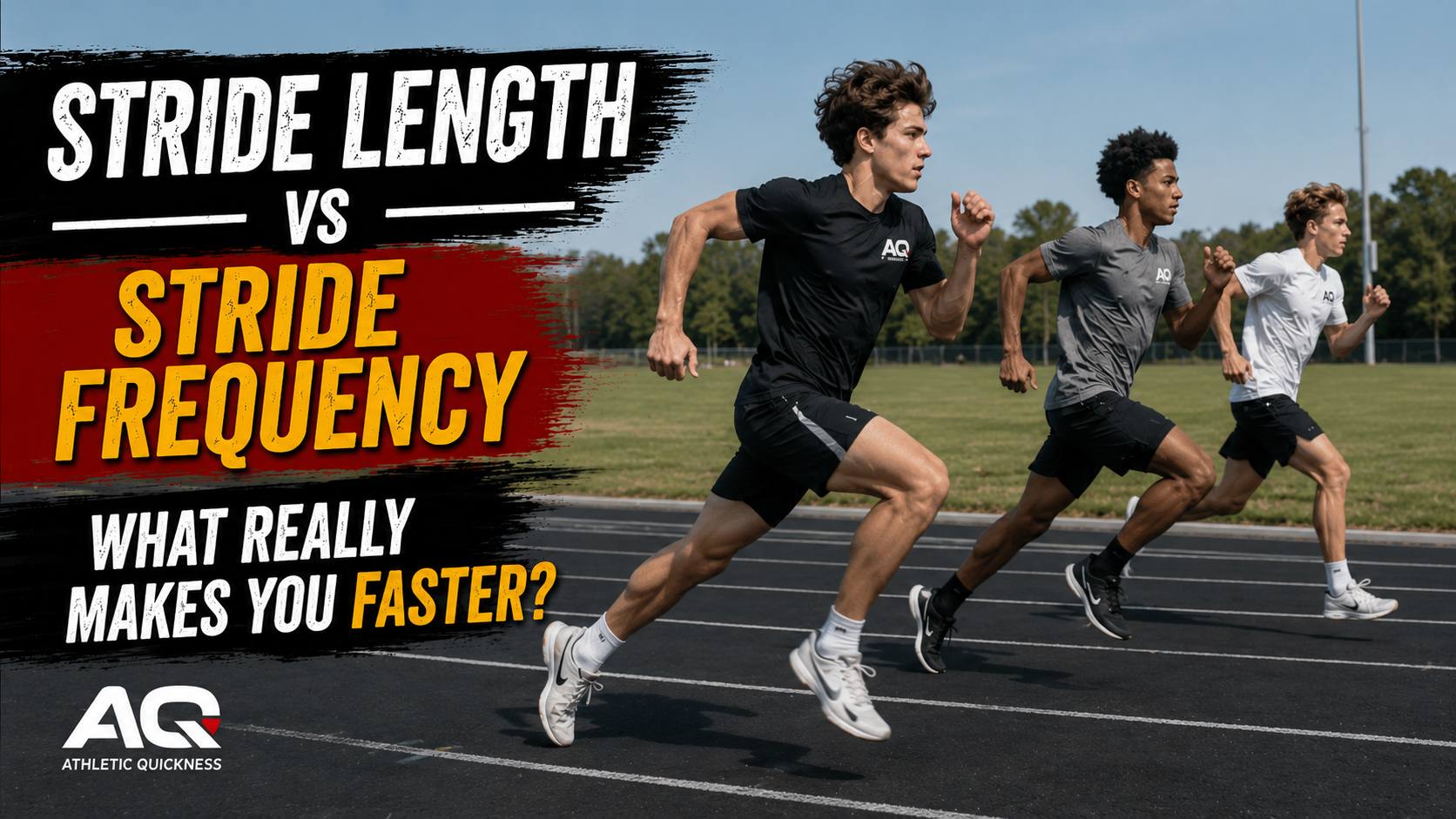
Many athletes think they must choose between stride length and stride frequency to run faster. AQ explains why both are often outcomes of speed-producing improvements happening underneath rather than the true source of speed itself.

Most athletes think speed comes primarily from the push phase. AQ explains why the swing phase is not recovery, how it contributes during every stride, and why faster running depends on both phases working together.
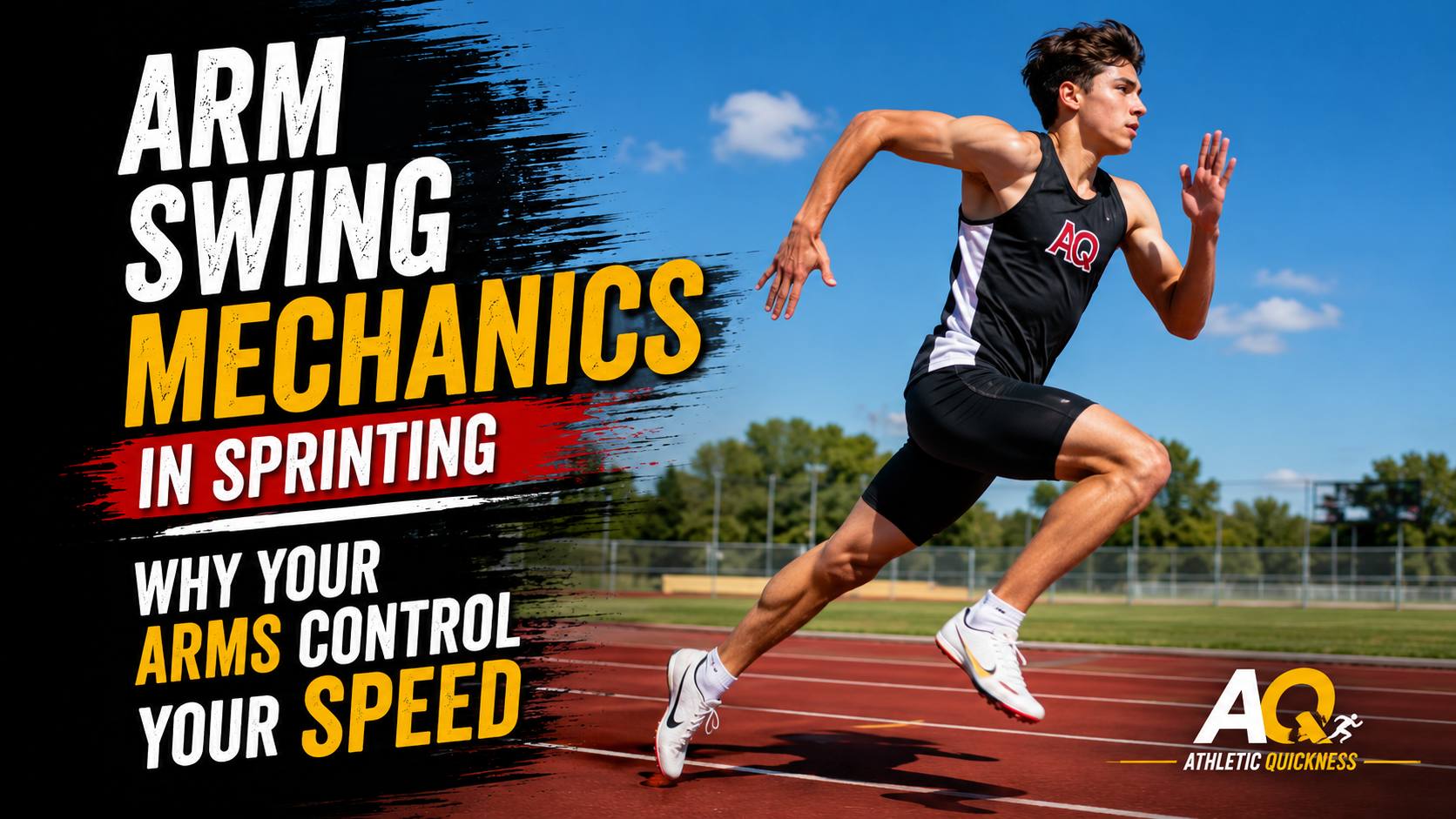
Most athletes view arm swing as a balancing mechanism. AQ explains why the arms do far more than simply move opposite each other, how they contribute to the pushing side during sprinting, and why arm action may play a much larger role in sprint speed than many athletes realize.
Chris J. – New Jersey
Event 1: 40
Before Time 1: 5.27
After Time 1: 4.90
Story: I’ve have been wanting to become a running back for my football team and had trouble increasing my speed. I did many strength exercises like leg presses, leg extensions, and leg curls. I did get results in muscle size, but not that increase of speed.
So, I went to youtube and watched the Speed Challenge video and did the thigh flexor exercise and I found quick results in my 40 yard dash! This increase in speed in so little time amazed me!”

User name: John
City, State: Odenville, AL
Event 1: 40
Before Time 1: 4.88
After Time 1: 4.79
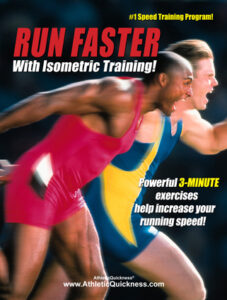
Story: i ran a 4.6 forty yard dash as a junior in highschool. now after two years in college..i’m running a high 4.8 so i am looking to get back to my former speed so that i can possibly walk on a football team. after two weeks i am seeing my time drop and now i think i can get it all the way back down to maybe a 4.5. thanks for offering the Run Faster Program..i think it is really going to work for me.

“My name is Adam Thomas and I go to Eagle’s View Academy in Jacksonville, FL. I am a senior that has graduated and I am on my way to playing college football this upcoming season for Methodist University.
I have started to use your Speed Training,from June 1 to June 15, which has drastically dropped my 40 yard dash time from a 4.56 to a “MOVING” 4.41. I thank you, and you have blessed me and prepared me better for the next level.”
Event 1: 40
Before Time 1: 4.56
After Time 1: 4.41
User name: David
City, State: Elk Grove Village, IL
Event 1: 100
Before Time 1: 11.9
After Time 1: 11.5
Story: I was really doubtful that this program would work, but when I finally tried it, it felt great. I feel so much faster. I’ve gone from an 11.9 to an 11.5 and can’t wait to get the whole package and see how much faster I get.

User name: Dylan
City, State: Auckland, NEW ZEALAND
Event 1: 40
Before Time 1: 5.8
After Time 1: 5.4
Event 2: 200
Before Time 2: 24.8
After Time 2: 24.1
Story: The Run Faster program is incredible! After just 14 days i have seen huge results as i feel more athletic, explosive and quick as i play soccer.
This increase in speed allows me to make goal scoring situations a lot more frequently.
It has helped my game hugely and i strongly recommend the program to any soccer player!

User name: Christian Sam
City, State: Allen, Tx
Event 1: 40
Before Time 1: 5.43
After Time 1: 5.16
Story: I wasn’t that fast, i mean i was fast but not that fast. so we ran 40’s at school and i got a 5.43, so i wasn’t satisfied, i saw yalls program, i ordered the RUN FASTER program and i did it.
I felt light right after the first workout, i did it the full 2 weeks, and my 40 dropped!! i was so happy. I’m still using it and i know hopefully I’ll be in the 4.8’s soon.
Thanks Dr. Van Such, this was amazing!!