
Home » What is isometric training » Dynamic vs Static Resistance: Why Your Muscles Respond Differently
💥 What If Your Muscles Don’t Care About the Exercise?
Most athletes think progress comes from:
• changing exercises
• adding variety
• working harder
👉 And sometimes that helps
But here’s the real question:
👉 Does your body actually experience anything different?
💥 Because your muscles don’t respond to exercises
👉 they respond to stimulus
⚠️ The Overlooked Difference
Not all resistance feels the same.
Two workouts can look similar…
👉 but create completely different internal demands
That difference comes down to:
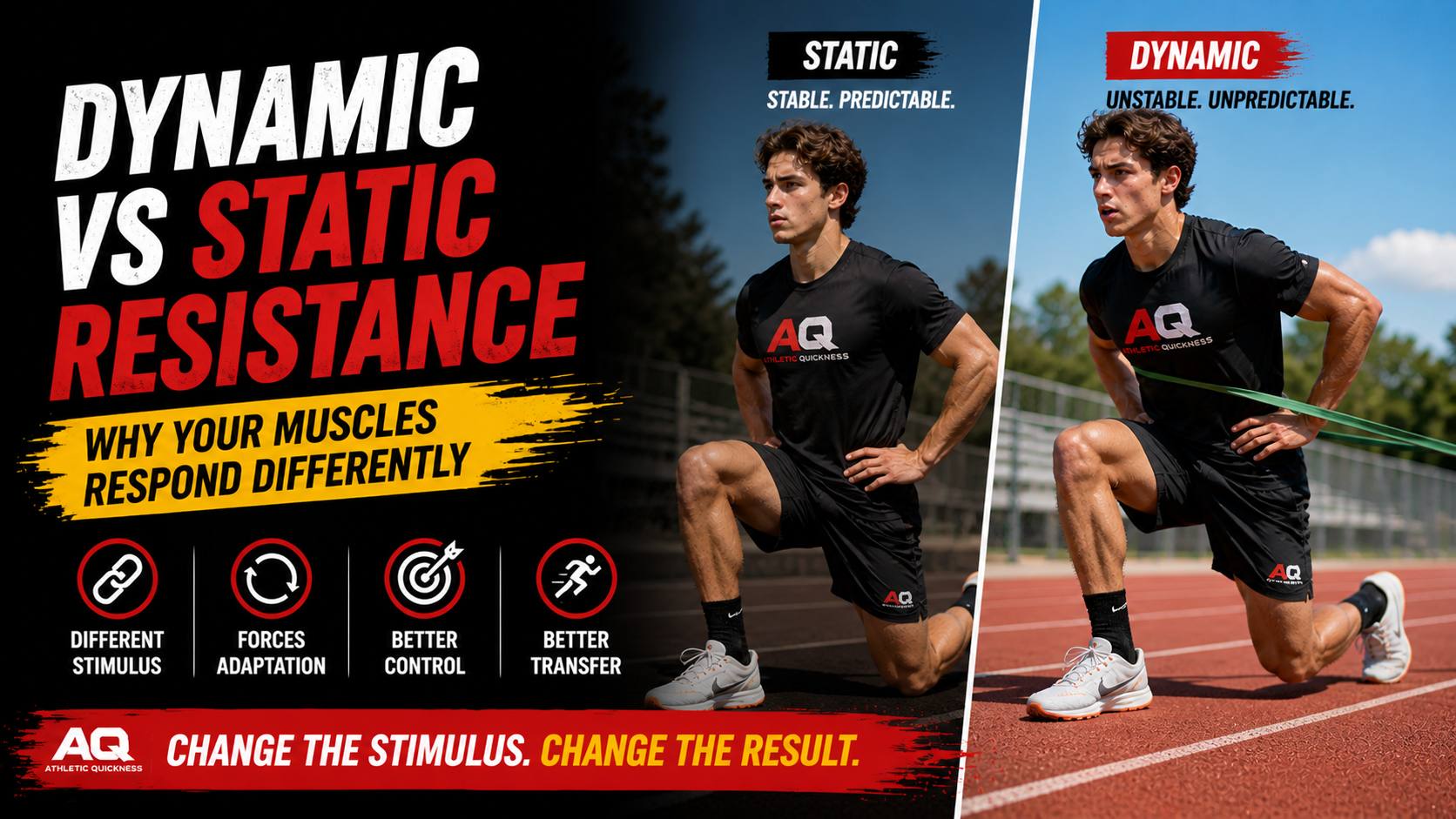
👉 static vs dynamic resistance
🔍 Static Resistance (What Most Training Uses)
Static resistance is:
👉 predictable
👉 consistent
👉 stable
Think:
• barbells
• machines
• fixed loads
👉 The weight doesn’t change unless you move it
So your body learns to:
• produce force
• follow a pattern
• repeat the same coordination
💥 That’s valuable—but limited
🔄 Dynamic Resistance (What Most Athletes Haven’t Felt)
Dynamic resistance behaves differently.
👉 the load changes
👉 tension shifts
👉 small movements matter
This happens with:
• resistance bands
• unstable force environments
• variable tension systems
👉 Even when you try to hold still…
💥 your body is constantly adjusting
🧠 Why This Changes Everything
Here’s the key difference:
👉 Static resistance allows repetition
👉 Dynamic resistance creates a different training stimulus
👉 And your body adapts to that stimulus
💥 Meaning it gets better at handling exactly what you train it to handle
With dynamic resistance:
• your body must react
• stabilize continuously
• correct small errors in real time
💥 This creates a completely different stimulus
⚡ Where Most Athletes Get Stuck
Most training lives here:
• same patterns
• same demands
• same type of resistance
👉 even when exercises change
💥 That’s why progress slows down
Because internally:
👉 nothing new is happening
🔁 What Dynamic Resistance Forces You To Do
When resistance changes—even slightly—your system must:
• adjust position
• stabilize under shifting load
• re-engage muscles instantly
👉 This creates:
• coordination under tension
• real-time correction
• improved responsiveness
💥 This is where development happens
🧠 Why Isometric Training Amplifies This
Now combine:
👉 no movement
with
👉 changing resistance
That’s where things get interesting.
In isometric band training:
• you hold position
• tension subtly shifts
• your system must constantly respond
👉 It looks static from the outside
💥 but internally, it’s dynamic
⚡ What You Actually Feel
At first:
• muscles shake
• positions feel unstable
• control feels inconsistent
👉 That’s not a problem
💥 That’s the stimulus working
Because your body is being forced to:
• coordinate
• stabilize
• adapt
🔗 How This Connects to Speed
Speed depends on:
• how quickly you can produce force
• how well you can organize it
• how efficiently you can transfer it
👉 Static resistance helps build force
👉 Dynamic resistance helps you apply it
🧩 Where This Fits in Your Training
This does not replace what you’re doing.
👉 it expands it
Continue to:
• lift
• run
• train
👉 but introduce new stimulus where needed
💥 That’s where progress happens
🚀 The Simple Takeaway
Your body doesn’t respond to:
👉 exercises
It responds to:
👉 how resistance behaves
And when that changes:
• coordination improves
• control improves
• speed becomes more natural
🚀 What This Means for You
Not all resistance creates the same result.
👉 Static resistance builds force
👉 Dynamic resistance teaches your body how to respond
And that difference matters more than it seems.
Because speed doesn’t just come from strength…
👉 it comes from how well your system can adapt, organize, and apply force in real time
When that improves:
• coordination becomes sharper
• control becomes more consistent
• speed becomes more natural
🧭 You Are Here (Within The AQ Speed Training System)
You are currently exploring:
👉 DYNAMIC VS STATIC RESISTANCE: WHY YOUR MUSCLES RESPOND DIFFERENTLY: why different types of resistance create different training stimuli—and how dynamic resistance challenges your body to continually adjust, stabilize, and organize force.
🌐 See How This Fits Into The Complete AQ Speed Training System
➡️ What Is Isometric Training? (And Why Athletes Should Care)
🪜 Continue Deeper Into What Is Isometric Training
Learn why changing the way your muscles respond can help improve how quickly they produce and organize force.
➡️ How to Increase Muscle Speed in Days (What Actually Works)
Learn why constantly changing exercises isn’t necessarily what causes muscles to adapt—and what actually does.
➡️ What Is Muscle Confusion? (And Does It Really Work?)
🎯 Ready to Start Running Faster?
If you’re ready to apply isometric training to improve sprint speed:
➡️ Run Faster With Isometric Training
❓ FAQ — Dynamic vs Static Resistance
What is static resistance?
Resistance that stays consistent and predictable, like weights or machines.
What is dynamic resistance?
Resistance that changes as you apply force, requiring your body to constantly adjust.
Are resistance bands considered dynamic?
Yes—because tension changes based on position and movement, even during holds.
Why does dynamic resistance feel harder?
Because your body must continuously stabilize and correct under changing conditions.
Is dynamic resistance better than static?
It’s not better—it’s different. Each creates a different type of adaptation.
Why does this matter for athletes?
Because performance depends on how well your body responds, not just how strong it is.