
Home » Running Mechanics Explained » The Real Cause of Overstriding (And Why It’s Not What You Think)
🚨 What If Trying To Cover More Ground Isn’t The Reason?
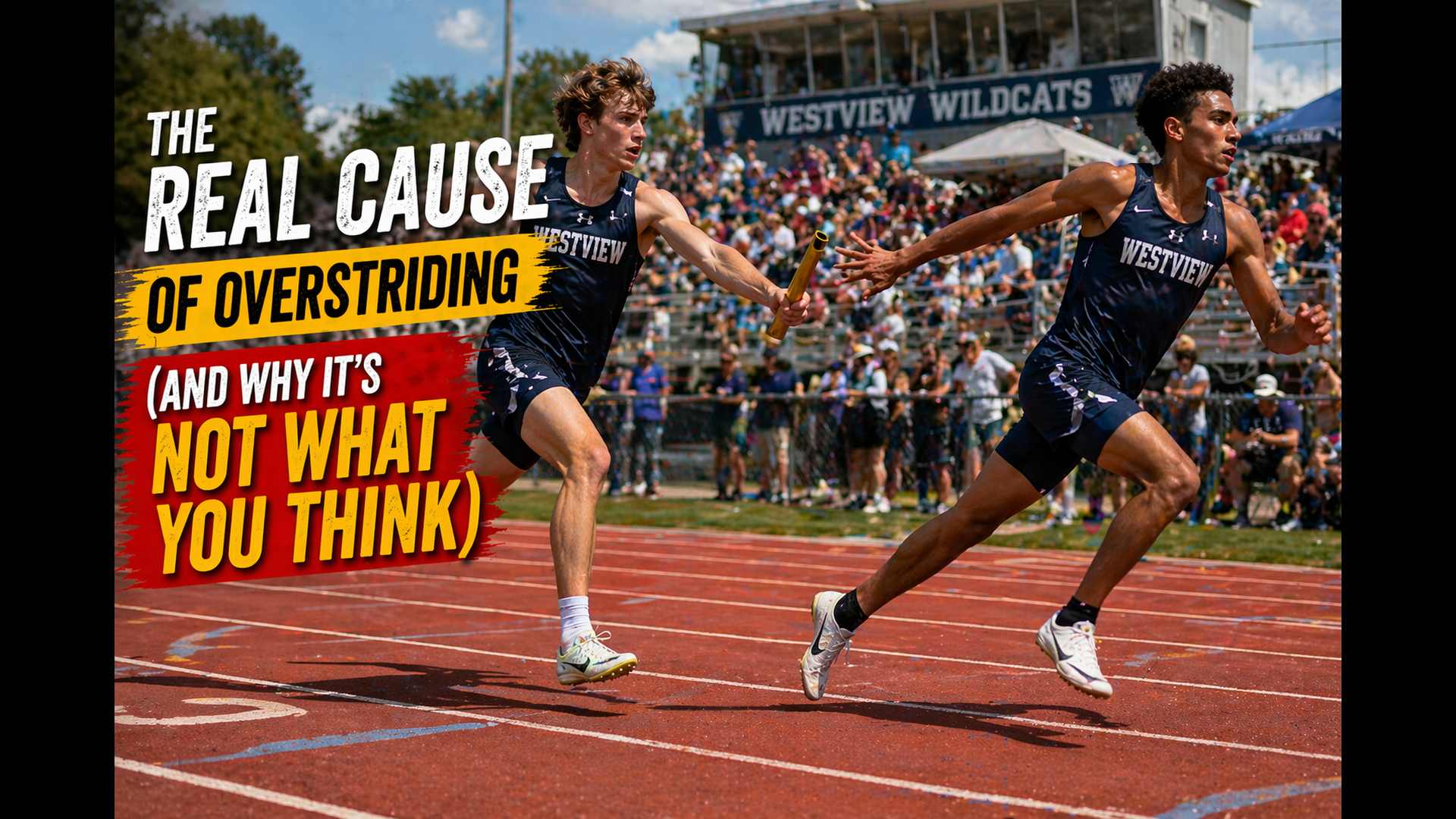
Many athletes chasing speed try to do one thing:
Reach farther.
Cover more ground.
Take bigger strides.
👉 It sounds like speed.
But sometimes it can be the opposite.
💥 Sometimes reaching can quietly reduce the very speed athletes are trying to create.
That surprises people.
But it makes sense when you see why.
⚡ Why Overstriding Can Be Misunderstood
Overstriding often gets reduced to:
“Your foot lands too far in front.”
That can be true.
But it may be incomplete.
👉 Overstriding may be less about where the foot lands…
and more about what the system is doing to make that happen.
That is a much more useful way to see it.
Sometimes overstriding is not a cause.
It is a symptom.
Important distinction.
➡️ Related: Stride Length vs Stride Frequency: Which Matters More for Speed?
🔍 Why Reaching Can Disrupt Speed
When athletes reach for length:
- timing can get disrupted
- rhythm can change
- force transfer can suffer
- system balance can be challenged
👉 And when those things drift…
speed may drift with them.
This is why trying to manufacture stride length can backfire.
It may interfere with the mechanics that naturally create it.
💡 Sometimes the problem is not “too much stride.”
It is forced stride.
That’s a big difference.
🚀 Why Overstriding May Be A System Issue
This is where things get more interesting.
👉 Sometimes athletes overreach not because they are trying to…
but because something else in the system is not organizing well.
A weak link elsewhere may show up as:
- reaching
- braking tendencies
- disrupted timing
- awkward front-side mechanics
That can make overstriding a systems conversation.
Not just a foot-placement conversation.
➡️ Related: How to Improve Strength Balance for Maximum Running Speed
💥 Why “Just Shorten Your Stride” Can Miss The Point
You sometimes hear:
“Don’t overstride.”
“Take shorter steps.”
👉 But if overstriding is partly a symptom…
then simply correcting the symptom may miss the cause.
That matters.
Because cues can sometimes fight problems they do not solve.
Sound familiar? 😄
⚙️ What May Reduce Overstriding Naturally
Often the better question is not:
How do I stop overstriding?
But:
👉 What improves the mechanics that make overstriding less necessary?
That is a much better question.
Things that may help:
- better push mechanics
- stronger swing-leg organization
- cleaner timing
- improved force transfer
- stronger system balance
💥 Sometimes overstriding fades…
when better mechanics emerge.
Not because it was coached away.
🔄 What Better Mechanics Can Feel Like
Athletes often feel this before they can explain it.
When overstriding starts disappearing:
- running may feel smoother
- stride timing may feel easier
- speed may feel less forced
- contact may feel cleaner
👉 Some athletes describe it as no longer feeling like they are reaching for speed.
I like that.
Because that may be exactly right.
🔥 A Different Way To See Overstriding
Maybe overstriding is not just:
A technical flaw.
Maybe sometimes it is:
👉 a system asking for better organization.
That is a very different framing.
And maybe a much more useful one.
Final Thought
Most athletes ask:
How do I stop overstriding?
A better question may be:
👉 What in my mechanics may be creating it?
That question can lead much deeper.
And often much closer to speed.
💥 Don’t just fight the symptom.
Improve what may be producing it.
🔍 FAQ
Does overstriding make you slower?
👉 It can, especially when reaching disrupts timing and force transfer.
Is overstriding always caused by taking strides that are too long?
👉 Not necessarily. It may sometimes reflect broader mechanical issues.
Can overstriding be a symptom instead of a cause?
👉 Yes, and that is a central idea of this article.
Should you shorten your stride to fix overstriding?
👉 Sometimes cues alone may miss the deeper cause.
Can better mechanics reduce overstriding naturally?
👉 Often that may be the better long-term solution.
Lorem ipsum dolor sit amet, consectetur adipiscing elit. Ut elit tellus, luctus nec ullamcorper mattis, pulvinar dapibus leo.