
Home » Why You're Not Getting Faster » How to Add This to Your Training Without Starting Over
🧠 Introduction
At this point, you understand something most athletes miss:
👉 speed isn’t just about pushing harder
👉 it’s also about how much strength your swing can contribute to your push
👉 and that’s controlled by your hip flexors
💥 so now the question becomes:
👉 “How do I actually use this?”
Do you need a new program?
Do you have to change everything?
👉 not at all
💥 you’re not starting over
👉 you’re adding the missing piece to your current system
⚠️ The Biggest Mistake You Could Make Right Now
Once athletes realize what’s missing, they often try to:
👉 overhaul everything
👉 replace their current training
👉 do more than they need
💥 that’s not the move
👉 because most of what you’re already doing…
👉 still matters
💥 you’re not replacing those things
👉 you’re adding what they’ve been missing
🧠 What You’re Actually Doing
You’re not replacing your training
👉 you’re adding to the system
👉 you’ve already built the push
💥 now you’re developing the part
👉 that helps your system fully use it
⚠️ This Is Where Most Athletes Get It Wrong
They treat this like:
👉 accessory work
👉 something to tack on at the end
👉 just another exercise
💥 that’s not what this is
🧠 This Is Speed Training
👉 you’re training the part of the system that determines how fast you can run
👉 even though you’re not sprinting
👉 even though the movement is controlled
💥 the outcome is speed
⚡ When You Should Actually Do This
This is where your results will be decided.
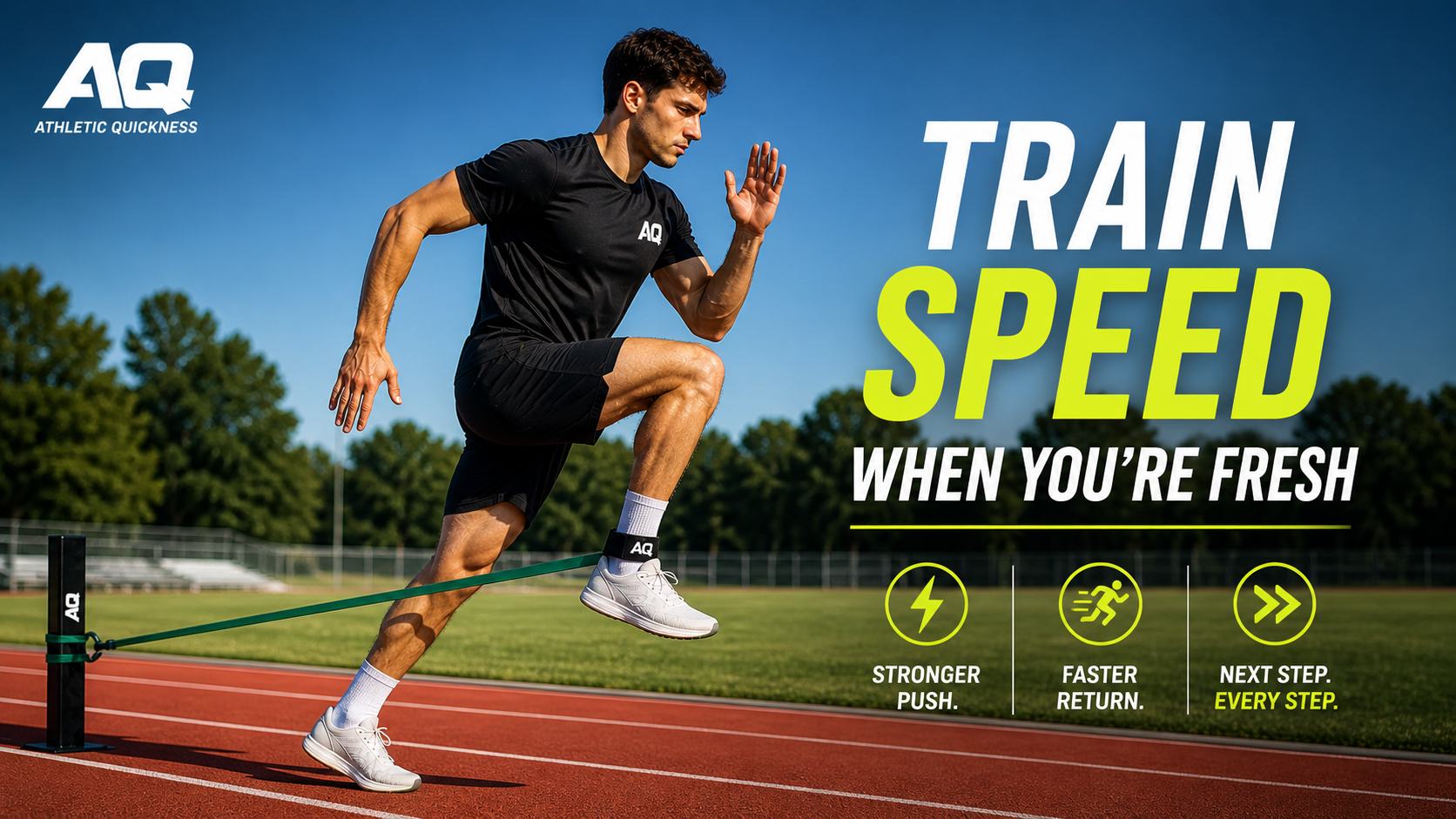
👉 this kind of training should be done when your system is fresh
Not after fatigue
Not at the end of leg day
💥 when your body can respond at a high level
🧱 The Best Way to Add This In
Keep it simple.
🧱 Option 1 — Standalone Sessions (Best Starting Point)
👉 short, focused sessions
• 10–15 minutes
• 2–4 sets
• full attention on position + tension
💥 this is where quality is highest
🧱 Option 2 — On Non-Leg Days
👉 days where you’re not training lower body
💥 this keeps the system fresh
👉 and avoids interference
🧱 Option 3 — At the Start of a Session
👉 before anything fatiguing
💥 when your body is most responsive
👉 then move into the rest of your training
⚠️ What to Avoid
👉 don’t treat this like a finisher
👉 don’t do it after heavy lower body work
👉 don’t do it when your legs are fatigued
💥 because this is where speed is built
👉 and speed requires freshness
🧠 The Simple Rule
👉 train strength when fatigue is acceptable
👉 train speed when freshness is required
⚠️ Why These Muscles Don’t Look the Same (And Aren’t Supposed To)
There’s something important to understand here.
👉 when you compare the front side of your body to the back side…
👉 the difference is obvious
👉 your hip flexors sit flat against your body
👉 long, lean bands of muscle
👉 your hip extensors—especially your glutes—are big, round, and powerful
💥 and that’s not an accident
🧠 They Don’t Have the Same Job
Think about what each side is responsible for.
👉 your hip extensors:
• move your entire body forward
• support your weight
• produce large amounts of force
👉 for a 200 lb athlete…
👉 they’re dealing with 200 lb of system load
👉 your hip flexors:
• contribute to the forward-drive side of your stride
• help support the push side of the system
• help keep the cycle balanced
👉 they’re moving:
👉 one leg
👉 maybe 40–60 lb depending on the athlete
💥 completely different demands
⚡ And That Explains the Size Difference
👉 bigger job → bigger muscles
👉 smaller job → smaller muscles
👉 that’s normal
💥 and it’s exactly how your body is designed to work
⚠️ But Here’s Where Most Athletes Get It Wrong
They see:
👉 big muscles = important
👉 small muscles = less important
💥 and that’s where the problem starts
🧠 The Better Way to Think About It
It’s not about matching size
👉 it’s about matching function
👉 your hip flexors don’t need to be big
💥 they need enough strength
👉 to keep the system balanced under force
⚡ Why This Matters for Your Training
Because if they can’t:
👉 your push can’t fully express
👉 your system down-regulates
👉 your speed stays capped
💥 not because they’re small…
👉 but because they’re under-prepared for their role
⚡ What You Should Focus On
Every rep should answer:
👉 can I create aggressive force
👉 from the forward-drive position under tension?
👉 can I hold the position
👉 without losing posture or balance?
👉 can I keep the system organized
👉 while under tension?
💥 that’s the goal
🔥 What You Should Start to Notice
As this starts to integrate:
👉 your stride feels lighter
👉 your steps cycle faster
👉 your movement feels smoother
👉 like you’re no longer fighting yourself
💥 like your push is finally being fully supported
👉 and something else starts to happen…
👉 you’re no longer stuck in that same gear
👉 you can feel yourself hitting another gear
👉 or shifting more easily between them
💥 not by trying harder
👉 but because your system finally supports it
🧠 Why This Works
You’re not adding more effort
👉 you’re improving how your system works together
👉 stronger push
👉 stronger force contribution from the forward-drive position
💥 balanced output
⚡ The Real Shift
Before:
👉 you were building force
Now:
👉 you’re learning how to support more of it across the system
⏩ Where We’re Going Next
Now that you know how to apply this…
👉 the next step is understanding how much is too much
➡️ Why Doing More Can Actually Slow You Down
We’ll break down:
• how overtraining shows up
• how to balance intensity and recovery
• and how to keep progressing without stalling
Because more isn’t always better…
👉 and in this case, it often isn’t
🚀 What This Means for You
You do not need to throw away your current training.
👉 you need to add strength
👉 to the part of the system that’s been limiting how much force you can actually use
💥 and once that changes
👉 your speed starts showing up differently
🧭 Go Deeper
➡️ RUNNING MECHANICS EXPLAINED: The System That Makes You Faster
🎯 Start Here
You don’t need a complicated system.
👉 you need to add the missing force contribution
👉 to the part of the stride that controls speed
➡️ Run Faster With Isometric Training
A simple way to improve how much force your system can express—without throwing away the training you already do.
❓ FAQ
Do I need to stop my current training?
👉 no—most of your current training still matters
When should I train this?
👉 when your system is fresh and able to respond at a high level
Why don’t hip flexors need to be big?
👉 because their role is not producing maximum bodyweight force—it’s supporting the system under speed demands