
Home » Why You're Not Getting Faster » The Biggest Speed Training Mistakes (And How to Avoid Them)
🧠 Introduction
At this point, you understand how speed is actually built.
👉 it’s a system
👉 it has to be trained the right way
👉 and the system has to stay responsive
💥 but even with the right ideas…
👉 it’s easy to drift back into old habits
👉 especially habits built around
👉 traditional fatigue-based training
💥 and when that happens:
👉 the system breaks down
⚠️ Why Most Speed Training Fails
It’s not because athletes don’t work hard
👉 it’s because they work
👉 in the wrong direction
💥 small mistakes change
👉 the entire outcome
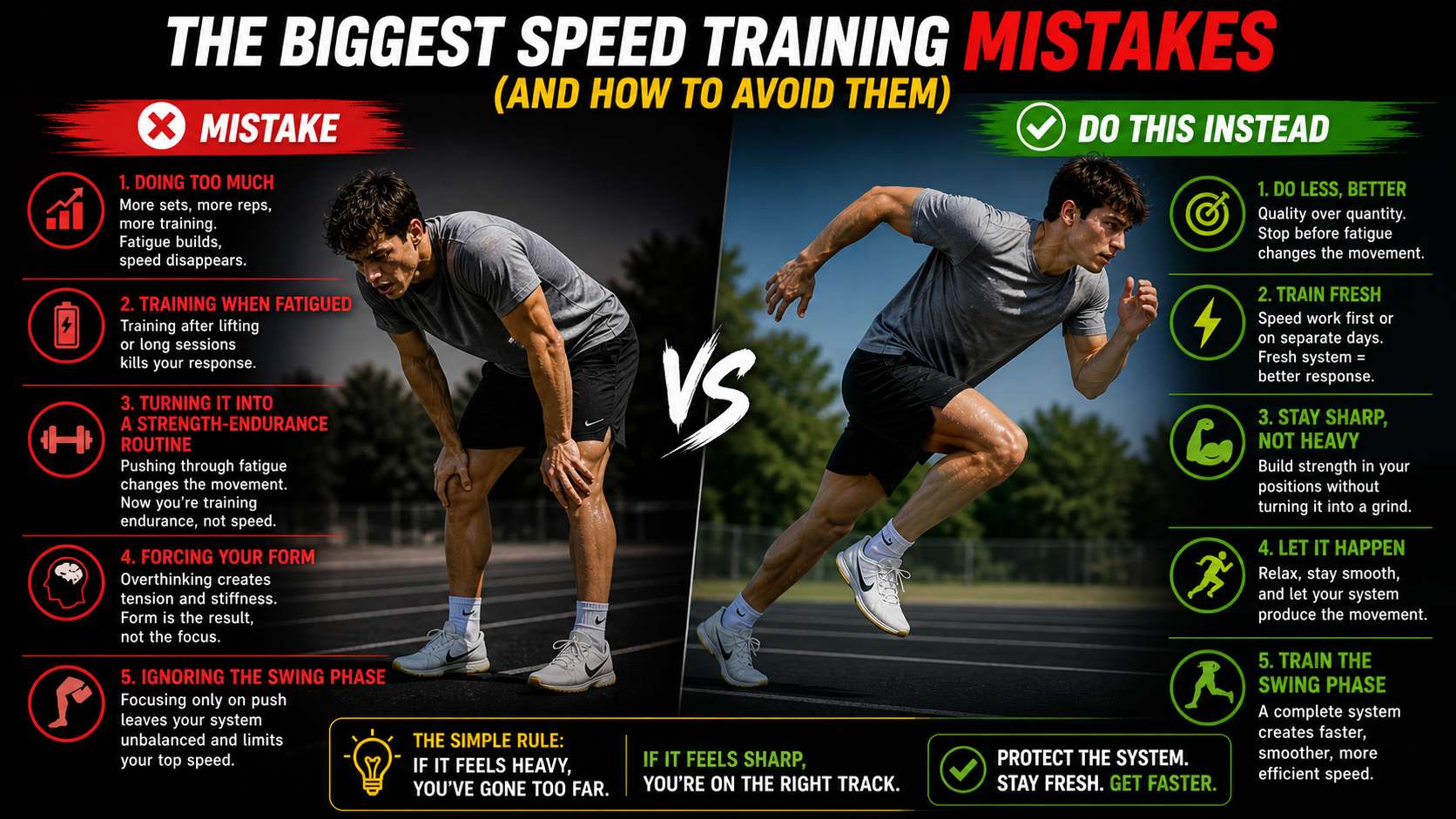
❌ Mistake #1: Doing Too Much
This is the most common one.
👉 adding more sets
👉 adding more reps
👉 training longer
💥 thinking it will lead to more progress
👉 but instead:
👉 fatigue builds
👉 timing between steps changes
👉 your swing starts arriving later
💥 and you’re no longer training speed
👉 don’t let your speed training
👉 turn into a fatigue-based workout
❌ Mistake #2: Training When You’re Fatigued
This usually happens when:
👉 speed work is added after lifting
👉 or at the end of long sessions
💥 when the system is already tired
👉 the problem:
👉 your body can’t respond the same way
👉 timing between steps changes
💥 and the training loses its effect
👉 speed has to be trained
👉 when the system is fresh
❌ Mistake #3: Turning It Into a Strength-Endurance Routine
This one sneaks in.
👉 longer holds
👉 more volume
👉 pushing through fatigue
💥 thinking you’re building more strength
👉 but what’s actually happening:
👉 timing between steps changes
👉 your support under force weakens
👉 the system stops cycling cleanly
💥 and now you’re training endurance
👉 not speed
👉 speed training should feel sharp
👉 not heavy
❌ Mistake #4: Forcing Your Running Form
Trying to:
👉 lift your knees higher
👉 control your stride
👉 think through each step
💥 instead of letting the system work
👉 the result:
👉 tension
👉 stiffness
👉 slower step cycling
💥 because form is not something you force
👉 it’s something your system produces
❌ Mistake #5: Ignoring the Swing Phase
This is the hidden one.
👉 most athletes focus on the push
👉 but don’t train what happens in front
💥 which means:
👉 the system stays unbalanced
👉 speed stays limited
👉 even if strength improves
💥 because something still can’t keep up
🧠 The Pattern Behind All These Mistakes
They all come back to one thing:
👉 training without understanding the system
💥 and drifting back toward
👉 traditional fatigue-based training patterns
👉 instead of what actually helps
👉 the system support speed
⚡ The Simple Fix
Keep it simple:
👉 train when you’re fresh
👉 keep the work clean
👉 focus on position and control
💥 and stop before fatigue changes
👉 the timing between steps
🚀 What This Means for You
Most speed plateaus are not caused by:
❌ lack of effort
❌ lack of motivation
❌ lack of hard work
💥 they’re usually caused by
👉 training the system the wrong way
👉 too much fatigue
👉 too much volume
👉 or training that slowly drifts away
👉 from actual speed qualities
💥 protect the system
👉 and your speed has room to improve
🧭 Go Deeper
➡️ How to Progress Your Speed Training Without Slowing Down
➡️ How to Train for Speed Using One Simple System
➡️ What Real Speed Improvement Actually Looks Like
🎯 Start Here
Speed training should not feel like survival.
👉 it should feel responsive
👉 controlled
👉 and clean between steps
➡️ Run Faster With Isometric Training
A system-based approach to improving speed through timing, balance, force support, and system response.
❓ FAQ
What is the biggest mistake athletes make in speed training?
👉 doing too much and allowing fatigue to change how the system responds
Why does fatigue hurt speed development?
👉 because speed depends on freshness, timing, and clean system response
Why shouldn’t speed work feel heavy?
👉 because heavy, exhausted training shifts the system away from speed qualities
Why is the swing phase so important?
👉 because if the swing cannot support the push correctly, the entire system becomes limited