
Home » How to Run Faster: The Complete System for Speed, Power, and Performance » Why Most Speed Training Programs Don’t Work
Introduction
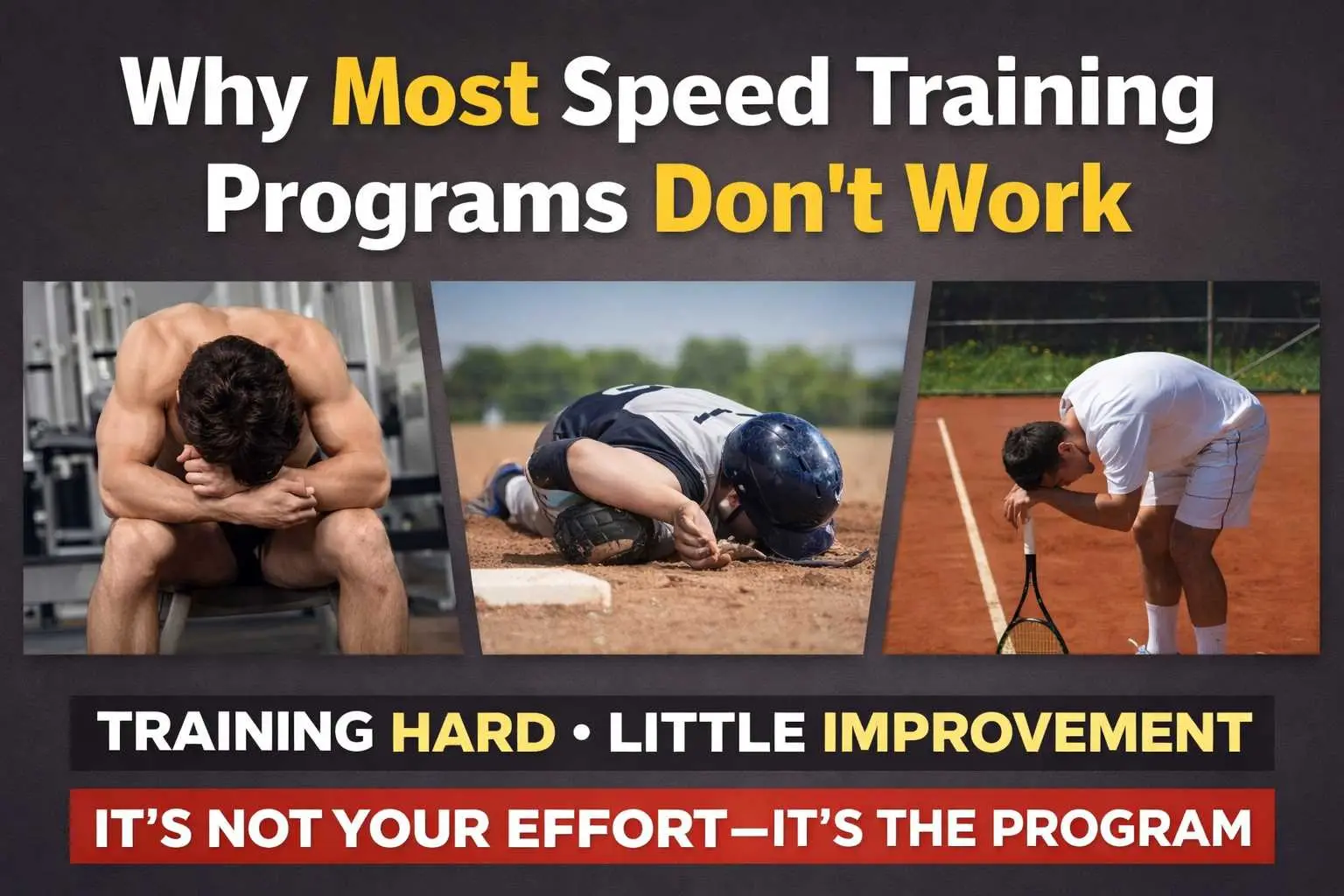
If you’ve ever wondered why most speed training programs don’t work—even when you’re training hard…
👉 you’re not alone
Most athletes:
- train consistently
- follow structured programs
- put in serious effort
👉 and still see little to no improvement in their speed
👉 So what’s the problem?
👉 It’s not your effort
👉 It’s not your discipline
💥 It’s the way most programs are designed
⚠️ The Problem With Most Speed Training Programs
Most programs focus on:
- strength
- power
- repetition
They rely on:
- sprint intervals
- resistance training
- repetitive drills
👉 And while these can improve fitness
👉 they often miss what actually creates speed
🧠 Why These Programs Fall Short
Most speed training is built around:
👉 repeating the same movements
👉 But the issue isn’t repetition
💥 The issue is that the system is incomplete
These programs focus heavily on:
- what happens on the ground
- force production
- visible strength
👉 But they fail to fully develop:
- the swing phase
- coordination between phases
- timing and rhythm
👉 In other words:
👉 they train parts of the system
👉 but not the system itself
🔄 Speed Is a System—Not a Routine
Many programs treat speed like a routine:
- do this drill
- repeat this movement
- increase intensity
👉 But speed doesn’t improve through repetition alone
💥 Speed is a system—not a routine
- push phase → force
- swing phase → speed
- return phase → reset
👉 All working together
👉 If one part falls behind:
👉 the entire system is limited
💥 Your speed is limited by your weakest link
🧩 The Missing Link in Most Training Programs
Most programs develop:
- strength
- endurance
- conditioning
👉 But they neglect:
👉 how your system responds under movement
They don’t train:
- coordination
- timing
- rapid muscle response
👉 These are the factors that actually determine speed
➡️ How Coordination Affects Running Speed (And Why It’s Overlooked)
➡️ Push Phase vs Swing Phase: Why Most Runners Don’t Train All the Muscles Needed for Speed
⚡ Why Repetition Alone Doesn’t Build Speed
Repetition builds familiarity
👉 But speed requires adaptability
If your training is always:
- controlled
- predictable
- repetitive
👉 your body adapts to that environment
👉 But running requires your body to:
- react instantly
- adjust constantly
- coordinate under changing conditions
👉 This is why athletes train consistently
👉 but never unlock real speed
⚖️ Strength Without System Development Falls Short
You can:
- build stronger muscles
- increase force production
👉 But without coordination and timing
👉 that strength stays limited
👉 It never fully transfers to speed
💥 Strength creates potential
👉 But balance and coordination determine if it shows up as speed
➡️ Why Strength Alone Won’t Make You Faster
🚀 What Actually Works
To improve speed, your training must:
1. Develop Muscle Response
👉 how quickly muscles activate
2. Improve Coordination
👉 timing between phases
3. Train Under Changing Conditions
👉 constant adjustments
👉 This is what creates real, usable speed
💪 A Different Approach to Speed Training
Instead of relying on repetition alone
👉 your training must force your body to:
- react
- adjust
- stabilize
- coordinate
👉 This is where real speed development happens
➡️ Isometric Training for Speed: The Complete System to Run Faster
➡️ Resistance Bands for Speed
➡️ Resistance Band Exercises for Speed
🏁 Conclusion
If your current speed training program isn’t working
👉 it’s not because you’re not working hard enough
👉 it’s because your training is incomplete
To run faster, you must train:
- how your muscles respond
- how your system stays balanced
- how your body works together
💥 Because speed is not built through repetition alone
👉 it’s built through how your system adapts and responds
🔥 Continue Here
👉 Continue building your speed system:
➡️ How Coordination Affects Running Speed (And Why It’s Overlooked)
❓ Frequently Asked Questions
Why don’t most speed training programs work?
Because they focus on strength and repetition but fail to develop coordination, timing, and full-system movement.
What is missing from most speed training programs?
Most programs don’t train the swing phase, coordination between phases, or how the body works as a system.
Can repetition improve speed?
Repetition can help, but without coordination and adaptability, it won’t maximize speed.
Why do I train hard but not get faster?
Because speed depends on how your body uses strength, not just how much effort you put in.
What type of training improves speed the most?
Training that improves muscle response, coordination, and movement under changing conditions.