
Running Mechanics Explained: The System That Makes You Faster
If you want to run faster, you’ve probably been told to:
- push harder
- get stronger
- increase your stride length
👉 And all of these can help
But there’s a deeper question most athletes never ask:
👉 How is speed actually created when you run?
⚡ A Simple Question That Changes Everything
When you run…
👉 do your arms work together or opposite each other?
Most people say:
👉 “opposite”
And from one perspective, that appears true.
If you’re standing on the ground watching someone run, you see:
- one arm forward
- one arm back
👉 So it looks like they’re working opposite each other
🧠 But That’s Only Part of the Picture
What you’re seeing is a 2-dimensional view
👉 from the side
And from that angle, the movement appears opposite
🔄 What Changes When You Look at the Whole System
Now imagine looking at running from above
👉 seeing the body in motion as a complete system
Instead of just forward and backward movement
👉 you now see how the body organizes force
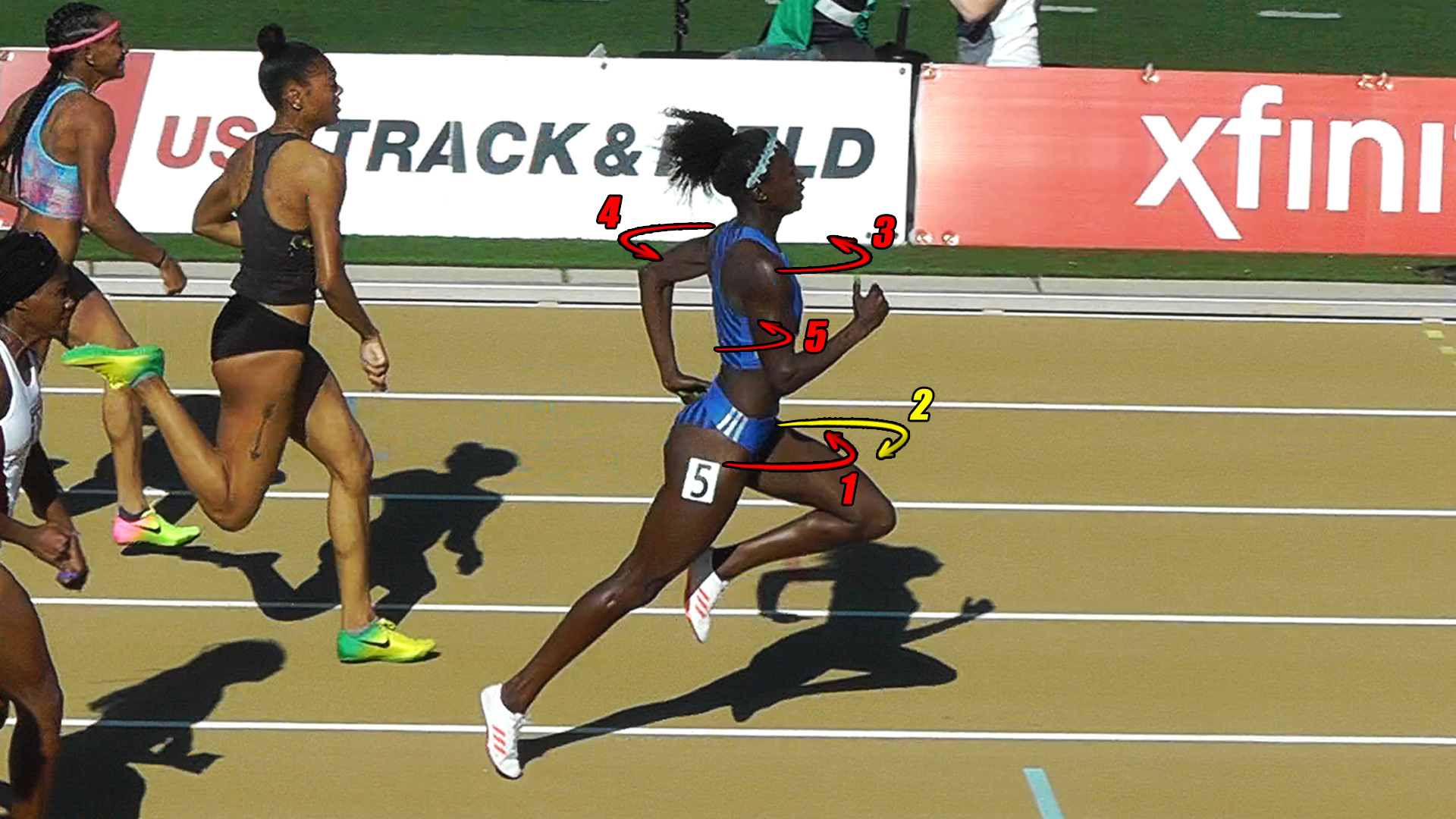
From this perspective:
👉 both arms are working together
👉 in the same direction
At one moment:
- the arms are organizing (twisting) force in one direction
At the next:
- they switch and organize (twist) force the other way
💥 This pattern alternates with every step
⚖️ The Key Shift in Understanding
So depending on how you look at it:
- from the ground (2D) → arms appear opposite
- from above (3D system view) → arms are working together
👉 both are true
👉 but one shows appearance
👉 the other shows function
💥 And function is what ultimately determines your speed
🔄 Now Add the Legs to the Picture
From the side view (2D):
- left arm forward → left leg back
- right arm back → right leg forward
👉 everything appears opposite
🧠 What the 3D System Reveals
During each step:
👉 one leg is on the ground producing force
👉 this is the stance leg
That leg is organizing force through the body
👉 and both arms support that action
👉 in the same direction
At the same time:
👉 the swing leg (the one in the air)
👉 helps balance and counter that action
💥 So the system is not “opposites”
👉 it’s organized balance
🔑 The Key Idea
Running is a 3D system where:
👉 one leg produces force on the ground
👉 both arms support that force
👉 the swing leg helps maintain balance across the system
🔄 The Two Patterns of Running
This system repeats in a very specific way
👉 alternating with every step
There are two patterns:
🔵 Left Swing Pattern
- left leg is in the air (swinging forward)
- right leg is on the ground producing force
- both arms support the force created by the right leg
👉 the system is organized around the left swing leg
🔴 Right Swing Pattern
- right leg is in the air (swinging forward)
- left leg is on the ground producing force
- both arms support the force created by the left leg
👉 the system is organized around the right swing leg
⚖️ What This Means
Each step is not random
👉 it’s a coordinated pattern
Where:
- one leg produces force
- the arms support that force
- the swing leg balances the system
💥 Then it switches
👉 left → right → left → right
🧠 Why This Matters
Once you see these patterns:
👉 running becomes predictable
👉 not just something you “do”
But something you can:
- understand
- analyze
- improve
⏱️ The Hidden Key: Timing
A common assumption is that running happens in sequence—especially when looking at the legs:
👉 push → swing → return
And for one leg, that appears true
But running is not just one leg
👉 it’s a system
In the system:
- one leg is pushing
- the other leg is swinging
- the arms are supporting the push
👉 all at the same time
💥 And more importantly:
👉 these actions reach their peak force together
👉 And that is how speed is actually created when you run
🔄 This Is Synchronization
Running is not a series of separate movements
👉 it’s a coordinated system
Where:
- force is produced
- force is supported
- balance is maintained
👉 simultaneously
💥 This is what creates:
- efficiency
- clean force transfer
- higher levels of speed
🧠 The System Behind It (URSE)
This coordinated movement isn’t random
👉 it follows a specific structure
This is what we call:
👉 the Ultimate Running Speed Equation (URSE)
URSE describes how:
- force is produced
- force is supported
- balance is maintained
👉 across the entire body
💥 When all parts of the system work together:
- movement becomes more efficient
- force transfers cleanly
- speed increases
👉 To understand this system in more detail:
➡️ Ultimate Running Speed Equation (URSE): How Speed Is Created Through Balance and Coordination
🚨 Why Athletes Stop Getting Faster
Many athletes continue to get stronger
👉 but don’t see the same improvement in speed
Not because their training isn’t working…
👉 but because part of the system may be underdeveloped
Often:
👉 the hip flexors
🔑 Why Hip Flexors Matter
These muscles:
- drive the leg forward
- influence stride timing
- help maintain balance across the system
👉 When they are underdeveloped:
- the swing phase shortens
- timing is affected
- stride efficiency drops
👉 and speed can be limited
🔗 Learn How to Train Them
 How to Train Hip Flexors for Maximum Speed (Most Athletes Miss This)
🔗 How This Connects to Training
To understand how to train this system:
Isometric Training for Speed: The Complete System to Run Faster
🚀 What This Means for You
If you want to run faster:
❌ don’t focus on just one part
✅ continue your current training
👉 while developing:
- balance across the system
- coordination
- timing
💥 That’s where meaningful speed improvements happen
🚀 Ready to Apply This?
👉 Learn how to apply this system step-by-step:
How to Run Faster: The Complete Guide to Increasing Speed, Power and Performance
❓ FAQ: Running Mechanics Explained
What actually makes you run faster?
Speed comes from how your body organizes and applies force—not just strength.
Do arms matter when running?
Yes. They support and balance the system during each step.
Why am I getting stronger but not faster?
Because speed depends on coordination and timing, not just strength.
What role do hip flexors play?
They control the swing phase and help maintain system balance.
Is running just about pushing off the ground?
No. It’s a coordinated system of movement working together.
🔥 Final Thought
Most people train speed like it’s a strength problem
👉 but it’s really a system
💥 And once you understand how the system works…
👉 everything starts to make more sense