Home » Running Muscles for Speed » Hip Flexor Muscles for Speed: What actually Makes You Run Faster
Introduction
Hip flexor muscles for speed are one of the most overlooked factors in running performance.
Most athletes focus on the muscles that push the body forward—like the glutes, hamstrings, and quadriceps—but speed is not just about pushing harder.
👉 It’s about how fast your legs move through each cycle.
👉 And that’s where the hip flexor muscles come in.
👉 To understand how these muscles directly impact speed, see:
Hip Flexors for Running Speed
🧠 What Are the Hip Flexor Muscles?
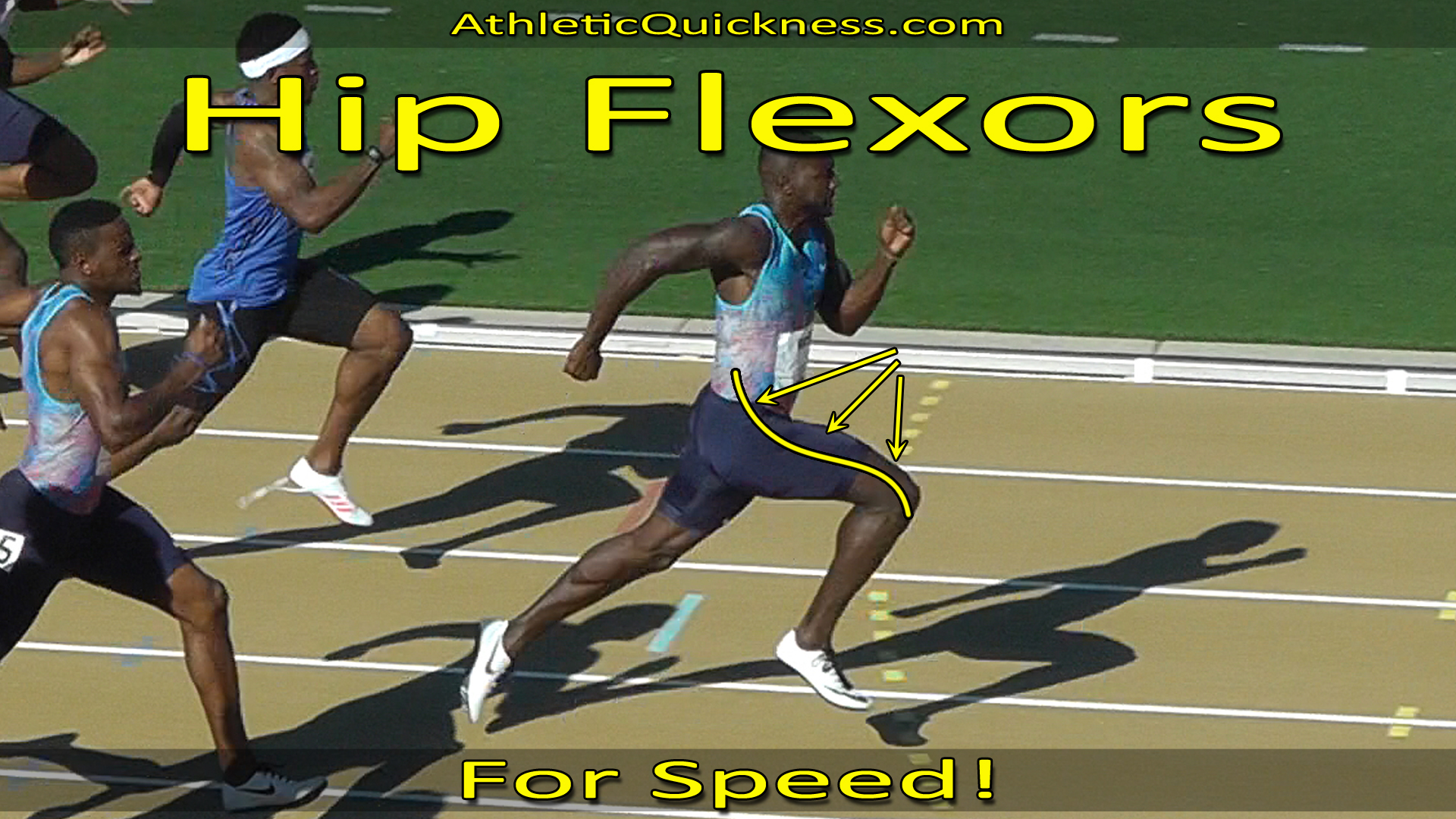
The hip flexors are not just one muscle—they are a group of muscles that work together to lift and drive the leg forward during running.
👉 This group includes:
- psoas
- iliacus
- rectus femoris
- sartorius
- adductor longus
- adductor brevis
- pectineus
👉 While you don’t need to memorize each one, it’s important to understand this:
👉 speed depends on how well this entire group functions together
⚡ What Hip Flexor Muscles Actually Do in Running
When you run, your body moves through a continuous cycle:
- push phase
- swing phase
- return phase
👉 The push phase generates force.
👉 But the hip flexor muscles drive the swing phase—bringing your leg forward quickly so the next step can happen.
👉 And this is critical:
👉 the faster your leg comes forward, the faster you can run
🔄 Why Hip Flexor Muscles Control Stride Rate
Stride rate is how quickly your legs cycle during running.
👉 And that cycle is largely controlled by:
👉 how fast your hip flexor muscles can move your leg forward
If your hip flexors are:
- slow → your stride rate is limited
- fast → your stride rate increases
👉 This is why athletes can be strong…
👉 but still not fast.
⚠️ Why Most Athletes Don’t Train Hip Flexor Muscles Correctly
Most training programs focus on:
- strength
- power
- pushing force
👉 So athletes spend most of their time training:
- squats
- lunges
- sprint repeats
👉 But these primarily develop the push phase—not the forward movement of the leg.
👉 Which means:
❗ half of the running cycle is undertrained
🧩 Why Hip Flexor Muscles Must Be Trained as a System
One of the biggest mistakes athletes make is treating the hip flexors as isolated muscles.
👉 In reality, they work as part of a coordinated system involving:
- the core
- the upper body
- the opposite leg
👉 If that system is not working together:
- timing breaks down
- coordination suffers
- speed is limited
🏋️♂️ Why Traditional Exercises Fall Short
Exercises like:
- sit-ups
- hanging knee raises
👉 only target part of the hip flexor group.
👉 They also fail to train:
- speed of contraction
- coordination
- real running movement
👉 Which is why many athletes think they are training hip flexors…
👉 but still don’t get faster.
🚀 How to Train Hip Flexor Muscles for Speed
To improve speed, your training must go beyond basic strength.
👉 You need to train your hip flexor muscles to:
- react quickly
- stabilize under tension
- move efficiently through the running cycle
👉 This is where isometric training with resistance bands becomes extremely effective.
👉 It allows you to train:
- faster muscle contractions
- coordination
- real movement patterns
👉 To learn how to apply this method, see:
Isometric Training for Speed
🏁 Conclusion
If you want to run faster, you can’t just focus on pushing harder.
👉 You must also improve how fast your legs move forward.
👉 And that means developing your hip flexor muscles as part of a complete system.
👉 Train them correctly…
👉 and you unlock a level of speed most athletes never reach.
❓ Frequently Asked Questions
What do hip flexor muscles do in running?
Hip flexor muscles lift and drive the leg forward during the running cycle, which directly affects stride rate and speed.
Do hip flexors make you run faster?
Yes, strong and fast hip flexor muscles improve how quickly your legs cycle, which is essential for running faster.
Why are hip flexors important for sprinting?
They control the swing phase of running and help bring the leg forward quickly, allowing for faster stride turnover.
Can you run fast with weak hip flexors?
No, weak or undertrained hip flexors limit stride rate and reduce overall speed, even if other muscles are strong.
What is the best way to train hip flexor muscles for speed?
Training should focus on speed, coordination, and reaction—often using methods like isometric training with resistance bands.